

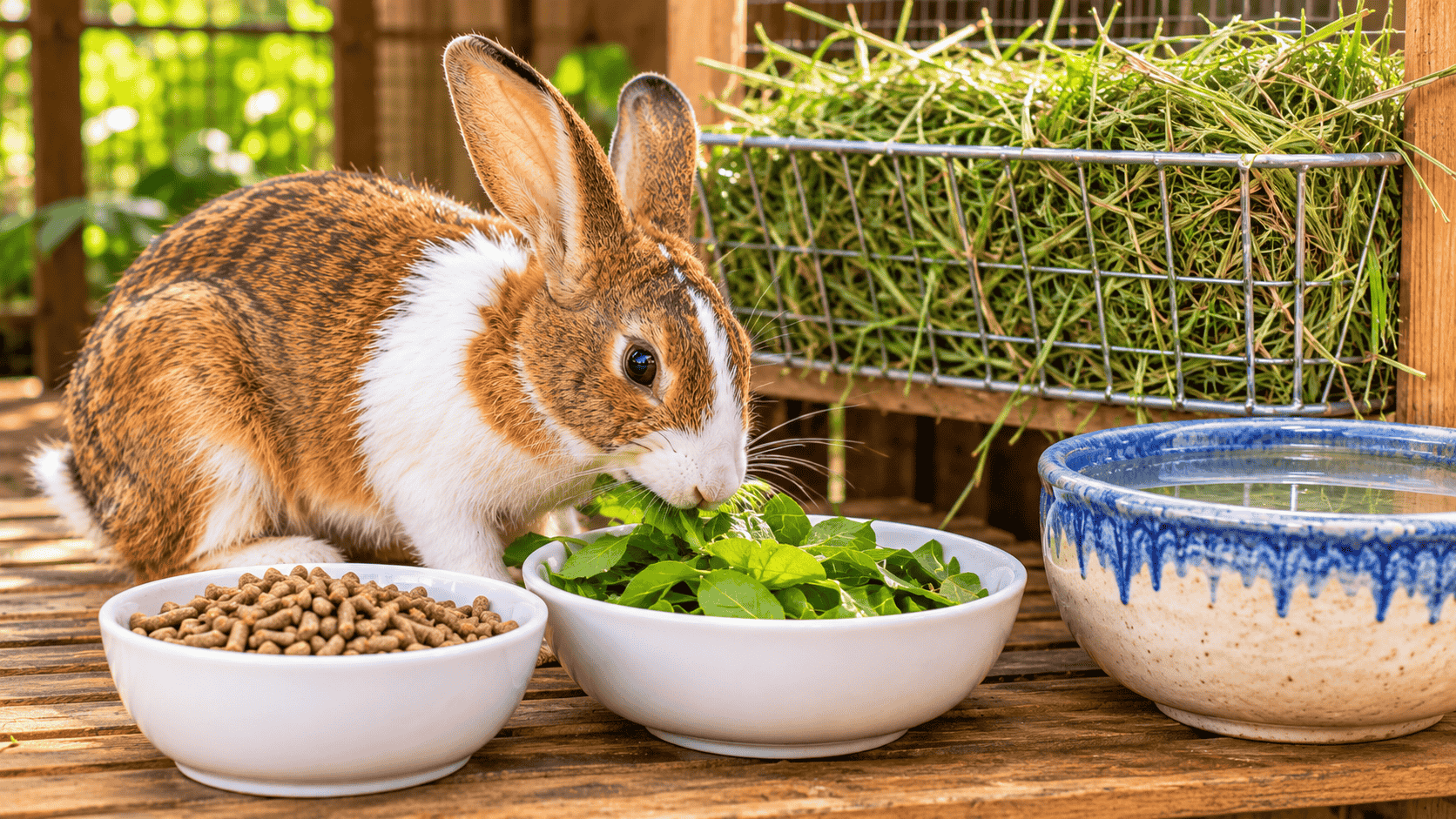
A consistent rabbit feeding schedule keeps your rabbits’ digestive tract moving smoothly, prevents painful bloating, and makes spotting early illness effortless. Rabbits are crepuscular grazers, which means they are naturally most active and hungry around dawn (5:30 AM to 8:00 AM) and dusk (5:00 PM to 8:30 PM), while resting quietly during the heat of midday. Aligning your morning and evening nutrition routine with this natural biological clock reduces stress, improves feed conversion, and protects your herd against gastrointestinal stasis.
Feeding rabbits at random hours or dumping an entire day’s pellets into a bowl once every 24 hours disrupts caecal fermentation and encourages overeating followed by long empty stretches. Whether you care for an indoor house rabbit in Accra or London, or manage a 30-doe commercial breeding rabbitry in Kumasi, Sunyani, or Tamale, this guide gives you exact morning, midday, and evening feeding routines, life-stage timetables for kits, adults, and nursing does, hot-weather adjustments for Ghana’s dry season, clean water and feeder hygiene habits, and practical fixes for common scheduling mistakes.
How a Rabbit’s Body Clock Shapes Daily Feeding Times
In nature, wild rabbits spend the bright midday hours resting deep inside cool underground burrows to avoid heat and daytime predators. As sunlight softens at dusk and again just before sunrise, they emerge to graze heavily on fibrous grasses, field weeds, and tree browse. Domestic rabbits keep this exact internal rhythm.
Feeding on a steady morning-and-evening schedule works with rabbit biology in four practical ways:
- Matches peak appetite and gut motility: Serving measured pellets and fresh leafy greens (or shade-wilted local forage) right when your rabbits wake up hungry guarantees fast, eager consumption without food sitting out to wilt or spoil.
- Supports healthy caecotroph cycles: Rabbits produce nutrient-rich soft caecotrophs roughly 4 to 8 hours after a major meal, usually during quiet late-morning or late-night rest periods. Predictable meal times keep caecotroph production regular so your rabbit eats them cleanly rather than leaving messy smears on the hutch floor.
- Prevents rapid gulping and bloating: Splitting the daily pellet allowance into two smaller meals (half at dawn, half at dusk) stops hungry rabbits from bolting an entire day’s concentrates in five minutes, which can trigger acute gas buildup in the caecum.
- Creates an automatic daily health check: When your rabbit expects breakfast at 6:30 AM and dinner at 6:00 PM, it will rush to the door every single day. If a rabbit stays huddled in a corner and ignores its scheduled meal, you know within minutes that something is wrong.
The Complete Morning, Midday, and Evening Rabbit Feeding Schedule
Use this master timetable as your everyday blueprint. Exact times can shift by 30 to 60 minutes to fit your household or farm routine, provided you stay consistent every single day.
| Time Window | Primary Focus | What to Serve (Pet Rabbit) | What to Serve (Ghana Farm / Breeding Rabbit) | Quick Check Task |
|---|---|---|---|---|
| Morning (6:00 AM to 7:30 AM) | First main meal + fresh water + health scan | Half of daily measured pellets + half of daily washed leafy greens + fresh pile of dry grass hay | Half of daily pellet ration (e.g., 50 g to 60 g for resting adult) + 150 g shade-wilted guinea grass or Tridax + fresh dry hay | Remove damp leftovers; inspect overnight droppings; wash and refill water bowls |
| Midday (12:00 PM to 2:00 PM) | Rest, hydration, and continuous hay grazing | No pellets; verify dry grass hay rack is visibly full; refresh cool water if warm | No heavy pellets during peak midday heat; check water levels (top up for nursing does); verify shade and cooling bottles | Check breathing rate and ear temperature on hot days above 28°C |
| Evening (5:30 PM to 7:00 PM) | Second main meal + overnight roughage load | Remaining half of measured pellets + second half of washed leafy greens + generous overnight hay top-up | Remaining half of daily pellets + larger 200 g to 250 g shade-wilted forage bundle (grass + sweet potato vines/leaves) + dry hay | Spot-clean wet litter corners; confirm eager evening appetite; top up water for overnight grazing |
| Bedtime (9:00 PM to 10:00 PM, Optional) | Overnight fibre buffer | Small fresh handful of fragrant hay or a safe chew twig (no extra pellets) | Quick visual sweep of breeding does and nursing litters for full waterers | Confirm hutch latches are secure against nocturnal predators |
To check the exact gram weights and tablespoons of pellets, hay, and greens that belong inside each time slot for your rabbit’s age and breed weight, see our complete portion charts in how much to feed a rabbit daily by age and weight.
Morning Nutrition Routine (6:00 AM to 7:30 AM)
Your morning feeding session sets the digestive tone for the entire day. Plan to spend 5 to 10 minutes completing these five simple steps in the same order every morning:
- Inspect droppings and leftovers before serving new food: Look at the litter box or drop pan first. Healthy adults produce plentiful, round, dry pellets overnight. Remove any damp uneaten greens or grass stems from the previous evening so rabbits never eat souring leftovers.
- Wash and refill water containers first: Empty yesterday’s water, wipe away any slippery biofilm inside the ceramic bowl or earthenware crock, rinse thoroughly, and refill with fresh cool water. Tap metal sipper bottles or farm nipple drinkers to confirm steady flow.
- Refresh dry grass hay or cured local roughage: Top up the hay rack with crisp, fragrant grass hay. Serving fresh hay right before pellets encourages your rabbit to graze roughage first rather than filling up solely on concentrates.
- Serve the morning half of measured pellets: Measure exactly half of your rabbit’s daily pellet ration using a marked scoop or kitchen scale (for example, 25 g for a 2 kg pet Dutch rabbit, or 50 g to 60 g for a 4.5 kg resting New Zealand White).
- Offer morning leafy greens or shade-wilted forage: Serve washed fresh herbs and leafy greens for indoor pets, or clean grass harvested the previous afternoon and wilted cleanly overnight on a shaded rack for farm stock. Never cut wet, dew-soaked bush grass at 6:00 AM and drop it straight into cages.
Midday Grazing, Shade, and Hydration Check (12:00 PM to 2:00 PM)
Healthy adult rabbits do not need a midday pellet meal. In fact, skipping dense concentrates at noon mimics natural wild resting habits and encourages your rabbit to nibble dry grass hay whenever it wakes up between naps.
- Keep dry hay 100% available: Your rabbit’s stomach must never go empty. Even while napping on and off between 10:00 AM and 4:00 PM, your rabbit will take brief hay snacks every 2 to 3 hours.
- Prioritise cool water and heat protection: Digesting heavy pellet meals generates internal metabolic heat. Keeping midday feeding light (hay and cool water only) reduces heat stress significantly during warm afternoons above 28°C to 30°C. On hot days, refresh warm water bowls at noon and place cloth-wrapped frozen water bottles beside resting tiles. Follow all ten warm-weather protection steps in our guide on how to keep rabbits cool in hot weather.
- Exception for nursing mothers and young growers: Lactating does raising 6 to 10 kits and newly weaned growers (6 to 12 weeks) have very high calorie needs and receive free-choice pellets. Check their feeders and water bowls briefly at midday so neither ever runs dry.
Evening Nutrition Routine (5:30 PM to 7:00 PM)
Rabbits do roughly 60% to 70% of their total daily eating between sunset and sunrise. Making your evening meal generous in clean roughage and well-timed around 5:30 PM to 6:30 PM fuels overnight digestion and stops bored rabbits from chewing hutch wood or rattling cage bars at 2:00 AM.
- Clear midday hay stalks or soiled stems: Brush out any trampled stalks and wipe solid resting tiles clean.
- Serve the evening half of measured pellets: Offer the remaining 50% of daily pellets in a clean ceramic dish or external J-feeder.
- Deliver the main fresh greens or wilted local forage ration: By 5:30 PM, tropical grasses and leaves harvested mid-morning (around 9:30 AM) have wilted neatly in open shade for 6 to 8 hours, making them crisp, safe, and ready for peak evening grazing. Serve the larger share of daily local forage in the evening so rabbits munch steadily through the cool night.
- Pack the hay rack generously for overnight grazing: Fill every hay rack fully before dark so your rabbits never run out of long-stem fibre at 3:00 AM.
- Top up fresh drinking water: Rabbits drink heavily alongside overnight hay grazing. Ensure every ceramic bowl or drinker holds enough clean water to last cleanly until 6:30 AM the next morning.
Tailoring Your Rabbit Feeding Schedule by Life Stage
While the dawn-and-dusk rhythm stays consistent for every rabbit, meal frequency and feeder access shift as rabbits grow out of the weaned kit stage into mature breeders or senior pets.
| Life Stage | Morning Meal (6:00 AM to 7:00 AM) | Midday (12:00 PM to 2:00 PM) | Evening Meal (5:30 PM to 6:30 PM) | Key Schedule Rule |
|---|---|---|---|---|
| Weaned Kits (6 to 12 Weeks) | Refill free-choice plain grower pellets + fresh crisp dry grass hay | Check pellets and water (never let bowls empty) | Top up grower pellets + generous overnight dry grass hay | Skip watery fresh greens until 12 weeks to prevent weaning diarrhoea |
| Growing Juveniles (3 to 6 Months) | Half of daily grower pellets + small portion of introduced safe greens/wilted grass + dry hay | Unlimited dry hay + clean cool water | Second half of pellets + wilted forage/greens + full hay rack | Introduce 1 new green leaf every 4 to 5 days during evening meals |
| Healthy Adult Pet (7 Months to 5 Years) | 50% measured maintenance pellets (25 g/kg total daily) + 50% leafy greens + fresh hay | Unlimited dry hay + cool water only | 50% measured pellets + 50% leafy greens + heavy overnight hay load | Never refill empty pellet bowls early if rabbit begs; offer fresh hay instead |
| Pregnant Doe (Days 15 to 31) | 50% increased pellet ration + clean wilted grass/protein leaves + dry hay | Fresh cool water check + unlimited dry hay | 50% increased pellets + generous wilted forage + dry hay | Expect a brief 12-to-24-hour appetite dip right before kindling on day 30 to 31 |
| Lactating Doe (Weeks 1 to 5 Nursing) | Fill free-choice pellet feeder + protein-rich wilted forage + 500 ml+ water | Mandatory midday refill of water bowl and pellets | Refill free-choice pellets + generous wilted forage + 600 ml+ water | Nursing mothers eat and drink around the clock; empty bowls cut milk supply immediately |
| Senior Rabbit (Over 5 Years) | 50% pellets + soft fragrant hay + hydrating leafy greens | Easy-access water bowl check + soft hay | 50% pellets + hydrating greens + soft overnight hay | Keep feeders and wide water bowls low to the floor for arthritic joints |
Morning and Evening Feeding Schedule for Rabbit Keepers in Ghana
In Accra, Tema, Kumasi, Takoradi, Cape Coast, Sunyani, and Tamale, tying your rabbit feeding schedule directly to your daily forage harvesting and wilting cycle makes farm work far smoother and eliminates wet-grass bloating.
The Practical Ghanaian Harvest-to-Feed Loop
Instead of rushing to cut wet grass at dawn, run a clean half-day offset wilting cycle:
- 9:00 AM to 10:30 AM (Harvest Batch A): Cut clean guinea grass (Panicum maximum), Tridax procumbens, sweet potato vines, or safe leaves after morning dew dries completely. Rinse off Harmattan dust if needed, and spread thinly on a raised shaded rack.
- 5:30 PM to 6:30 PM (Feed Batch A: Evening Meal): Batch A has now wilted cleanly in shade for 7 to 8 hours. Serve 60% of Batch A as your rabbits’ main evening forage alongside evening pellets, and reserve the remaining 40% spread thinly on the shaded rack overnight.
- 6:00 AM to 7:00 AM Next Morning (Feed Reserved Batch A: Morning Meal): Serve the clean, dry, shade-wilted forage from the rack right alongside morning pellets and fresh cool water. Zero wet morning dew ever enters a cage.
- Dry-Season Adaptation (November to March): When fresh green grass is scarce, serve stored sun-cured guinea grass hay at 6:00 AM with morning pellets, and serve shade-wilted sweet potato vines, banana leaf strips, moderate moringa, or thoroughly dried cassava leaves (wilted 24 to 48 hours) at 6:00 PM alongside evening pellets.
Review safe local plants, commercial pellet targets, and toxic Ghanaian foods in our guide on what rabbits eat in Ghana and safe local foods, and check safe harvesting and hay-curing rules in our directory of the best grasses and leaves for rabbits and unsafe plants.
Pet Rabbit Schedule vs. Commercial Farm Feeding Schedule
Although both pet owners and commercial farmers follow the dawn-and-dusk biological clock, their feeding goals differ slightly.
| Feature | Indoor / Backyard Pet Schedule | Commercial Breeding / Meat Farm Schedule |
|---|---|---|
| Main Goal | Long lifespan (8 to 12 years), lean weight, dental health, and clean litter box habits | Healthy 7-to-10-kit litters, strong milk yield, and fast 10-to-12-week fryer growth |
| Pellet Timing | Two tiny measured portions (morning and evening) or scattered across a foraging mat for enrichment | Resting adults: two measured meals (6:00 AM & 6:00 PM); Nursing does & growers: free-choice J-feeders topped up morning, midday, and evening |
| Roughage Focus | Unlimited dry grass hay (Timothy, orchard, or cured local hay) placed directly at one end of the litter box | Unlimited dry grass hay + two generous daily bundles of shade-wilted local grasses and protein browse in hanging wire racks |
| Bonding & Treats | Hand-feed part of the evening pellet ration or fresh herbs during 20-minute floor bonding sessions | Offer a clean grass stalk during quick morning nest checks to keep breeding does calm |
For further veterinary-backed guidance on structuring healthy daily rabbit meals and encouraging natural grazing behaviour, you can consult the RSPCA veterinary advice on feeding rabbits daily.
How to Manage Your Rabbit Feeding Schedule on Busy Workdays
Many rabbit owners commute early to offices in Accra, Kumasi, or London and return home after dark. A busy 9-to-5 workday works smoothly with a rabbit’s natural crepuscular clock if you set up your enclosure intelligently:
- Feed before leaving (6:00 AM to 7:00 AM) and right after returning (6:00 PM to 7:30 PM): These two windows align almost identically with natural dawn and dusk grazing peaks.
- Install oversized hay racks: Use a large hanging hay manger or pile plenty of dry hay at the clean front end of a roomy litter box so your rabbit never runs out of roughage during a 10-hour workday.
- Provide two independent water sources: If you are away all day, offer both a heavy ceramic water bowl and a clean, tested sipper bottle (or two heavy bowls). If your rabbit kicks hay into one bowl or a bottle ball jams at 11:00 AM, the backup water source prevents dehydration and GI stasis.
- Skip electronic automatic pellet feeders for wet greens: Gravity hoppers that dump unlimited dry pellets make adult pets obese quickly, and fresh greens spoil in warm rooms if left sitting inside timers. Measured morning and evening hand-feeding remains safer and lets you inspect appetite daily.
- Prepare weekend or travel backup instructions: If you travel for more than 12 hours, never leave a massive pile of pellets expecting a rabbit to ration itself for three days. Rabbits cannot safely be left unattended for 24 to 48 hours because GI stasis turns fatal within 12 to 24 hours. Always arrange a trained caretaker to visit morning and evening following your written schedule.
Feeder Placement, Water Refreshes, and Hygiene Timing
Where and how you serve scheduled meals matters just as much as the clock.
- Keep forage off the cage floor: Always mount wire hay racks above shoulder height or place hay inside one clean end of a large litter tray. Feeding grasses straight on bare hutch floors mixes food with droppings and spreads coccidiosis across your herd.
- Use tip-proof ceramic bowls or external metal J-feeders: Rabbits love tossing lightweight plastic dishes, spilling pellets into wet corners. Heavy glazed ceramic bowls (for indoor pens) and sifter-bottom external J-feeders (for farm hutches, which let fine pellet dust fall away before rabbits inhale it) keep meals spotless.
- Sync water washing with morning feeding: Wiping water bowls daily at 6:30 AM and washing them with mild unscented soap once a week prevents slimy bacterial film and warm-weather green algae that stop rabbits from drinking.
- Clear wet leftovers before flies gather: In warm tropical weather, remove uneaten damp greens or lightly dampened local wheat-bran mash within 2 hours so fermented food never causes bloat or attracts blowflies.
7 Common Rabbit Feeding Schedule Mistakes to Avoid
Fixing these seven frequent routine errors keeps digestion steady and cuts wasted feed:
- Feeding pellets only once a day in one huge heap: Dumping 120 g of pellets into a bowl once at 7:00 AM invites rapid gulping, mild caecal upset, and long hungry stretches overnight. Splitting pellets into two equal morning and evening meals is far healthier.
- Giving in to midday begging with extra pellets or sugary treats: Rabbits are clever actors that stand at the bars begging whenever you walk past the kitchen. Handing out extra pellets or carrot slices every afternoon causes obesity and soft caecotrophs. Reward begging with a fresh pinch of fragrant hay instead.
- Feeding heavy concentrates at 1:00 PM during tropical heatwaves: Digesting dense pellets raises internal body temperature right during the hottest part of the afternoon. Keep midday meals strictly to dry hay and cool water.
- Cutting and feeding wet morning grass at 6:00 AM: Dew-soaked grass ferments rapidly and causes watery diarrhoea. Harvest mid-morning and wilt for 6 to 8 hours in shade so tomorrow’s breakfast is already safely wilted.
- Letting the hay rack go empty overnight: Because rabbits eat most heavily between 6:00 PM and 6:00 AM, running out of hay at midnight leaves the gut idle for six hours and drives rabbits to chew hutch wood or carpet.
- Keeping wildly unpredictable meal times: Feeding at 6:00 AM on weekdays and noon on weekends creates stress and makes it harder to notice true appetite loss early. Keep meal windows within a 1-hour range every day.
- Leaving a sick rabbit until the next scheduled meal to see if it eats: Never wait 24 hours hoping appetite will return by tomorrow’s breakfast.
Using Mealtime to Spot Illness Early (When to Call a Vet)
One of the biggest hidden advantages of a strict morning-and-evening feeding schedule is early disease detection. Because healthy rabbits are famously enthusiastic about scheduled meals, a rabbit that ignores breakfast at 6:30 AM is giving you an immediate, unmistakable alert.
Treat 10 to 12 hours without eating or passing droppings as a medical emergency. Check water flow and feed freshness first, offer a favourite fragrant herb like coriander or fresh wilted grass, and contact a qualified veterinarian promptly if your rabbit refuses food or shows any of these accompanying red flags:
- No faecal pellets (or only tiny, dark, dry droppings) since the previous meal.
- Sitting rigidly hunched in a corner with narrowed eyes or loud, harsh tooth grinding.
- Watery, mucus-coated, or bloody diarrhoea soaking the hindquarters.
- Dropping chewed pellets repeatedly or showing wet, matted fur under the chin (molar spurs).
- Rapid open-mouth breathing, hot dark-red ears, cold limp ears, or collapse.
If your rabbit ever skips a scheduled meal, follow our step-by-step emergency checklist immediately in why is my rabbit not eating and what to do right away.
Frequently Asked Questions About Rabbit Feeding Schedules
1. How many times a day should you feed a rabbit?
Feed measured pellets and fresh leafy greens (or shade-wilted local forage) twice a day, once in the early morning (6:00 AM to 7:30 AM) and once in the evening (5:30 PM to 7:00 PM). Keep unlimited clean dry grass hay and fresh drinking water available 24 hours a day between meals.
2. What are the best times of day to feed a rabbit?
The ideal feeding times are dawn (6:00 AM to 7:30 AM) and dusk (5:30 PM to 7:00 PM). Rabbits are crepuscular animals naturally most active and hungry around sunrise and sunset, and evening feeding also aligns with cooler temperatures in warm climates like Ghana.
3. Should I leave food in my rabbit’s cage overnight?
Always leave a generous, full rack of clean dry grass hay and plenty of fresh drinking water available overnight, because rabbits do most of their grazing between sunset and sunrise. For adult pet rabbits, do not leave overflowing bowls of pellets overnight; serve their measured evening pellet portion around 6:00 PM so they graze hay through the night.
4. Should I feed pellets in the morning or evening?
Split your rabbit’s daily measured pellet allowance into two equal halves: serve half in the morning and half in the evening. Splitting pellets prevents rapid gulping, supports steady blood sugar and gut fermentation, and lets you verify healthy appetite twice every day.
5. What if my rabbit begs for food during the afternoon?
Do not give extra pellets or sugary treats during midday begging. Rabbits naturally wake up between naps looking for something to chew. Offer a fresh handful of fragrant dry grass hay or a safe untreated chew twig (such as clean dried apple or guava branch) to satisfy chewing instincts without causing obesity.
6. How should I adjust my rabbit feeding schedule in hot weather?
In hot weather above 28°C to 30°C (such as Ghana’s dry season between November and April), shift the main pellet and wilted forage meals strictly to cool early morning (6:00 AM) and cool evening (6:00 PM) hours, serve the slightly larger forage portion in the evening, skip midday concentrates for resting adults, and refresh cool water bowls at midday.
7. Can I leave my rabbit for a weekend with extra food in the cage?
No. Never leave a rabbit unattended for 48 hours with a big pile of pellets. Rabbits can develop fatal gastrointestinal stasis within 12 to 24 hours, jam a water bottle, or tip over a bowl without anyone noticing. Always have a trusted caretaker check, water, and feed your rabbit morning and evening while you are away.
8. When should I feed fresh leafy greens: before or after pellets?
You can serve fresh washed greens alongside measured pellets at both morning and evening meals, or serve dry hay first, then pellets, and then leafy greens. The most important rule is keeping dry grass hay available continuously so your rabbit always has long fibre in its stomach alongside greens and concentrates.
Building a Dependable Morning and Evening Routine
A clear rabbit feeding schedule removes daily guesswork and keeps every system in your rabbit’s body working smoothly. Feed half of your rabbit’s measured pellets and fresh greens (or properly shade-wilted local forage) around 6:00 AM to 7:00 AM, keep midday calm with unlimited dry grass hay and cool clean water, and serve the remaining half of pellets alongside a generous evening roughage load around 5:30 PM to 6:30 PM to fuel overnight grazing.
Adapt feeder access to match life stages (giving free-choice pellets and midday refills to nursing mothers and growing kits while measuring strictly for resting adults), tie your Ghanaian forage harvesting into a clean half-day shade-wilting loop, and use every morning and evening mealtime as a 60-second health scan. Consistent, well-timed nutrition is the simplest daily habit for raising healthy, calm, and productive rabbits year-round.
