

If you are wondering why do rabbits lose weight, the answer almost always points to an underlying medical condition, a dental problem, or a nutritional gap that needs prompt attention. Rabbits hide physical weakness instinctively, and a thick fur coat makes gradual weight loss easy to miss until the spine and hip bones feel sharp under your hand. Losing even 10% of body weight is a serious warning sign in a domestic rabbit, whether you keep a single house rabbit in Accra, manage a commercial rabbitry in Kumasi, or care for pet rabbits in the UK.
Weight loss in rabbits falls into two broad patterns: rabbits that lose weight because they have stopped eating enough, and rabbits that continue eating normally yet still waste away. Both patterns demand careful investigation. This guide explains how to tell if your rabbit is truly underweight, covers the most frequent medical and dietary causes of weight loss, outlines what a veterinarian will check, provides practical recovery and feeding strategies tailored to Ghana and international climates, and clarifies when weight loss becomes an urgent veterinary emergency.
How to Tell If Your Rabbit Is Losing Weight
Looking at a rabbit inside its hutch rarely tells you whether it is losing weight. Dense fur hides shrinking muscle mass along the back and flanks for weeks. Many owners only notice a problem when they pick up their rabbit and realise it feels unusually light, or when their hand brushes against a sharp, bony spine.
Two simple habits give you an accurate, early warning system:
- Weekly hands-on checks: Run your open palm and fingertips gently along your rabbit’s ribcage, backbone, and hip bones once a week. On a healthy rabbit, you can feel the ribs and spine under a smooth, firm layer of muscle and fat. If the spine feels like a jagged row of beads and the hips jut out sharply, your rabbit has already lost significant condition. Pair this touch test with the full weekly routine in our guide on checking the signs of a healthy rabbit at home.
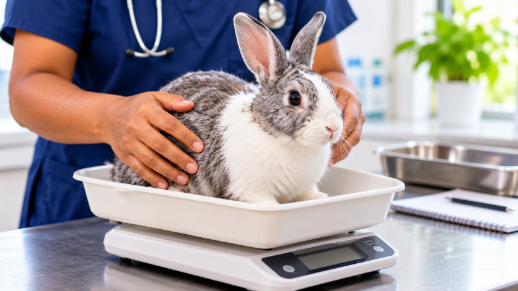
- Monthly digital weighing: Place a clean plastic laundry basket or carrier onto a digital kitchen or parcel scale, press the tare button to zero the display, and place your rabbit gently inside. Record the weight in grams or kilograms every two to four weeks (or weekly for senior rabbits over five years old and breeding does). A healthy adult rabbit’s weight should stay steady within 3% to 5%. An unintended drop of 5% to 10% warrants a veterinary check even if the rabbit still acts bright and alert.
Rabbit Body Condition Score (BCS) Guide
Veterinarians use a 5-point Body Condition Score (BCS) scale to judge whether a rabbit is underweight, ideal, or overweight, regardless of breed size. A 1.2 kg Netherland Dwarf and a 4.5 kg New Zealand White are scored using the exact same physical landmarks.
| BCS Score | Category | What You Feel on the Ribs, Spine, and Hips | Action Needed |
|---|---|---|---|
| 1 out of 5 | Emaciated | Ribs, spine, and pelvis stick out sharply with almost no flesh covering; deep hollows along the flanks; muscle wasting over the hindquarters | Immediate veterinary examination; high risk of organ failure and hypothermia |
| 2 out of 5 | Underweight (Thin) | Spine and ribs feel prominent and angular with minimal fat padding; hips feel sharp when stroked | Prompt veterinary check-up to find the underlying cause and build a safe weight-gain plan |
| 3 out of 5 | Ideal Healthy Weight | Ribs and spine are easily felt beneath a smooth, even layer of flesh; hips feel rounded; belly is firm without sagging fat pads | Maintain current diet, unlimited hay/grass, and routine monthly weigh-ins |
| 4 out of 5 | Overweight | Ribs and spine require firm pressure to feel; noticeable fat padding over the rump and shoulders | Gradually cut back pellets and treats; increase hay and daily exercise space |
| 5 out of 5 | Obese | Ribs and spine are very hard to feel beneath thick fat layers; heavy fat folds; difficulty grooming hindquarters cleanly | Veterinary-supervised gradual weight-loss diet (never starve an obese rabbit, as rapid fasting triggers fatty liver disease) |
10 Common Causes of Weight Loss in Rabbits
Unplanned weight loss never happens without a reason. Below are the ten most frequent medical, parasitic, dental, and husbandry causes seen in pet and farmed rabbits.
1. Dental Disease and Molar Spurs
Dental disease is the single most common medical cause of chronic weight loss in pet rabbits. A rabbit’s front incisors and back cheek teeth (molars and premolars) grow continuously throughout life. If the rabbit eats too little abrasive long-stem hay or has inherited jaw misalignment, sharp spikes called molar spurs form on the back teeth and cut into the tongue or cheeks.
A rabbit with painful molar spurs still feels hungry. It rushes over to its bowl, picks up pellets or leafy greens, chews awkwardly on one side, and drops half the food onto the floor. Over weeks, the rabbit eats less and less while you may assume it is simply being fussy. Look for wet fur under the chin, watery eyes, bad breath, or firm lumps along the lower jawline.
2. Internal Parasites (Coccidiosis and Worms)
Parasites steal nutrients directly from the digestive tract or damage the organs responsible for processing food. In Ghana and other warm, humid regions, coccidiosis caused by Eimeria protozoa is a leading cause of poor growth and wasting in weaned kits aged 4 to 12 weeks. Hepatic coccidiosis (Eimeria stiedae) attacks the liver and bile ducts, causing rabbits to lose muscle along the back while developing a swollen, pot-bellied abdomen. Pinworms (Passalurus ambiguus) and other gastrointestinal worms can also contribute to gradual weight loss in heavily infested hutches where manure builds up.
3. Chronic Gastrointestinal Issues and Poor Nutrient Absorption
Recurrent mild bouts of gastrointestinal stasis, chronic caecal dysbiosis (imbalanced gut bacteria), or inflammatory bowel conditions stop a rabbit from extracting full nutrition from its food. Rabbits with chronic gut imbalance frequently produce soft, unformed caecotrophs smeared onto the cage floor instead of eating them. Because caecotrophs supply vital B vitamins, amino acids, and microbial protein, losing them day after day steadily drains body weight.
4. Chronic Kidney Disease
Older rabbits (typically over four or five years old) and rabbits infected with the microscopic parasite Encephalitozoon cuniculi (E. cuniculi) can develop chronic kidney disease. Damaged kidneys fail to filter waste efficiently and cannot concentrate urine properly. Affected rabbits often drink far more water than normal, soak their litter trays with large puddles of dilute urine, develop a dull staring coat, and lose weight steadily even while continuing to nibble hay.
5. Encephalitozoon cuniculi (E. cuniculi) Infection
E. cuniculi is a widespread microsporidian parasite transmitted through infected urine or passed from a doe to her kits before birth. Many rabbits carry it silently, while others develop active inflammation in the kidneys, brain, or eyes. Alongside weight loss and increased thirst, affected rabbits may show subtle hind-leg weakness, urinary dribbling (urine scald), head tilt, or cloudiness inside the eye.
6. Chronic Respiratory or Internal Infections
Long-term bacterial infections burn huge amounts of daily energy while suppressing appetite. Rabbits fighting chronic pasteurellosis (snuffles), deep lung abscesses, uterine infections (pyometra) in unspayed females, or hidden internal abscesses often lose weight steadily over several weeks. You can review the warning signs of these infections in our guide to common rabbit diseases, symptoms, and prevention.
7. Cancer (Neoplasia) in Middle-Aged and Senior Rabbits
Unspayed female rabbits over three to four years old carry a very high risk of uterine adenocarcinoma (cancer of the uterus). Early signs include gradual weight loss, subtle mood changes, blood-stained vaginal discharge or bloody urine, and small lumps in the mammary glands. Other cancers, such as lymphoma or thymoma (a chest mass that can cause bulging eyes and laboured breathing), also cause progressive wasting in older rabbits.
8. Inadequate Diet, Low Calories, or Feed Competition
Not every case of weight loss is caused by disease. Growing kits, pregnant does, lactating mothers nursing large litters of 6 to 10 kits, and heavy meat breeds have high energy and protein demands. Feeding only watery vegetables (such as iceberg lettuce or cucumber), poor-quality brown stalky grass with very low nutrients, or too small a daily pellet ration leaves these rabbits in a constant calorie deficit. Check exact daily portions for every life stage in our guide on how much to feed a rabbit daily by age and weight.
In bonded pairs or group-housed pens, a dominant rabbit may also push a quieter cage-mate away from the pellet bowl and hay rack, causing the subordinate rabbit to starve quietly while the food bowl looks empty every morning.
9. Dehydration and Chronic Heat Stress
Rabbits cannot eat dry hay or commercial pellets without drinking adequate water. A sticky sipper bottle ball, a clogged farm nipple drinker, or warm dirty water cuts food intake immediately. Similarly, prolonged heat stress above 30°C reduces daily feed intake sharply because digesting food raises internal body heat. Over a hot two-month dry spell, poorly shaded rabbits lose noticeable body weight and breeding performance drops.
10. Chronic Pain, Arthritis, or Persistent Stress
Rabbits living with untreated pain (such as painful sore hocks on wire floors, osteoarthritis in senior joints, or spinal discomfort) spend less time moving to the hay rack and burn extra energy coping with stress hormones. Constant fear from roaming dogs, rats raiding the hutch at night, or aggressive cage-mates also keeps adrenaline high, disrupting normal grazing and causing steady weight loss.
Losing Weight While Eating Normally vs. Refusing Food
Telling your veterinarian whether your rabbit is still eating eagerly or refusing meals narrows down the likely causes immediately.
| Pattern Observed | Most Likely Causes | Key Clues to Check at Home |
|---|---|---|
| Losing weight while eating normally (or even hungrily) | Internal parasites (coccidiosis, worms), chronic kidney disease, E. cuniculi, cancer, nursing a large litter, poor-quality low-nutrient forage, or a cage-mate stealing food | Increased water drinking and soaked litter tray; pot-bellied look in kits; soft uneaten caecotrophs; check whether a second rabbit is eating the pellets |
| Losing weight while eating less or dropping food | Dental disease (molar spurs or incisor overgrowth), chronic pain (sore hocks, arthritis), respiratory infection, early GI stasis, spoiled/mouldy feed, or severe heat stress | Wet chin or drooling; chewing on one side; preferring soft leaves over hay or pellets; smaller dry droppings; sneezing or matted front paws |
| Sudden weight drop with complete refusal to eat | Acute GI stasis, gut blockage, severe coccidiosis or enterotoxaemia, acute infection, or poisoning | Zero droppings for 10 to 12 hours; hunched tense posture; loud tooth grinding; watery diarrhoea; treat as an immediate emergency |
If your rabbit has stopped eating completely rather than losing weight slowly over weeks, treat the situation as urgent and follow our emergency steps on what to do when your rabbit is not eating.
Warning Symptoms to Watch Alongside Weight Loss
Before your veterinary appointment, spend 48 hours observing your rabbit closely and writing down any secondary clues. Even small details help a vet reach the right diagnosis faster:
- Dropping changes: Are faecal pellets smaller, darker, drier, strung together with fur, or fewer than the normal 200 to 300 pellets per day? Are soft caecotrophs sticking to the fur around the tail?
- Drinking and urination habits: Is the water bottle emptying twice as fast as usual, or barely moving? Is the rabbit straining to urinate, leaving chalky white sludge, or showing blood-tinted droplets?
- Mouth, eyes, and nose: Check for damp chin fur, green saliva stains on the chest, watery discharge from one or both eyes, thick white nasal mucus, or lumps along the lower jaw.
- Coat and skin condition: Look for a dull, brittle, or un-groomed coat, heavy dandruff along the shoulders, bald spots, or sore red patches on the heels of the hind feet.
- Posture and mobility: Watch for stiffness when hopping, reluctance to jump into a litter tray, sitting hunched in a corner, or a slight tilt of the head.
Veterinary Care: How Vets Diagnose and Treat Rabbit Weight Loss
Because so many serious internal conditions look identical from the outside, guessing at home rarely solves chronic weight loss. A rabbit-experienced veterinarian follows a structured diagnostic process to find the exact cause rather than masking symptoms:
- Full physical and dental examination: The vet weighs your rabbit on an accurate clinical scale, assigns a Body Condition Score, listens to the heart and lungs, palpates the abdomen to feel the stomach, kidneys, bladder, and uterus, and uses an illuminated otoscope to inspect the back molar teeth for sharp spurs or cheek ulcers.
- Faecal examination (floatation and smear): Bringing a fresh sample of your rabbit’s droppings lets the vet check under a microscope for coccidia oocysts, worm eggs, and abnormal bacterial overgrowth.
- Blood tests and urinalysis: A small blood sample checks kidney values (urea and creatinine), liver enzymes, blood sugar, white blood cell counts (for hidden infection), red blood cell levels (for anaemia), and antibodies for E. cuniculi. A urine test checks how well the kidneys concentrate urine and detects urinary infections or blood.
- Imaging (X-rays or ultrasound): If the physical exam and lab tests do not reveal the answer, skull X-rays uncover hidden tooth-root abscesses, while chest and abdominal X-rays or ultrasound detect bladder stones, lung masses, liver enlargement, or uterine tumours.
Once the cause is identified, treatment targets the root problem directly: burring down sharp molar spurs under anaesthesia, prescribing a full course of rabbit-safe antibiotics or anticoccidial drugs, treating E. cuniculi with fenbendazole alongside supportive care, providing subcutaneous fluids and kidney-supportive management, or performing spay surgery if uterine disease is caught early. For further independent welfare guidance on rabbit health and preventive veterinary care, you can review the Blue Cross veterinary and rabbit care advice.
Common Causes of Rabbit Weight Loss in Ghana and Tropical Climates
Rabbit farmers and pet owners across Ghana in Accra, Cape Coast, Kumasi, Sunyani, and Tamale encounter specific local challenges that drive weight loss across both backyard hutches and commercial colonies.
- Over-reliance on low-protein mature grasses: During the dry season (November to March), roadside guinea grass (Panicum maximum) and elephant grass turn tall, dry, and woody, with very low digestible protein and energy. Rabbits fed only mature dry stems without balanced commercial pellets or protein-rich safe leaves (such as properly wilted Moringa oleifera, sweet potato vines, or Tridax procumbens) lose weight quickly, especially pregnant and nursing does. Review safe, nutrient-rich local options in our guide on what rabbits eat in Ghana and safe local foods.
- Subclinical hepatic coccidiosis in weaned kits: In humid rainy months (April to July and September to October), damp hutches and floor feeding allow Eimeria oocysts to build up rapidly. Even when kits do not show obvious watery diarrhoea, chronic liver coccidiosis stunts growth and leaves young rabbits thin along the spine with bloated bellies.
- Re-breeding does too soon after kindling: Nursing a litter of 7 to 9 kits drains a doe’s body reserves rapidly. Re-mating a thin doe before she has recovered her ideal Body Condition Score of 3/5 leads to progressive wasting, weak litters, and early culling. Always weigh breeding does and rest any doe that drops to BCS 2/5 until she regains healthy condition.
- Mycotoxins in damp commercial pellets: Buying large 25 kg or 50 kg bags of rabbit pellets and storing them in humid sheds allows mould toxins to grow. Low-level mycotoxin exposure damages the liver slowly, causing poor appetite, rough coats, and steady weight loss across an entire rabbitry.
- Prolonged dry-season heat stress: In uninsulated metal-roofed hutches where afternoon temperatures pass 34°C, rabbits stop eating during daylight hours. Providing deep shade, roof insulation, cool water refreshed twice daily, and feeding the main pellet and wilted forage ration during cooler early morning (6:00 AM) and evening (6:00 PM) hours keeps daily intake steady.
How to Help an Underweight Rabbit Gain Weight Safely
Once a veterinarian has diagnosed and started treating the underlying medical cause, you can support steady, safe weight gain at home. Never try to fatten a thin rabbit overnight with bread, sugary fruits, biscuits, or huge bowls of grains; sudden starchy foods trigger fatal caecal dysbiosis and GI stasis.
- Keep unlimited high-quality grass hay or wilted fibrous grass available 24/7: Offer fresh, green, fragrant hay (such as Timothy, orchard grass, or clean well-cured local grass hay) in a raised rack. Freshly topped-up hay encourages continuous grazing.
- Gradually increase plain, high-fibre pellets: Work with your veterinarian to increase plain extruded pellets (containing at least 18% to 20% crude fibre and 14% to 16% protein, with no colourful muesli pieces) by small increments over 7 to 10 days. For underweight senior rabbits, nursing does, or recovering adults, a vet may temporarily recommend mixing a small portion of higher-calorie alfalfa (lucerne) hay or alfalfa-based pellets alongside grass hay, provided the rabbit has healthy kidneys and no history of bladder sludge.
- Add safe, calorie-dense rabbit-friendly boosters in tiny amounts: A pinch (half to one teaspoon per kilogram of body weight daily) of plain rolled oats (uncooked) or a small measured amount of wilted protein-rich leaves such as moringa or young sweet potato vines can add gentle calories once gut motility is normal. Introduce any addition slowly and watch faecal pellets daily for softness.
- Separate competing cage-mates during meal times: If you keep a bonded pair, feed pellets in two separate ceramic bowls spaced apart, or supervise mealtime for 15 minutes so the thinner rabbit eats its full share without being chased away.
- Ensure effortless access to fresh water: Offer a heavy, wide ceramic water bowl alongside any sipper bottle. Underweight, arthritic, or senior rabbits drink significantly more from an open bowl than from a metal ball spout, which directly boosts hay intake.
- Track weekly weight progress: Weigh your rabbit on the same digital scale once a week on the same day. Healthy, sustainable weight gain is slow and steady, roughly 1% to 2% of body weight per week. Rapid weight swings or continued loss despite extra food means you must report back to your veterinarian promptly.
Common Mistakes That Worsen Weight Loss in Rabbits
Well-intentioned owners often make feeding or treatment mistakes that turn manageable weight loss into a severe emergency. Avoid these five errors:
- Feeding bread, maize dough (banku/kenkey), biscuits, or sweet fruits to “put on weight”: High-starch and high-sugar foods ferment rapidly in the rabbit’s caecum, killing beneficial fibre-digesting bacteria and triggering lethal enterotoxaemia or painful gas stasis.
- Giving random dewormers or poultry antibiotics without a diagnosis: Giving a rabbit unprescribed dewormer when the true cause is molar spurs wastes weeks while the rabbit continues to starve. Worse, giving oral penicillins or poultry antibiotics can destroy gut flora and prove fatal.
- Switching feed brands or adding large amounts of rich greens overnight: A thin rabbit’s digestive tract is already fragile. Any dietary adjustment must happen gradually over 5 to 7 days.
- Assuming weight loss is “just old age”: While senior rabbits over six years old naturally lose a small amount of muscle tone, steady weight loss is never a normal part of ageing. Treatable conditions like arthritis pain, mild molar spurs, or early kidney disease are usually behind “senior thinning”.
- Ignoring a thin rabbit because it still looks active: Rabbits mask weakness until they are exhausted. By the time an underweight rabbit finally stops hopping or refuses food, it has very little energy reserve left to survive veterinary treatment.
When to Seek Emergency vs. Same-Day Veterinary Care
Use this quick guide to decide how fast your rabbit needs clinical attention:
- Seek immediate emergency veterinary care if weight loss is paired with refusing all food for 10 to 12 hours, zero droppings, watery or bloody diarrhoea, open-mouth breathing, cold ears, collapse, a hard bloated abdomen, or sudden head tilt.
- Book a prompt veterinary appointment (within 24 to 48 hours) if your rabbit has dropped 5% to 10% of its body weight, feels bony along the spine (BCS 2/5), drops chewed food, drools under the chin, drinks excessive water, or shows a rough coat and soft uneaten caecotrophs.
If you keep rabbits in Ghana, contact your District Veterinary Officer (Veterinary Services Directorate, Ministry of Food and Agriculture) or a private small-animal clinic with rabbit experience, and bring a fresh sample of droppings plus your rabbit’s recent weight notes to the appointment.
Frequently Asked Questions About Rabbit Weight Loss
1. How much weight loss is considered serious in a rabbit?
Any unintended weight loss of 5% to 10% of a rabbit’s normal adult body weight is clinically significant and warrants a veterinary check-up. For a 2 kg rabbit, that is a drop of just 100 g to 200 g, which is why regular weighing on a digital scale is far more reliable than judging by sight alone.
2. Why is my rabbit losing weight even though it eats all its food?
Weight loss despite a normal or strong appetite commonly points to internal parasites (such as coccidiosis or worms), chronic kidney disease, E. cuniculi infection, hidden cancer, high energy demands during lactation, or a low-nutrient diet lacking sufficient digestible protein and calories. In paired rabbits, also check that the cage-mate is not eating the thinner rabbit’s share.
3. Can worms make a rabbit lose weight?
Yes, heavy infestations of gastrointestinal parasites, particularly coccidia (Eimeria species) in young rabbits and occasionally pinworms, can interfere with nutrient absorption and cause weight loss, rough coats, and poor growth. Always have a veterinarian run a faecal test before giving parasite medication so you target the exact organism at the right dose.
4. Why is my older rabbit getting skinny along the spine?
Senior rabbits (over 5 to 6 years old) frequently lose weight due to early dental spurs, chronic kidney disease, arthritis pain that limits movement to the hay rack, or uterine cancer in unspayed females. Do not dismiss thinning as normal ageing; a veterinary check-up and blood test can identify manageable causes.
5. What foods help a skinny rabbit gain weight safely?
Once a vet rules out dental pain and disease, safe weight gain relies on unlimited fresh grass hay, a gradual increase in plain high-fibre pellets, small amounts of alfalfa hay (if kidneys and calcium levels are normal), and tiny measured additions such as half a teaspoon of plain rolled oats per kilogram of body weight or wilted protein-rich safe leaves like moringa. Avoid bread, sugary fruits, and muesli mixes.
6. Why is my nursing mother rabbit losing weight so fast?
Producing rich milk for a litter of 6 to 10 kits triples a doe’s daily energy and water requirements. If a lactating doe does not receive unlimited high-fibre pellets, abundant fresh hay or wilted grasses, and constant clean water, she burns through her own body fat and muscle rapidly. Increase her feed gradually after kindling and never re-breed her until she regains a healthy Body Condition Score of 3/5.
7. Can stress cause a rabbit to lose weight?
Yes. Persistent stress from predators lurking near the hutch, aggressive cage-mates, noisy overcrowded housing, or prolonged heat above 30°C suppresses appetite and raises stress hormones, leading to steady weight loss over time.
8. How often should I weigh my rabbit at home?
Weigh healthy adult rabbits once every two to four weeks on a digital scale and log the number. Weigh growing kits, pregnant or nursing does, senior rabbits over five years old, and any rabbit recovering from illness once a week so you spot downward trends early.
Protecting Your Rabbit’s Weight and Long-Term Health
Unexplained weight loss is one of the clearest early warnings your rabbit’s body can give you. Because thick fur masks shrinking muscle along the ribs and spine, combining weekly hands-on Body Condition Score checks with monthly digital weigh-ins catches problems weeks before they become fatal.
Whenever you notice a drop of 5% to 10% in weight or feel sharp bones along the spine, look closely at your rabbit’s appetite, droppings, water intake, and chin fur, and arrange a veterinary examination promptly. Treating the true root cause (whether molar spurs, coccidiosis, kidney disease, or a dry-season forage gap) and following a steady, high-fibre recovery diet gives your rabbit the best chance to bounce back to full health and strength.
