

Learning how to keep rabbits cool in hot weather is essential for preventing sudden, fatal heatstroke. Rabbits wear a thick fur coat year-round and cannot sweat through their skin or pant effectively like dogs. Their ideal comfort range sits between 15°C and 22°C. Once ambient temperatures rise past 28°C to 30°C, especially with high humidity or stagnant air, rabbits struggle to shed excess body heat and can deteriorate into life-threatening hyperthermia within hours.
Whether you raise commercial rabbits in Accra, Kumasi, or Tamale during Ghana’s scorching dry season (November to April), or keep indoor and outdoor pet rabbits during hot UK or North American summer heatwaves, heat protection must be built into both your housing design and your daily routine. This guide explains how rabbits regulate temperature, lays out exact temperature risk zones, provides ten proven low-cost cooling methods for homes and farms, covers roof insulation and shade strategies, details early heatstroke warning signs and safe emergency first aid, and clarifies when you must call a veterinarian immediately.
Why Rabbits Overheat Faster Than Other Pets
Wild European rabbits evolved to survive hot afternoons by retreating two to three metres underground into cool, damp earth burrows where soil temperatures stay near 18°C even when surface air reaches 35°C. Domestic rabbits living in raised wooden hutches, wire cages, or warm indoor rooms do not have access to cool underground tunnels unless you actively recreate a cool microclimate for them.
Three biological traits make domestic rabbits especially vulnerable to heat:
- No sweat glands on the body: Unlike humans or horses, rabbits cannot cool their skin through sweating.
- Heavy, insulating fur coats: Even short-coated breeds carry dense undercoats that trap body heat; long-haired breeds (such as Lionheads and Angoras) and overweight rabbits trap heat even faster.
- Limited heat-release organs: Rabbits release excess heat almost entirely through the dense network of blood vessels inside their large ears (vasodilation) and slightly through rapid nasal breathing. When surrounding air climbs above 30°C with high humidity, blood flowing through the ears can no longer shed heat into the warm air effectively, causing core body temperature (normally 38.5°C to 40.0°C) to climb rapidly toward lethal levels above 41°C.
Rabbit Temperature Risk Chart: Safe Zones vs. Danger Zones
Use an inexpensive digital thermometer-hygrometer placed right at rabbit level inside your hutch or pen rather than guessing the temperature by how you feel. Air trapped under a metal roof or near a sun-heated concrete wall is often 5°C to 8°C hotter than the shaded weather forecast.
| Temperature at Rabbit Level | Risk Level | Typical Rabbit Response | Required Action |
|---|---|---|---|
| 15°C to 22°C (59°F to 72°F) | Ideal Comfort Zone | Active grazing, normal breathing (30 to 60 breaths/min), normal energy and fertility | Standard daily care, fresh water, and routine ventilation |
| 23°C to 27°C (73°F to 81°F) | Mild Warmth | Resting stretched out flat during midday, slightly warmer ears, drinking more water | Confirm full shade, open airflow, place cool ceramic tiles, and refresh cool water twice daily |
| 28°C to 31°C (82°F to 88°F) | Moderate Heat Stress | Reduced daytime appetite, bright pink warm ears, faster nasal breathing, lying flat against cool surfaces | Add cloth-wrapped frozen water bottles, run indirect fan airflow, shift main feeding to dawn and dusk, inspect twice daily |
| 32°C to 35°C (90°F to 95°F) | High Risk (Heat Exhaustion) | Rapid shallow breathing, flared nostrils, hot red ears, lethargy, refusing daytime pellets, drop in buck fertility | Active cooling required continuously; move indoor rabbits to coolest ground-floor room; dampen outer ears lightly; watch constantly for heatstroke |
| 36°C and above (97°F+) | Extreme Emergency (Heatstroke Risk) | Open-mouth panting, drooling, wet nose/chin, weakness, limp posture, seizures, collapse | Emergency relocation to air-conditioned or deeply cooled shaded room, gentle lukewarm-to-cool ear dampening, and immediate veterinary intervention |
High relative humidity (above 70%, common in coastal Ghanaian cities like Accra, Tema, Takoradi, and Cape Coast) raises heat stress dramatically at lower temperatures. A 30°C afternoon at 80% humidity feels far harsher on a rabbit than 30°C in dry air.
Housing, Shade, and Ventilation: Your First Line of Defence
Frozen bottles and fans help during heat spikes, yet long-term survival in hot climates depends first on smart housing placement and airflow. Fix your housing structure before the hottest months arrive:
1. Guarantee 100% Continuous Shade
Never place a rabbit hutch or outdoor run where direct sunlight hits the wire mesh or roof at any hour of the day. Remember that the sun shifts angle between 9:00 AM and 4:00 PM; a hutch shaded at breakfast can sit in blazing sun by 2:00 PM. Position hutches under dense tree canopies (such as mango or neem trees) or inside an open-sided shed with wide roof overhangs extending at least 60 cm past the cages.
2. Insulate Metal Roofs and Build an Air Gap
Bare corrugated zinc or iron sheets sitting in tropical sun reach surface temperatures above 55°C and radiate heat straight down onto your rabbits. Line the underside of metal roofs with woven bamboo mats, thick thatch, wooden ceiling boards, or reflective foil insulation, and leave a 15 cm to 30 cm open air gap between the cage top and the roof so rising heat escapes freely. If you are planning or modifying a wooden hutch, follow our complete ventilation and roofing blueprints in how to build a low-cost rabbit hutch with proper shade and airflow.
3. Maximise Cross-Ventilation Without Direct Blasts
Stagnant air traps both body heat and pungent ammonia gas from urine. Make sure at least two opposite sides of your rabbitry or hutch use open 16-gauge welded wire mesh so breezes flow cleanly across the cages. Avoid placing outdoor hutches flush against solid concrete compound walls, which block wind and radiate stored solar heat well into the night.
4. Give Rabbits Space to Stretch Out
Overcrowded cages trap heat around huddled bodies. Giving every rabbit enough floor space to lie fully stretched out on a cool tile lowers body heat noticeably. Check recommended minimum floor areas for pets and breeding stock in our guide on the best rabbit cage size and space needs.
10 Proven Ways to Keep Rabbits Cool in Hot Weather
Combine several of these practical, budget-friendly cooling techniques whenever temperatures climb above 27°C:
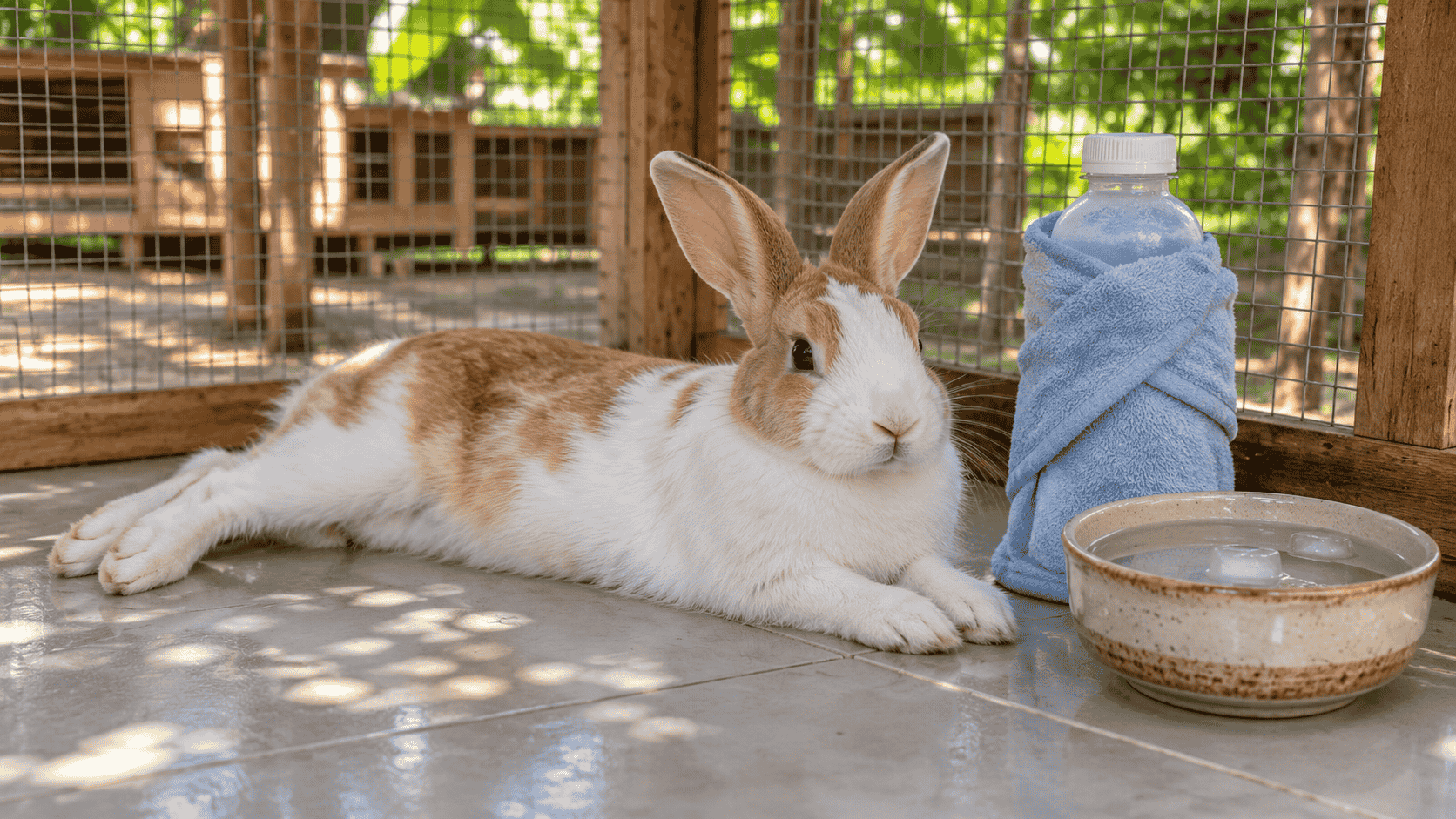
- Place cloth-wrapped frozen water bottles inside each enclosure: Fill sturdy 1.5-litre plastic water bottles three-quarters full with water (leaving room for ice expansion), freeze them solid overnight, wrap each bottle in a thin clean cotton sock or towel so bare skin does not get frostbite, and lay one bottle on the cage floor around 11:00 AM. Rabbits quickly learn to lean their belly, cheeks, or ears directly against the cool bottle. Keep a second set in the freezer so you can swap melted bottles at 3:00 PM.
- Provide smooth ceramic, granite, or marble resting tiles: Buy plain, unglazed or smooth ceramic floor tiles (30 cm x 30 cm) from any local building supplies shop. Stone and ceramic naturally pull body heat away from a rabbit’s belly and feet. On wire-bottom cages, ceramic tiles solve two problems at once by cooling the rabbit and preventing sore hocks. You can even chill spare tiles in the refrigerator for 30 minutes before rotating them in during peak afternoon heat.
- Offer cool water in heavy ceramic bowls: Rabbits drink up to twice as much water from a wide, heavy ceramic crock as they do from a metal sipper bottle. Refresh water twice a day (morning and midday) with cool (never icy) clean water, and drop one or two ice cubes into the bowl on scorching afternoons to keep the water refreshing.
- Create gentle indirect airflow with a fan: Position an oscillating standing fan or wall fan across the room or rabbitry aisle so it circulates fresh air smoothly past the enclosures without blasting directly into a rabbit’s eyes and ears. Placing a shallow tray of ice or a damp cotton sheet in front of the fan creates simple evaporative cooling in dry weather (though skip damp sheets when outdoor humidity already exceeds 75%).
- Dampen the outer ears gently with cool water: When a rabbit feels very warm around 2:00 PM, lightly stroke the outside of its ears with cool tap water using your fingertips or a damp cotton cloth. As water evaporates across the thin ear skin, it cools the blood vessels directly beneath. Never pour water into the ear canal (which triggers ear infections) and never soak the rabbit’s body fur.
- Hang damp cotton towels or jute sacks over shaded wire edges: In dry, breezy heat (such as northern Ghana or dry inland summer afternoons), hanging a dampened clean jute sack or cotton sheet on the windward side of a shaded hutch cools passing air through evaporation. Re-wet the cloth when it dries out, and remove it at nightfall so humidity does not linger.
- Brush out heavy shedding coats daily: Thick dead undercoat fur acts like a heavy winter blanket. Grooming your rabbit with a soft rubber brush or damp hands removes loose insulating hair quickly. For long-haired breeds like Angoras or Lionheads, carefully trim excess coat length (never shave down to bare skin, which risks sunburn and skin nicks) before hot weather begins.
- Serve moisture-rich, chilled safe leafy greens: Rinse safe leafy herbs and greens (such as coriander, parsley, romaine lettuce, or clean local leafy greens) in cool water and serve them slightly damp during warm afternoons to boost hydration gently without upsetting digestion.
- Move indoor rabbits to the lowest, coolest room: Heat rises. An upstairs bedroom or loft can be 5°C hotter than a shaded ground-floor hallway or tiled downstairs room. Close curtains or blinds on sun-facing windows before 10:00 AM to block solar gain.
- Use air conditioning sensibly when available: If you keep house rabbits in an air-conditioned room, set the thermostat to a steady, moderate 20°C to 24°C and keep the pen away from direct freezing vents. Avoid moving a rabbit repeatedly between a 19°C air-conditioned room and a 35°C outdoor yard, as sudden 15°C thermal shocks stress the respiratory tract.
Hot-Weather Hydration and Feeding Schedule Adjustments
Digesting dense feed produces metabolic heat inside the rabbit’s gut. Adjusting when and how you feed during hot spells keeps appetite steady and prevents secondary gastrointestinal stasis.
- Shift main pellet meals to cooler dawn and evening hours: Serve your rabbit’s measured high-fibre pellets and main wilted forage around 6:00 AM and again around 6:00 PM, when temperatures drop and rabbits are naturally eager to eat. Keep unlimited clean, dry grass hay available 24 hours a day.
- Avoid leaving wet greens to wilt and ferment in the heat: Uneaten damp leaves sitting inside a warm 32°C hutch spoil within two to three hours and attract flies. Offer modest portions that your rabbit finishes within 30 to 45 minutes, and remove leftovers promptly.
- Double-check water intake daily: A 3.5 kg rabbit that normally drinks 250 ml per day may drink 450 ml to 600 ml during hot weather (and a nursing doe can drink over 1 litre daily). Clean bowls and flush farm nipple-drinker pipes weekly so warm water does not grow slimy green algae that stops rabbits from drinking.
- Watch for heat-driven appetite loss: Mild midday laziness is normal when it is 30°C, yet your rabbit should still rush eagerly for evening pellets and hay once temperatures cool after sunset. If your rabbit refuses all food for 10 to 12 hours even after cooling down, treat it as urgent and follow our guide on what to do when your rabbit is not eating.
Protecting High-Risk Rabbits: Kits, Pregnant Does, Seniors, and Heavy Breeds
Not every rabbit handles warm weather equally. Give extra daily attention to these five vulnerable groups:
- Newborn baby rabbits (under 2 weeks old): Blind kits tucked deep under thick pulled fur inside a wooden nest box can suffocate or overheat rapidly on a 34°C afternoon. On hot afternoons, gently part the top layer of nest fur slightly so trapped heat escapes (leaving dry bedding underneath for cushioning), then tuck the fur back lightly at night. For full week-by-week nest temperature guidance, read our article on how to care for baby rabbits safely during their first 8 weeks.
- Pregnant does (days 20 to 31 of gestation): Heavily pregnant females carry high internal metabolic heat and are at extreme risk of fatal heatstroke or stillborn litters if temperatures exceed 32°C. Always prioritise shade, cool tiles, and frozen bottles for pregnant does, and avoid breeding altogether during the hottest peak weeks of the dry season if your housing lacks strong cooling.
- Breeding bucks (temporary heat sterility): Sustained temperatures above 30°C to 32°C impair sperm production in male rabbits, causing temporary infertility (“summer sterility”) that lasts 4 to 6 weeks even after cooler weather returns. Keeping buck cages cool preserves steady farm conception rates.
- Overweight, giant, and long-haired breeds: Heavy fat layers and thick wool trap internal heat. Keep heavy breeds like New Zealand Whites, Californians, and Flemish Giants on cool ceramic tiles and maintain an ideal Body Condition Score of 3/5.
- Senior rabbits (over 5 years old) and rabbits with respiratory or heart issues: Older rabbits regulate body temperature less efficiently and benefit most from indoor ground-floor placement during heatwaves.
Practical Heat Protection for Rabbit Keepers in Ghana
Across Ghana, especially during the dry season and hot transition months between November and April (when afternoon temperatures reach 33°C to 36°C in Accra, Kumasi, Takoradi, and Cape Coast and climb past 38°C to 41°C in Tamale, Bolgatanga, and Wa), heat management is a year-round farm survival skill.
- Build tall, open-sided thatch or insulated sheds for rabbitries: Traditional Ghanaian thatch (elephant grass or palm frond) roofs keep farm sheds 5°C to 8°C cooler than bare metal sheets. If you use Aluzinc or galvanised sheets for durability, build the shed ceiling at least 3 metres high with an open ridge vent at the peak so rising hot air vents straight out, and line the underside with bamboo mats or raffia.
- Use local cooling tiles and earthenware water pots: Terracotta clay water pots keep drinking water noticeably cooler than plastic bottles in direct tropical warmth. Similarly, leftover ceramic floor tiles bought cheaply from local hardware shops give every hutch compartment a permanent, zero-electricity cooling pad.
- Plan around power cuts (dumsor): Never rely solely on electric fans or air conditioning for an enclosed rabbit room. If power fails at 1:00 PM while you are away at work, an unventilated closed room turns lethal within two hours. Always pair electric cooling with passive protection: shaded windows with welded-wire breeze screens, insulated roofs, cool ceramic tiles, and two rotated frozen water bottles.
- Avoid midday transport and handling: Never transport rabbits in car boots or crowded vehicles between 10:00 AM and 4:00 PM. Schedule market pickups, veterinary trips, nail trims, and breeding transfers for early morning (6:00 AM to 8:00 AM) or late afternoon (5:00 PM to 6:30 PM), lining carriers with a damp chilled towel under a dry cotton cloth.
Recognising Rabbit Heatstroke Symptoms and Safe Emergency First Aid
Heatstroke (hyperthermia) progresses fast and can cause fatal organ failure within an hour if ignored. Learn the difference between early heat stress and full-blown heatstroke so you can act immediately.
| Stage | Warning Signs to Look For | Immediate Action |
|---|---|---|
| Early Heat Stress | Lying stretched out flat, bright pink warm ears, faster nasal breathing, resting quietly away from food | Move to deep shade or cooler room, offer cool water bowl, place cool ceramic tile and cloth-wrapped frozen bottle nearby, monitor every 30 minutes |
| Severe Heatstroke (Medical Emergency) | Rapid open-mouth panting, head thrown back gasping for air, hot dark-red ears, drooling and wet fur around mouth/nose, weakness, uncoordinated hopping, limp body, blue-tinged gums, or seizures | Begin gentle emergency cooling immediately AND contact a veterinarian urgently right away |
Step-by-Step Safe Emergency First Aid for Heatstroke
- Move your rabbit immediately to the coolest, quietest shaded or air-conditioned area available.
- Call your veterinarian right away (or have a family member call while you begin gentle cooling) to let them know you are coming in with a suspected heatstroke case.
- Cool gradually using cool (NEVER ice-cold) water: Gently stroke cool tap water (roughly 18°C to 22°C) onto the outer surfaces of both ears and dab cool damp cloths lightly onto the paws and groin area. Place a gently moving fan nearby to help evaporate moisture off the ears.
- Wrap a cool damp towel loosely beneath the rabbit (not tightly around its body, as wrapping traps heat inside) and offer small sips of cool water in a shallow dish if the rabbit is fully conscious and able to swallow. Never force water down the throat of a limp or semi-conscious rabbit.
- Transport straight to a veterinarian: Even if your rabbit seems to perk up after 15 minutes of cooling, severe heatstroke damages internal organs, triggers dangerous blood-clotting disorders, and causes delayed gastrointestinal stasis. A veterinarian will check core rectal temperature safely, administer cool subcutaneous or intravenous fluids, provide oxygen if needed, and monitor recovery.
For further veterinary-reviewed guidance on recognising heatstroke and protecting rabbits during heatwaves, you can consult the RSPCA advice on keeping rabbits safe in hot weather.
6 Dangerous Cooling Mistakes You Must Avoid
Panicking during a heatwave leads well-meaning owners to make fatal cooling errors. Avoid these six dangerous mistakes:
- Submerging a hot rabbit in cold water or ice water: Plunging an overheated rabbit into a bucket of cold water causes extreme panic, constricts surface blood vessels (which actually traps heat deeper inside vital organs), and can trigger fatal cardiac shock or rebound hypothermia. Always cool gradually via the outer ears and cool shaded air.
- Applying rubbing alcohol (surgical spirit) to rabbit ears: Outdated internet tips suggest wiping alcohol on rabbit ears for rapid evaporation. Rabbits groom their ears constantly and can ingest toxic alcohol, and strong alcohol fumes irritate delicate airways. Plain cool tap water works safely and effectively.
- Placing bare ice packs or unwrapped frozen bottles directly in the cage: Direct contact with bare frozen plastic or chemical gel packs can cause frostbite on thin skin, and chewing through a chemical blue ice pack causes severe poisoning. Always use plain frozen water inside tough plastic bottles wrapped in a clean cotton cloth.
- Pointing a high-speed fan directly into a rabbit’s face: Strong continuous wind blasts dry out rabbit eyes (causing painful corneal irritation) and chill nasal passages. Always aim fans to circulate air across the space gently so your rabbit can choose whether to sit in the light breeze or behind a shelter.
- Misting or spraying water heavily onto the rabbit’s back and hindquarters: Soaking a rabbit’s dense fur coat traps humid moisture against the skin, prevents cooling in high humidity, causes painful skin scald, and attracts blowflies within hours.
- Assuming indoor rabbits cannot get heatstroke: Rooms with closed curtains, no airflow, or sun beating through glass windows easily climb past 33°C during hot afternoons. Always monitor indoor room temperature at floor level.
Preventing Flystrike During Hot, Humid Weather
Hot weather brings a deadly secondary threat alongside heatstroke: flystrike (myiasis). Blowflies and houseflies thrive in temperatures above 25°C and lay clusters of tiny white eggs on damp, urine-soaked, or faeces-stained fur around a rabbit’s tail or on minor skin wounds. In warm tropical weather, those eggs hatch into flesh-eating maggots in under 12 hours, causing fatal toxic shock rapidly.
- Check your rabbit’s hindquarters twice daily (morning and evening) throughout hot weather, especially for overweight, senior, or heavy-breed rabbits.
- Remove soiled litter and manure daily so urine odours never draw flies to the enclosure.
- Fit fine insect mesh or mosquito netting over hutch fronts and rabbitry windows without blocking airflow.
- Treat visible maggots or fly eggs as an immediate life-threatening emergency: Take your rabbit straight to a veterinarian. Learn how to spot flystrike alongside other urgent seasonal illnesses in our complete guide to common rabbit diseases, symptoms, and emergency warning signs.
Frequently Asked Questions About Keeping Rabbits Cool
1. What temperature is too hot for rabbits?
Rabbits are most comfortable between 15°C and 22°C. Mild heat stress starts around 27°C to 28°C, and temperatures above 30°C (86°F) pose a serious risk of heat exhaustion and heatstroke, especially when combined with high humidity, direct sun, or poor ventilation.
2. How can I cool my rabbit down without electricity or air conditioning?
Place the hutch in 100% continuous deep shade with open welded-wire cross-ventilation, insulate beneath metal roofs with thatch or bamboo matting, place smooth ceramic floor tiles inside every compartment, provide cool water in heavy ceramic bowls or clay pots, brush out thick dead fur, and rotate cloth-wrapped frozen water bottles (prepared overnight or sourced from a local cold store during power cuts).
3. Is it safe to put ice cubes in my rabbit’s water bowl?
Yes. Dropping one or two clean ice cubes into a heavy ceramic water bowl during hot afternoons keeps water refreshingly cool and encourages drinking. Avoid making the water painfully freezing; lightly chilled water is best for sensitive stomachs.
4. Can I give my rabbit a bath to cool it down in hot weather?
No. Never submerge a rabbit in a tub or bucket of water to cool it down. Full-body baths cause extreme fear, trap heavy moisture inside dense fur, constrict surface blood vessels, and risk fatal shock. Instead, gently stroke plain cool tap water onto the outer surfaces of the ears.
5. Why is my rabbit eating less during hot afternoons?
Digesting food generates internal body heat, so rabbits naturally eat less during the hottest midday hours (11:00 AM to 4:00 PM) and rest stretched out flat. Shift main pellet and wilted forage meals to cooler early morning (6:00 AM) and evening (6:00 PM) hours. However, if your rabbit still refuses all food once temperatures cool at night, or goes 10 to 12 hours without eating or passing droppings, contact a veterinarian urgently.
6. Do frozen water bottles really help rabbits stay cool?
Yes. A frozen 1.5-litre water bottle wrapped in a thin cotton sock or towel provides a safe, affordable personal cooling zone for 3 to 5 hours. Most rabbits quickly learn to lie directly beside the wrapped bottle, resting their cheeks, belly, or ears against it to shed excess body heat.
7. Can rabbits tolerate fans in hot weather?
Yes, provided the fan is placed to circulate air gently across the room or rabbitry aisle rather than blasting directly into the rabbit’s face. Make sure your rabbit has a sheltered corner or hideout box so it can step out of the breeze whenever it wants, and keep all electrical fan cords completely out of chewing reach.
8. Should I breed rabbits during the hottest dry-season months in Ghana?
If your rabbitry temperatures regularly exceed 32°C to 34°C during peak dry-season months (February to April), pausing breeding or reducing mating frequency is often the smartest choice. High heat causes temporary buck infertility, increases the risk of fatal heatstroke in heavily pregnant does, and leads to higher newborn kit losses inside warm nest boxes.
Planning Ahead Keeps Your Rabbits Safe Year-Round
Keeping rabbits cool in hot weather works best when you prepare before temperatures peak rather than scrambling on a 36°C afternoon. Build your foundation on continuous deep shade, open wire cross-ventilation, insulated roofs with air gaps, and roomy cages that let rabbits stretch out fully.
Layer simple daily habits on top of good housing: smooth ceramic resting tiles, cloth-wrapped frozen water bottles rotated midday, cool water in heavy ceramic bowls refreshed twice daily, dawn-and-dusk feeding schedules, and twice-daily flystrike checks. Watch closely for early warning signs like hot bright-red ears or rapid breathing, act calmly with gradual outer-ear cooling if heat stress strikes, and contact a veterinarian immediately at any sign of heatstroke. Steady preparation keeps your rabbits comfortable, fertile, and safe through every hot season.
