

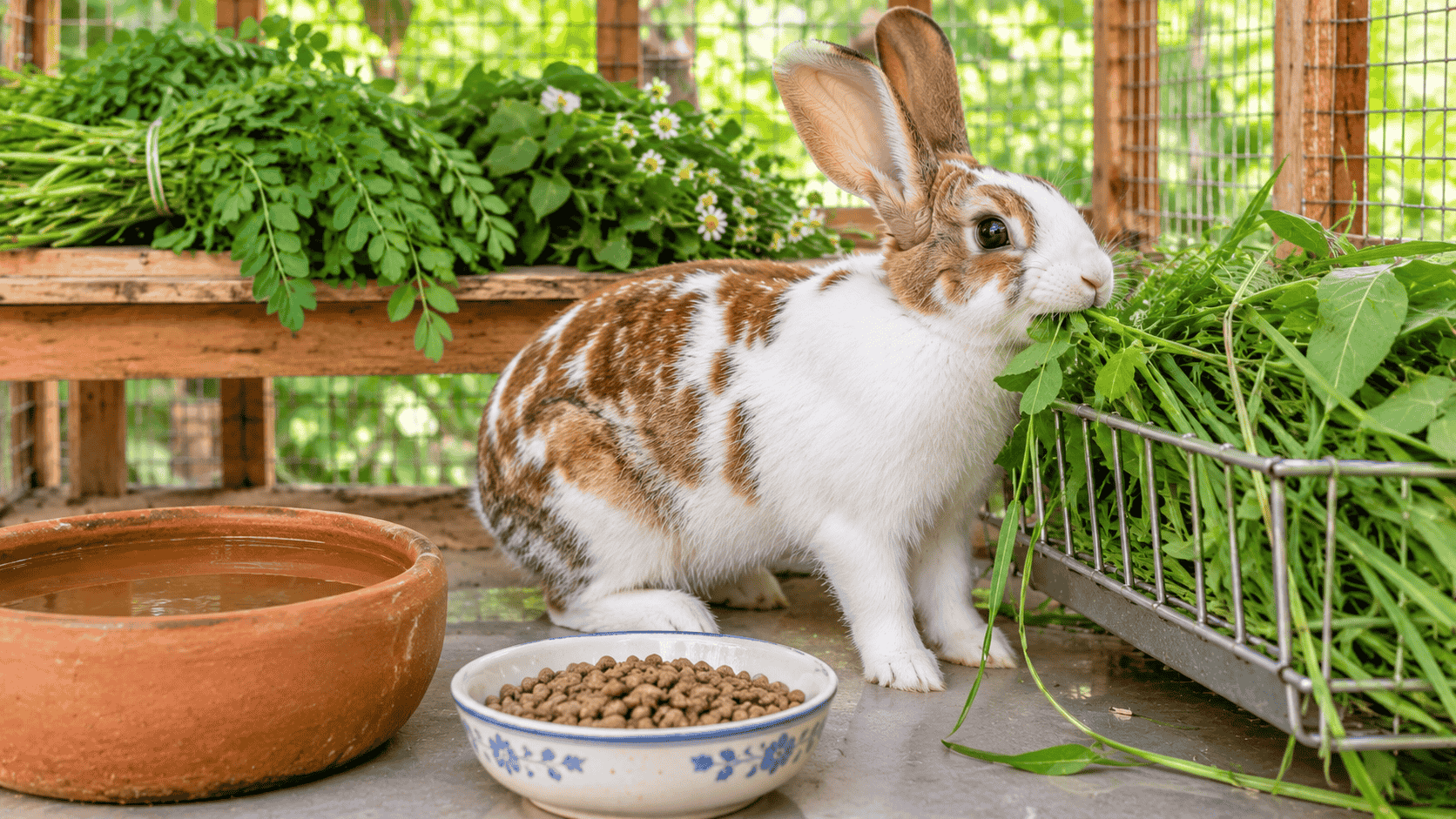
Knowing what do rabbits eat in Ghana lets you raise healthy, fast-growing rabbits without overspending on imported hay or expensive commercial feeds. Across Accra, Kumasi, Takoradi, Cape Coast, Sunyani, and Tamale, you already have access to abundant, nutrient-rich local grasses, browse leaves, farm by-products, and safe kitchen greens that match a rabbit’s natural high-fibre digestive system.
The biggest feeding challenge in Ghana is not a shortage of rabbit food; it is knowing which local plants are safe, how to prepare them properly to avoid bloating and diarrhoea, and how to balance free local forages with commercial pellets so your rabbits stay productive through both the rainy season and the dry season. Whether you keep two pet rabbits indoors or manage a 40-doe backyard rabbitry, this guide covers the core rules of rabbit nutrition, lists the best safe Ghanaian grasses, leaves, vegetables, and local concentrates, warns you about toxic local plants and kitchen scraps, explains how to wilt and store forage cleanly, and gives you a practical daily feeding plan.
How a Rabbit’s Digestive System Works (Why Fibre Comes First)
Rabbits are strict herbivores and hindgut fermenters. Unlike chickens or pigs, rabbits cannot thrive on starchy grains, kitchen leftovers, or heavy concentrates alone. Their digestive tract depends on a continuous flow of tough, indigestible long-stem fibre (such as dry grass hay or properly wilted fibrous grasses) for two life-saving reasons:
- Keeping the gut moving 24 hours a day: Long fibre stimulates natural wave-like contractions (peristalsis) in the stomach and intestines. Without enough crude fibre (at least 16% to 20% of the total diet), gut movement slows down, gas-producing bacteria multiply rapidly inside the caecum, and fatal gastrointestinal stasis or enterotoxaemia develops within 12 to 24 hours.
- Wearing down continuously growing teeth: A rabbit’s front incisors and back cheek teeth (molars) grow continuously throughout life. Chewing tough, fibrous grass stems side to side grinds teeth down evenly. Soft, starchy diets let sharp molar spurs grow into the tongue and cheeks, causing drooling, weight loss, and refusal to eat.
Rabbits also produce two types of droppings: normal dry, round faecal pellets and soft, glossy, berry-like clusters called caecotrophs. Rabbits eat caecotrophs directly from their bottom to absorb essential B vitamins, amino acids, and beneficial microbes. When a diet has too much starch or sugar (such as bread, banku, or excess fruit), caecal bacteria die off and smelly, unformed caecotrophs smear across the hutch floor.
The Ideal Diet Balance for Rabbits in Ghana
How you split roughage and concentrates depends on whether you keep companion house rabbits or raise commercial meat and breeding rabbits. Both systems rely on clean roughage as the foundation, paired with measured concentrates and constant fresh water.
| Diet Component | Pet / Resting Adult Rabbits | Breeding Does & Growing Fryers | Practical Ghanaian Examples |
|---|---|---|---|
| Dry Hay & Shade-Wilted Fibrous Grasses | 75% to 80% of daily intake | 50% to 60% of daily intake | Sun-cured guinea grass hay, shade-wilted guinea grass, elephant grass, Rhodes grass, clean dry lawn grass |
| Balanced Rabbit Pellets / Local Concentrates | 5% to 10% (measured strictly to prevent obesity) | 30% to 40% (for fast 10-to-12-week growth and strong milk yield) | Commercial high-fibre rabbit pellets (15% to 17% protein), or balanced wheat bran + palm kernel cake + soybean meal mix |
| Safe Leafy Greens & Protein-Rich Browse | 10% to 15% | 10% to 15% | Tridax procumbens, sweet potato vines, young moringa leaves, dandelion greens, pawpaw leaves, carrot tops |
| Safe Fruit Treats | Under 5% (tiny occasional pieces once or twice a week) | Optional / avoid for weaned kits under 12 weeks | Small slice of ripe pawpaw, watermelon rind, pineapple core, or mango peel (washed cleanly) |
| Clean Drinking Water | Unlimited 24/7 | Unlimited 24/7 (doubles during lactation and hot weather) | Cool, clean tap or borehole water in heavy ceramic bowls or clean nipple drinkers |
To dial in exact gram weights and tablespoons for newborn weanlings, pregnant does, and resting adults, check our life-stage charts in how much to feed a rabbit daily by age and weight.
Safe Local Grasses and Weeds Found Across Ghana
Fresh tropical grasses and common roadside weeds are the cheapest, most natural roughage available across Ghana. Because young green tropical grasses hold 75% to 85% water, always wilt them in the shade for 4 to 8 hours before serving so excess moisture does not trigger diarrhoea.
| Local Plant (Common & Botanical Name) | Local Ghanaian Context | Nutritional Strength | Feeding Guidance |
|---|---|---|---|
| Guinea Grass (Panicum maximum) | Widely abundant along fallow fields, farm edges, and southern/middle-belt plots | High digestible fibre and steady energy | Cut young-to-medium green stems before they turn woody; wilt in shade for 4 to 8 hours or sun-cure into dry hay |
| Coatbuttons / Tridax (Tridax procumbens) | One of the most popular wild rabbit weeds across Accra, Kumasi, and Cape Coast | Moderate protein, good minerals, very palatable | Harvest away from sprayed roadsides; rinse off dust and wilt lightly before feeding daily alongside grasses |
| Elephant Grass / Napier (Pennisetum purpureum) | Common near streams, valleys, and wet low-lying plots | High roughage and bulk fibre | Feed young tender leaves and thin shoots only; mature thick canes are too woody and low in protein |
| Tropical Dandelion / Wild Lettuce (Launaea taraxacifolia) | Known locally as nyanya or wild lettuce in southern Ghana | Rich in vitamins, fibre, and trace minerals | Feed washed and wilted in moderate portions mixed with other grasses |
| Centro (Centrosema pubescens) | Trailing green legume vine found on fallow farmland across southern and central Ghana | High plant protein (18% to 22% dry matter) | Excellent protein booster for nursing does and growing kits; wilt thoroughly and mix with grass |
| Gamba Grass / Rhodes Grass (Andropogon gayanus / Chloris gayana) | Common in savannah and northern Ghana (Tamale, Bolgatanga, Wa) | Reliable fibrous roughage | Harvest before flowering stage and cure into dry hay stacks for dry-season feeding |
For a wider botanical directory of safe wild grasses, legumes, and poisonous weeds to avoid while harvesting, read our guide to the best grasses and leaves for rabbits and unsafe plants.
Safe Tree Leaves, Shrubs, and Farm Crop Vines
Tree leaves and crop residues shine during Ghana’s dry season (November to March) when open grasses turn dry and brown. Many tropical browse leaves contain 16% to 28% crude protein on a dry-matter basis, helping you cut commercial pellet costs safely when fed in balanced combinations.
- Sweet potato vines (Ipomoea batatas): One of the single best rabbit forages in Ghana. Rabbits love both the leaves and trailing stems, which supply strong protein and energy for lactating does and weaned growers. Rinse off soil and wilt in the shade for 4 to 6 hours.
- Moringa leaves (Moringa oleifera): Packed with crude protein (often 22% to 26% dry matter), calcium, and vitamins. Feed fresh wilted moringa or dried moringa leaf meal as a supplement (10% to 20% of the forage mix) rather than the sole feed, as very high calcium levels can cause chalky white urine sludge in resting adult pets.
- Pawpaw (papaya) leaves (Carica papaya): Safe and widely used in Ghanaian rabbitries when wilted properly. Offer moderate amounts mixed with grass hay.
- Plantain and banana leaves (Musa species): Safe fibrous roughage that rabbits enjoy chewing, especially during dry months. Rinse off dust and cut into manageable strips.
- Cassava leaves (Manihot esculenta) (Strict preparation required): Fresh raw cassava leaves contain cyanogenic glycosides that release toxic hydrogen cyanide if fed straight off the plant. You must wilt cassava leaves thoroughly in the shade or dry them in the sun for at least 24 to 48 hours before feeding in modest quantities alongside other roughage. Never feed fresh, unwilted cassava leaves or raw cassava peels. Get exact safety rules for all three leaves in our detailed guide on whether rabbits can eat cassava leaves, pawpaw leaves, and banana leaves.
- Gliricidia (Gliricidia sepium) and Leucaena (Leucaena leucocephala): Both are high-protein tropical fodder trees grown across Ghana. Wilt Gliricidia for 12 to 24 hours to improve palatability. Limit Leucaena strictly to no more than 10% to 15% of the diet, because Leucaena contains mimosine, a natural compound that causes hair loss and poor growth if overfed.
- Groundnut haulms (peanut vines) and cowpea vines: Sun-dried groundnut and cowpea leaves left over after harvest make nutritious dry-season legume hay. Inspect closely for dark mould before feeding, as damp groundnut hay grows deadly aflatoxins rapidly.
Safe Ghanaian Vegetables, Herbs, and Occasional Fruits
Fresh market greens and herbs make wonderful daily hydration and enrichment for pet rabbits and backyard stock. Always wash market produce thoroughly in clean water to remove pesticide residues, introduce one new vegetable at a time over 3 to 5 days, and avoid feeding fresh watery greens to kits under 12 weeks old.
Safe Daily Leafy Greens and Herbs
- Coriander (dhania), parsley, mint, and basil: Aromatic, vitamin-rich herbs that almost every rabbit loves and that work brilliantly as healthy bonding treats.
- Kontomire (cocoyam / taro leaves): Avoid feeding raw kontomire to rabbits. Raw cocoyam leaves contain sharp calcium oxalate crystals that burn the mouth and throat and irritate the kidneys. Stick to safer leafy greens instead.
- Carrot tops (green leafy stems): Far healthier for rabbits than the sugary orange carrot root itself.
- Romaine lettuce, green leaf lettuce, and bok choy: Safe hydrating greens (never feed pale iceberg lettuce, which has minimal nutrients and contains lactucarium that can cause loose stools).
- Cabbage, cauliflower leaves, and kale (in small amounts only): Safe in modest portions for adult rabbits accustomed to greens, yet feeding large piles of wet market cabbage leaves causes painful gas buildup and bloating. Keep cruciferous leaves under 10% to 15% of the green mix.
- Okra leaves and young green bean pods (washed): Safe occasional additions in small quantities.
Safe Occasional Fruit Treats (Strictly Limited)
Fruits are high in natural sugar. Too much sugar kills beneficial fibre-digesting bacteria in the caecum and triggers soft stools or GI stasis. For an adult rabbit, limit fruit to one small thumbnail-sized piece once or twice a week:
- Ripe pawpaw (remove seeds)
- Watermelon (small piece of flesh or well-washed green rind, seeds removed)
- Pineapple or mango (tiny piece, skin and pit removed)
- Banana (one thin 5 mm slice only; very high in sugar and starch)
- Guava or apple (seeds removed, as apple seeds contain trace cyanide compounds)
Commercial Rabbit Pellets and Local Ghanaian Feed Ingredients
While pet rabbits thrive on 80% dry grass hay plus a small measured portion of plain pellets, commercial breeding does and growing meat fryers in Ghana need concentrated protein, energy, and balanced minerals to reach 2.2 kg to 2.5 kg by 12 weeks.
Choosing Good Commercial Rabbit Pellets
When buying bagged rabbit pellets from agricultural feed suppliers in Accra, Kumasi, or Techiman, check the nutrient tag and inspect the pellets closely before paying:
- Target nutrient levels: Look for plain, uniform extruded pellets containing 15% to 17% crude protein (for growers and breeding does) or 13% to 14% crude protein (for resting adult pets), at least 16% to 20% crude fibre, and 2% to 4% fat.
- Avoid colourful muesli mixes: Mixes filled with dried maize kernels, coloured biscuits, and seeds encourage selective feeding, where rabbits pick out sugary starch pieces and leave the healthy fibre pellets behind, leading straight to obesity and dental disease.
- Smell and texture test: Fresh pellets are firm, dry, and smell faintly like sweet grass or toasted bran. Reject any bag that smells sour or musty, feels warm or damp, or crumbles into fine dust, as humid Ghanaian storage breeds invisible liver-destroying mycotoxins (aflatoxins).
Common Local Concentrate Ingredients Used on Ghanaian Farms
Experienced Ghanaian farmers who formulate supplementary dry mash or homemade pellets commonly blend local agro-by-products alongside unlimited dry grass hay:
- Wheat bran (widely available from flour mills in Tema and Takoradi): High in fibre and moderate protein (15% to 16%); serves as a staple base in many local rabbit rations.
- Palm kernel cake (PKC): Affordable local energy and fibre source; keep inclusion moderate (15% to 25% of concentrate mix) and verify it is fresh and free of rancid odour.
- Soybean meal or roasted groundnut cake: High-protein boosters (40% to 45% crude protein) needed in small percentages to support nursing does and fast fryer growth.
- Brewers’ spent grain (pito mash or brewery grain, dried only): Nutritious fibre and protein source once thoroughly sun-dried. Never feed wet, sour, fermenting spent grain, as fermented mash causes rapid fatal bloating.
- Oyster shell / dicalcium phosphate and plain salt premix: Supplies essential calcium, phosphorus, and trace minerals (keep dietary salt near 0.5% of the concentrate mix).
Important note on dry mash: If you feed a loose dry powder mix (such as wheat bran and soybean meal) instead of compressed pellets, lightly dampen it with just enough clean water to form a crumbly, non-dusty texture right before serving (never soupy) so rabbits do not inhale fine bran dust into their lungs. Remove any uneaten damp mash within 2 hours so it never sours in tropical heat.
For further peer-reviewed research on tropical rabbit nutrition, forage digestibility, and balanced local feed formulation, you can consult the Food and Agriculture Organization (FAO) tropical rabbit feeding and nutrition manual.
Dangerous and Toxic Local Foods Rabbits Must Never Eat
Many common Ghanaian household foods, kitchen scraps, and garden plants are strictly poisonous or mechanically dangerous to rabbits. Keep every item in the table below completely out of your rabbitry.
| Unsafe Food or Plant | Why It Is Dangerous to Rabbits |
|---|---|
| Avocado (fruit, leaves, skin, and pit) | Contains persin, a toxin that causes severe heart failure, breathing difficulty, and sudden death in rabbits |
| Onions, garlic, shallots, and spring onions | Contain sulphur compounds that destroy rabbit red blood cells, causing haemolytic anaemia |
| Raw cassava roots, raw cassava peels, and fresh unwilted cassava leaves | High levels of cyanogenic glycosides release lethal cyanide in the digestive tract (leaves must be thoroughly wilted/dried 24 to 48 hours first) |
| Irish potatoes, raw yam peels, and tomato/pepper/garden-egg leaves | Nightshade plants (Solanaceae) contain toxic solanine alkaloids, and raw potato/yam starch triggers lethal caecal fermentation |
| Banku, kenkey, fufu, gari, rice, bread, biscuits, and pasta | Pure processed starch destroys beneficial gut bacteria and triggers fatal enterotoxaemia and painful gas stasis |
| Raw kontomire (cocoyam / taro leaves) | Packed with needle-like calcium oxalate crystals that burn oral membranes and damage kidneys |
| Milk, yoghurt, meat, fish, eggs, and cooked oily stews | Rabbits are strict herbivores and cannot digest animal protein, lactose, or cooking oils |
| Chocolate, coffee, tea leaves, and sugary soft drinks | Contain theobromine and caffeine, which cause seizures, heart arrhythmia, and death |
| Ornamental garden plants (oleander, milkweed, dieffenbachia, lantana, castor bean) | Highly toxic sap and alkaloids; castor bean seeds (ricin) and oleander leaves are fatal even in tiny doses |
| Poultry layer mash or medicated broiler feed | Formulated with high starch, animal by-products, and poultry anticoccidials (such as ionophores like monensin or salinomycin) that are strictly fatal to rabbits |
How to Harvest, Wash, and Wilt Local Forage Safely (Step by Step)
Even the safest local plant like guinea grass or Tridax procumbens can kill a rabbit if harvested from the wrong spot or fed soaking wet. Follow this five-step forage preparation routine every day:
- Harvest from clean, uncontaminated zones: Never cut grass along busy paved roads (heavy vehicle exhaust lead and dust), near gutters or open drains, inside fields recently sprayed with chemical weedkillers (herbicides like glyphosate or paraquat), or in areas frequented by stray dogs, goats, or wild rabbits (which spread parasites and viral RHD).
- Cut mid-morning after heavy dew evaporates: Dew-soaked grass harvested at 6:00 AM holds excess surface water and ferments rapidly when stacked in sacks.
- Rinse dusty leaves cleanly: During the dusty Harmattan season (December to February), swish harvested leaves briefly in a basin of clean water to remove grit and dust, then shake off excess droplets.
- Wilt in open shade on a raised rack for 4 to 8 hours: Spread cut grasses and leaves in a thin layer across a clean wire mesh drying table, bamboo mat, or raised wooden rack out of direct scorching sun. Wilting drops water content slightly, prevents gas bloating, and preserves green vitamins. Never leave wet grass stuffed inside a closed plastic sack, because enclosed wet grass heats up, ferments within hours, and causes deadly bloat.
- Serve inside raised hay racks (never on the floor): Hang wilted forage in wire hay racks or tie clean bundles above shoulder height so rabbits eat clean leaves without trampling them into urine and faeces.
Managing Seasonal Feeding: Rainy Season vs. Dry Season in Ghana
Ghana’s two distinct weather patterns require shifting your forage strategy smoothly so your rabbits never face sudden dietary shocks.
Rainy Season Feeding (April to July and September to October)
- Watch moisture levels strictly: Lush rainy-season grasses are very high in water and low in dry matter. Always wilt cut grass longer (6 to 10 hours under a covered shed) and pair it daily with crisp dry hay or dry commercial pellets so young kits do not develop watery stools.
- Protect bagged pellets from humidity and mould: Store commercial pellets inside heavy airtight plastic drums raised off concrete floors on wooden pallets. Buy smaller 2 to 3 week supplies rather than stockpiling for months in damp weather.
Dry Season Feeding (November to March)
- Cure and stockpile dry grass hay ahead of time: Harvest abundant young green guinea grass, Rhodes grass, or elephant grass leaves at the end of the rainy season (October), sun-dry them cleanly on raised tarpaulins until stems snap crisply without feeling damp, and store dry hay in breathable woven sacks inside a dry roofed store.
- Shift to deep-rooted drought-tolerant browse: Rely more heavily on shade-wilted sweet potato vines, moringa leaves, plantain leaves, dried groundnut haulms, and balanced commercial pellets when roadside grasses turn brown and woody.
- Adjust feeding times for heat: Serve main pellet and forage rations during cooler early morning (6:00 AM) and evening (6:00 PM) hours when rabbits eat most eagerly. Build a consistent morning-and-evening routine using our rabbit feeding schedule and daily nutrition guide.
Clean Water: The Most Overlooked Part of Rabbit Nutrition
Dry hay, wilted grasses, and commercial pellets cannot move smoothly through a rabbit’s gut without abundant fresh water. A rabbit deprived of water stops eating dry feed within hours, triggering rapid gastrointestinal stasis.
- Daily volume: Expect a 3.5 kg to 4.5 kg adult rabbit in Ghana’s warm climate to drink 250 ml to 500 ml of water daily, climbing to 600 ml to 1,200 ml for a nursing doe with a large litter.
- Best containers: Heavy earthenware clay bowls (which naturally keep water cool in warm weather) or wide ceramic crocks encourage far higher water intake than small ball-bearing bottles. On larger farms using automatic nipple drinkers, flush overhead header tanks and pipes weekly to clear warm-weather algae and check every metal nipple daily for clogs.
- Never rely on “wet greens alone” for hydration: An old backyard myth claims rabbits eating fresh leaves do not need drinking water. In reality, skipping drinking water causes chronic dehydration, bladder sludge, low milk production, and slow growth. Provide clean, cool water 24 hours a day.
7 Common Rabbit Feeding Mistakes in Ghana
Correcting these seven everyday errors prevents most nutrition-related deaths on Ghanaian backyard farms and in homes:
- Feeding leftover poultry feed to rabbits: Commercial broiler and layer feeds often contain poultry coccidiostats (ionophores) that are acutely toxic and fatal to rabbits, alongside excess starch and animal protein. Only feed dedicated rabbit pellets or safe herbivore ingredients.
- Feeding freshly cut, wet, dew-soaked grass straight from the bush: Wet, fermenting grass causes severe caecal bloating and watery diarrhoea within hours, especially in weaned kits aged 4 to 12 weeks.
- Dumping grass and pellets directly onto the cage floor: Food placed on bare floors mixes immediately with faecal pellets and urine, spreading fatal intestinal coccidiosis across your entire herd.
- Feeding starchy human kitchen scraps (banku, bread, rice, yam peels): Rabbits happily nibble bread or banku if offered, yet processed starch destroys gut flora and triggers deadly enterotoxaemia.
- Switching feeds abruptly when pellets run out: Running out of commercial pellets and suddenly feeding 100% unfamiliar leaves for three days shocks caecal bacteria. Always keep a reserve buffer of dry hay and transition every feed change slowly over 5 to 7 days.
- Feeding fresh unwilted cassava leaves: Raw cassava foliage contains toxic cyanide precursors; always wilt or sun-dry thoroughly for 24 to 48 hours first.
- Overfeeding carrots, cabbage, and sweet fruits to pet rabbits: Cartoons show rabbits eating piles of carrots, yet carrots are high in sugar and should be treated only as a small occasional snack, never a staple meal.
Digestive Warning Signs and When to Call a Veterinarian
Monitor your rabbit’s appetite and droppings every morning during feeding time. Healthy adult rabbits produce 200 to 300 firm, round, dry, golden-brown pellets daily. Contact a qualified veterinarian or your District Veterinary Officer (Ministry of Food and Agriculture) promptly if you observe any of these feeding-related red flags:
- Refusing all food or passing zero droppings for 10 to 12 hours (treat as an immediate medical emergency; review urgent steps in why your rabbit is not eating and what to do).
- Watery, foul-smelling, mucus-coated, or bloody diarrhoea (immediate emergency, especially in weaned kits aged 4 to 12 weeks).
- A hard, drum-like bloated belly, hunched rigid sitting posture, or loud harsh tooth grinding.
- Frequent soft, smelly caecotrophs smeared across the cage floor or stuck to the tail fur (signals excess starch/sugar or too little roughage).
- Drooling, wet chin fur, or dropping chewed pellets (classic sign of painful molar spurs caused by low-fibre diets).
Frequently Asked Questions About What Rabbits Eat in Ghana
1. What is the best local food for rabbits in Ghana?
The best everyday local foundation combines clean, shade-wilted fibrous grasses (especially guinea grass, Tridax procumbens, and young elephant grass) with nutrient-rich sweet potato vines, moderate moringa leaves, a measured daily ration of high-fibre commercial rabbit pellets (or balanced wheat bran mix), and unlimited clean drinking water.
2. Can rabbits eat only grass in Ghana without commercial pellets?
Resting adult pet rabbits can survive on a very diverse mix of high-quality dry grass hay plus varied safe weeds and protein-rich leaves, though relying on poor roadside grass alone often leads to vitamin, mineral, and protein deficiencies. For breeding does, nursing mothers, and fast-growing meat fryers, pairing clean wilted grasses with balanced commercial pellets (or a properly formulated local concentrate mix) is essential for healthy litters and strong 12-week market weights.
3. Why must I wilt fresh grass before feeding it to rabbits?
Freshly cut tropical grass contains high surface dew and internal moisture (up to 85% water). Feeding heavy piles of wet grass straight off the field frequently causes painful gas bloating and diarrhoea in rabbits. Spreading cut grass in the shade for 4 to 8 hours lowers excess moisture while keeping fibre and nutrients intact.
4. Can rabbits eat pawpaw, banana, and cassava leaves in Ghana?
Yes, with proper preparation. Shade-wilted pawpaw leaves and clean banana or plantain leaves are safe fibrous additions in moderate quantities. Cassava leaves contain natural cyanide compounds when fresh, so they must always be thoroughly wilted or sun-dried for 24 to 48 hours before feeding in modest amounts mixed with other grasses.
5. Can I feed poultry feed (broiler or layer mash) to my rabbits?
No. Never feed poultry feed to rabbits. Commercial poultry feeds are too low in fibre, too high in starch, often contain animal by-products, and frequently contain poultry coccidiostat medications (ionophores) that are strictly toxic and fatal to rabbits.
6. Can rabbits eat kontomire (cocoyam leaves) or yam peels?
No. Raw kontomire (cocoyam/taro leaves) contains sharp calcium oxalate crystals that irritate a rabbit’s mouth, throat, and kidneys. Raw yam peels and Irish potato peels contain excessive starch and toxic compounds that cause fatal digestive upset. Keep both strictly out of your rabbitry.
7. Do rabbits in Ghana need drinking water if they eat fresh green leaves?
Yes. Every rabbit needs unlimited access to clean, cool drinking water 24 hours a day regardless of how many fresh leaves it eats. In Ghana’s warm climate, adult rabbits drink 250 ml to 500 ml daily, and nursing does drink up to 1.2 litres daily.
8. What can I feed rabbits during Ghana’s dry season when green grass is scarce?
Prepare ahead by sun-curing abundant young guinea grass or Rhodes grass into dry hay stacks in October before the rains end. During November to March, combine stored dry hay with drought-tolerant local leaves (sweet potato vines, moringa, plantain leaves, thoroughly dried cassava leaves, and clean sun-dried groundnut haulms) alongside mould-free commercial rabbit pellets.
Building a Reliable, Low-Cost Ghanaian Rabbit Diet
Feeding rabbits well in Ghana does not require expensive imported pet-store hay. Build every meal around clean, high-fibre roughage: harvest uncontaminated guinea grass, Tridax procumbens, sweet potato vines, and safe local leaves, wash off Harmattan dust, wilt them neatly in the shade for 4 to 8 hours, and serve them in raised racks well off the cage floor.
Pair that daily forage with a measured ration of mould-free high-fibre rabbit pellets tailored to each rabbit’s life stage, keep cool clean water available 24 hours a day, and keep toxic foods like avocado, raw cassava, kontomire, banku, and poultry mash strictly out of reach. When you match Ghana’s abundant local plants to your rabbit’s natural high-fibre digestive system, you lower feed costs while raising healthier, faster-growing rabbits all year long.
