

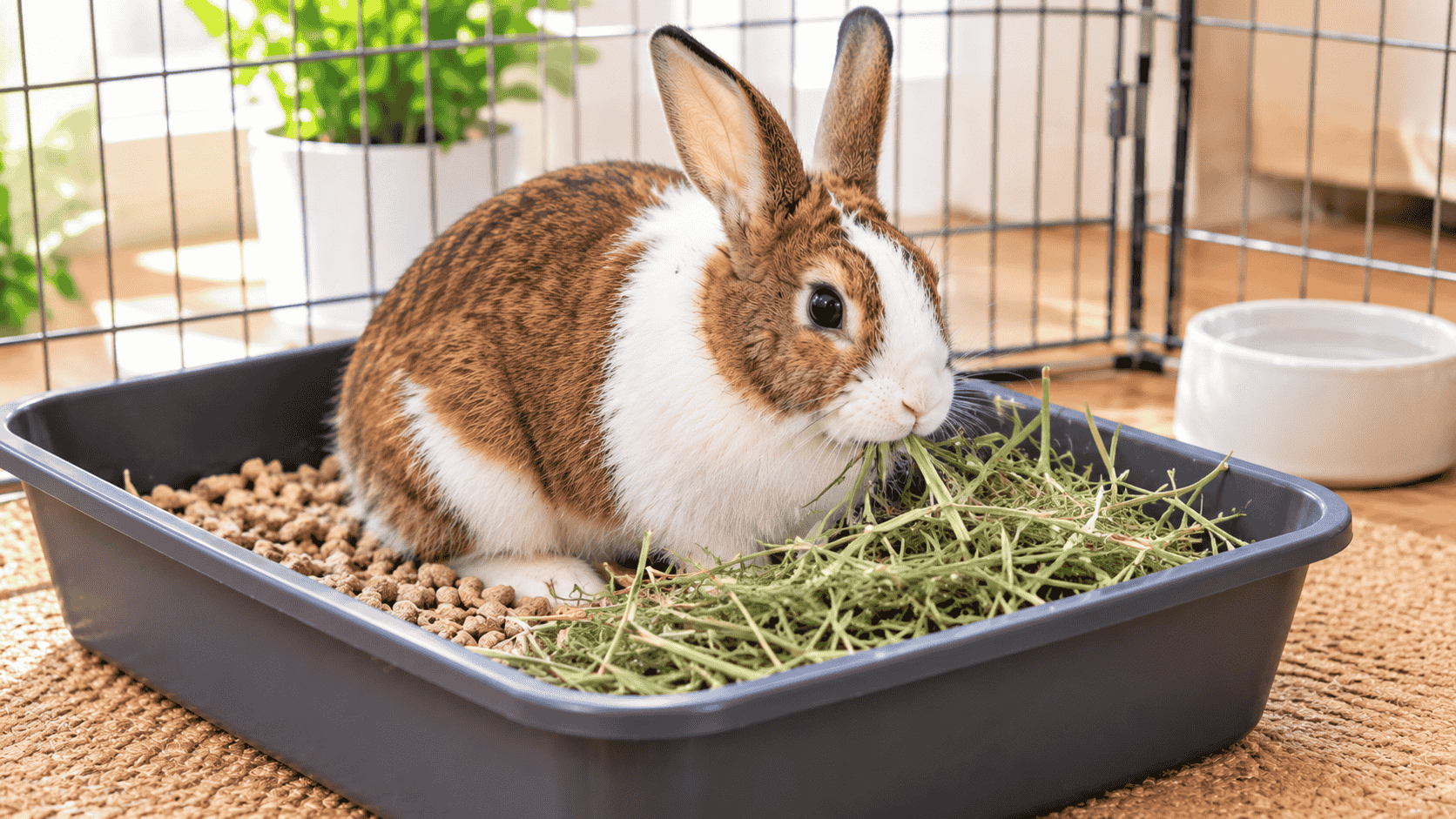
Learning how to litter train a rabbit is easier than most beginners expect. Rabbits are naturally clean animals that instinctively pick one or two corners of their territory as a toilet area. Unlike dogs, rabbits do not need complex commands or strict schedules to learn where to go. Instead, successful litter training relies on working with your rabbit’s natural habits: placing a large, comfortable litter tray in the corner your rabbit already chooses, filling it with safe absorbent litter and plenty of fresh hay, and keeping the training space small until good habits stick.
Whether you keep a house rabbit indoors in Accra, manage a balcony pen in Kumasi, or care for free-roaming pet rabbits in the UK, litter training cuts daily cleaning time, eliminates strong urine smells, and makes it simple to monitor your rabbit’s digestive health every day. This step-by-step beginner’s guide walks you through choosing the right box and safe litter, setting up a hay-powered toilet station, following a clear 14-day training plan, understanding why neutering matters, solving common accidents, and adapting litter training for warm Ghanaian homes.
Can Any Rabbit Be Litter Trained?
Yes. Almost every domestic rabbit can be litter trained for urination, and most will deposit 85% to 95% of their faecal pellets inside the tray as well. Age, breed, and whether the rabbit is spayed or neutered influence how quickly the habit forms, though patience and the right setup work for every breed.
- Adult spayed or neutered rabbits: Usually learn the fastest, often using a litter tray reliably within 7 to 14 days because hormonal territorial marking has settled down.
- Young rabbits (8 to 16 weeks old): Pick up the basics quickly, though their shorter attention spans mean they need a slightly smaller play area and an extra tray nearby until they mature.
- Unneutered teenage rabbits (3 to 6 months old): Often experience a temporary regression when hormones surge. They may spray urine or leave scattered territorial droppings around the edges of their pen until they are neutered or reach stable adulthood.
- Older rabbits adopted from hutches: Even a four-year-old rabbit that lived in a backyard hutch its whole life can learn to use an indoor litter box within two to three weeks once you pair the box with fresh hay.
Keep realistic expectations about dry faecal pellets. Even a fully litter-trained rabbit will occasionally leave two or three dry, odourless “territorial poops” near a doorway, sofa leg, or new piece of furniture. Sweeping up a few stray dry pellets is completely normal; true litter training success means 100% of urine and the vast majority of droppings go cleanly into the tray.
The Golden Rule: Why Rabbits Eat Hay and Poop at the Same Time
If you remember only one principle about litter training a rabbit, make it this: rabbits love to munch hay while they urinate and defecate. As prey animals with continuously moving digestive tracts, rabbits graze while relieving themselves. Placing fresh grass hay directly inside one end of the litter tray (or hanging a hay rack right above the back edge of the tray) turns the litter box into your rabbit’s favourite place to sit.
Do not worry about hygiene when putting hay in the litter box. Rabbits are smart eaters: they sit facing the clean hay pile, nibble from the front, and drop urine and faecal pellets behind them at the opposite end of the tray. Refreshing the clean hay pile twice a day keeps the box inviting and guarantees your rabbit eats plenty of high-fibre roughage while reinforcing the toilet habit every single hour.
Choosing the Right Rabbit Litter Box
The number one reason litter training fails is using a tiny, cramped corner tray sold in pet shops for hamsters or ferrets. Rabbits need enough space to hop completely inside, turn around comfortably, stretch out slightly while eating hay, and keep their rear end well inside the rim so urine does not shoot over the edge.
Recommended Litter Box Sizes
- Small breeds (under 2 kg, such as Netherland Dwarfs or Mini Rex): At least 40 cm long by 30 cm wide.
- Medium breeds (2 kg to 4 kg, such as Dutch, English Spot, or local crosses): A standard medium-to-large rectangular cat litter tray measuring at least 48 cm long by 36 cm wide.
- Large breeds (over 4 kg, such as New Zealand Whites, Californians, or Flemish Giants) or bonded pairs: An extra-large cat litter tray or a sturdy plastic under-bed storage tub measuring at least 55 cm to 65 cm long by 40 cm wide.
Key Design Features to Look For
- Low entry side, higher back walls: A wall height of 12 cm to 16 cm stops urine splashes over the back edge while remaining easy for young or senior arthritic rabbits to hop into. If you buy a tall storage tub, you can carefully cut a smooth U-shaped doorway on one side and sand the edges completely smooth.
- Open top (no hood or swinging flap): Covered hooded cat boxes trap ammonia fumes inside, which burns a rabbit’s sensitive respiratory tract and discourages use. Rabbits also prefer clear sightlines so they can watch for danger while sitting in the box.
- No harsh bare wire grids: Avoid metal wire grates with thin bars that press into a rabbit’s fur-covered heels and trigger painful sore hocks. If you want a raised grid to keep paws dry, use only wide, smooth, slotted plastic bunny mats designed specifically for rabbit feet, topped with a generous layer of soft hay.
Safe vs. Unsafe Rabbit Litter Materials
Rabbits sniff, dig, and sometimes nibble their litter while sitting in the tray. Choosing the wrong litter material can cause fatal stomach blockages or severe respiratory irritation. Never use standard clumping clay cat litter, scented crystal litter, or aromatic softwood shavings.
| Litter Material | Safety Rating | Odour Control & Absorbency | Notes for Rabbit Owners |
|---|---|---|---|
| Unscented recycled paper pellets | Safe (Excellent) | High absorbency, strong odour control, very low dust | Soft on feet and safe if a rabbit accidentally nibbles a pellet; ideal for indoor house rabbits |
| Kiln-dried wood stove pellets (unscented) | Safe (Excellent & Low Cost) | Very high absorbency; breaks down into sawdust when wet and traps ammonia well | Must be 100% pure untreated wood with no chemical accelerants or glues; cover with a thick layer of hay for foot comfort |
| Aspen wood shavings | Safe (Good) | Moderate absorbency and odour control | Hardwood shaving free of toxic aromatic phenols; dustier than pellets |
| Clean wheat or oat straw / dry grass hay | Safe (Top Layer) | Low urine absorption on its own | Works best as a soft, dry top layer over absorbent paper or wood pellets; keeps paws clean and encourages grazing |
| Plain shredded newspaper (soy-based ink) | Safe (Budget Liner) | Low to moderate absorbency | Useful as a base layer under straw or pellets; must be changed daily so urine does not pool |
| Clumping clay cat litter | Dangerous (Never Use) | Clumps into hard cement when wet | Causes fatal gastrointestinal blockages if swallowed during grooming or digging; heavy clay dust harms rabbit lungs |
| Pine or cedar wood shavings | Unsafe (Avoid) | Strong wood smell masks urine temporarily | Releases volatile aromatic phenols that irritate airways and can stress liver enzymes over time |
| Scented or baking-soda crystal litters | Unsafe (Avoid) | Artificial fragrances | Irritates delicate nasal passages and encourages rabbits to avoid the litter box completely |
For a closer look at safe absorbent bases and soft top layers for both indoor pens and outdoor hutches, read our complete guide on the best rabbit bedding materials for safety and hygiene.
How to Litter Train a Rabbit: 7-Step Beginner’s Guide
Follow these seven steps in order. Rushing straight to full-room freedom on day one is the most common reason beginners struggle.
Step 1: Start With a Contained Training Space
Begin in a manageable, rabbit-proofed enclosure such as a spacious exercise pen (roughly 1.2 m by 1.2 m to 1.8 m by 1.2 m) or a properly sized indoor cage. Giving a brand-new rabbit immediate access to an entire house or large living room overwhelms its sense of territory, causing it to mark multiple corners. Make sure your base setup still meets healthy welfare minimums by checking our guide on the best rabbit cage size and space requirements.
Step 2: Watch Where Your Rabbit Naturally Chooses to Pee
During the first 24 hours, observe which corner of the enclosure your rabbit uses most often for urination. Rabbits strongly prefer quiet, sheltered corners away from their main sleeping spot. Instead of fighting your rabbit’s preference, put the litter box right in the exact corner your rabbit already picked.
Step 3: Build a Layered, Hay-Powered Litter Box
Set up the tray in three quick layers:
- Base layer (optional): Two sheets of plain newspaper to make dumping soiled litter effortless.
- Absorbent middle layer: 2 cm to 3 cm of unscented paper pellets or kiln-dried untreated wood pellets.
- Inviting top layer: A generous handful of fresh, fragrant grass hay piled at one end of the box (or placed in a hay rack mounted directly over the tray). Keep hay out of the rest of the enclosure during the initial training week so your rabbit learns to hop into the tray whenever it wants to graze.
Step 4: Transfer Early Accidents Straight Into the Box
Whenever your rabbit urinates outside the tray, soak up the urine with a plain paper towel and place that urine-soaked tissue inside the litter box. Sweep up any stray faecal pellets and drop them into the tray too. Rabbits rely heavily on scent to recognise their toilet area. Smelling their own urine and droppings inside the box tells them clearly where to go next time.
Step 5: Neutralise Accident Spots Completely
Immediately wipe down the floor where the accident happened using a 50/50 mix of plain white vinegar and water (followed by a clean damp cloth). Never use harsh ammonia-based household cleaners, because ammonia smells just like rabbit urine and actually encourages your rabbit to pee in that exact spot again.
Step 6: Reward Good Behaviour and Never Punish
If you catch your rabbit lifting its tail outside the box, stay calm. Gently scoop it up or guide it quietly into the litter box without shouting or startling it. Whenever you see your rabbit hop into the tray on its own and urinate, praise it softly and offer a tiny reward such as a sprig of fresh coriander, parsley, or a single pellet. Never scold, hit, tap the nose, or rub a rabbit’s face in urine. Punishment breaks trust, creates fear, and makes a rabbit hide behind furniture to pee out of sight. Building calm, positive trust makes every stage of training smoother; read our guide on how to bond with your rabbit and build lasting trust.
Step 7: Expand Freedom Gradually
Wait until your rabbit uses its litter box reliably for at least 5 to 7 consecutive days inside the starting pen. Then open up one extra metre of play space or one adjacent room at a time. If your rabbit starts exploring a large living room, place a second litter box in the far corner so it never has to run a long distance when nature calls. If accidents restart after expanding space, simply shrink the play area back down for three to four days until consistency returns.
Sample 14-Day Rabbit Litter Training Schedule
Every rabbit learns at its own pace, though most healthy adult rabbits follow a steady two-week progression like the plan below.
| Training Phase | Enclosure Setup | Daily Routine | Goal Before Moving On |
|---|---|---|---|
| Days 1 to 3 | Contained exercise pen (1.2 m x 1.2 m); 1 large litter tray in rabbit’s preferred corner; hay served only in the tray | Soak up any stray urine with tissue and place in tray; wipe outside spots with diluted white vinegar; top up fresh hay morning and evening | Rabbit eats hay comfortably inside the tray and begins urinating there at least half the time |
| Days 4 to 7 | Same pen size; remove soft absorbent rugs or towels on the floor if the rabbit mistakes them for litter | Spot-clean wet litter corners daily; leave a tiny pinch of dry pellets in the clean tray after changing so scent remains; praise tray use calmly | 100% of urine and at least 85% of droppings land inside the litter box for 3 to 4 days straight |
| Days 8 to 10 | Expand pen by 50% or allow supervised 1-hour sessions in one rabbit-proofed room with a second tray in the far corner | Watch for tail-lifting outside the trays and gently guide back to the box; reward voluntary hops into the tray with a tiny herb leaf | Rabbit returns to either tray willingly during supervised out-of-pen time with no urine accidents |
| Days 11 to 14 | Gradually increase supervised roaming hours across the main living area; keep water bowl and hay station near the primary tray | Maintain daily spot-cleaning and full tray washes twice a week; monitor dropping size and urine colour during cleaning | Reliable, stress-free litter habits across the full living area |
How Spaying and Neutering Affect Litter Training
If your rabbit is between four and twelve months old and suddenly starts spraying urine on walls, circling your ankles, or leaving piles of pungent droppings right beside a clean litter box, hormones are almost certainly the cause.
Intact (unspayed and unneutered) rabbits feel a strong biological drive to claim territory with scent. Unneutered bucks often spray jets of urine upward while hopping, and unspayed does mark soft surfaces like beds and sofas. Spaying or neutering through a rabbit-experienced veterinarian dramatically reduces territorial marking within 4 to 6 weeks as hormone levels drop, while also preventing uterine cancer in females and accidental litters. For additional veterinary-backed guidance on indoor rabbit litter training and neutering benefits, you can consult the House Rabbit Society rabbit care and litter training resources.
What if neutering is not yet available in your area or your rabbit is too young? You can still achieve strong litter habits with an intact rabbit by keeping the enclosure slightly smaller, using high-sided litter boxes in two corners, keeping other intact rabbits out of direct sight and smell, and wiping territorial spots promptly with diluted white vinegar.
Daily Cleaning Routine and Safe Odour Control
A dirty, urine-soaked litter box is the quickest way to ruin good training. Rabbits have sensitive noses and hate stepping into wet pools of ammonia. They will simply hop out and pee on your clean floor instead.
- Twice daily (morning and evening): Top up the front end of the tray with a fresh handful of clean hay or properly wilted fibrous grass so the tray stays fragrant and inviting.
- Once daily: Scoop out heavily urine-soaked litter corners and damp hay, and replace them with fresh dry pellets and hay.
- Every 2 to 3 days (full change): Empty the entire tray into a compost bin or waste bag (rabbit droppings and paper/wood litter make excellent garden manure). Wash the plastic tray with warm water and plain white vinegar to dissolve chalky white calcium urine stains, rinse thoroughly, and dry completely before refilling.
Keep your entire enclosure hygienic and odour-free by combining this tray routine with our complete guide on how to clean a rabbit cage daily, weekly, and monthly.
Daily tray cleaning gives you a major health bonus as well. Because all droppings and urine collect in one easy-to-see spot, you will notice immediately if faecal pellets shrink in size, stop completely, or show unusual blood or chalky white sludge. Review normal healthy output in our guide on recognising the signs of a healthy rabbit at home.
Troubleshooting Common Litter Training Problems
Even well-trained rabbits occasionally hit bumps along the way. Match the exact behaviour you are seeing to the right fix below.
| Problem Observed | Most Likely Cause | Practical Solution |
|---|---|---|
| Peeing right next to the litter box | Box is too small, tray is dirty, or your rabbit’s rear end hangs over the edge while eating hay | Switch to a larger rectangular tray with higher sides; clean more frequently; place hay at the far back end so the whole body fits inside |
| Peeing on beds, sofas, or soft rugs | Soft fabrics absorb smell like earth/bedding, and your strong human scent on beds triggers territorial marking | Block access to beds and sofas temporarily; remove soft washable rugs during training; cover sofas with a waterproof throw until habits solidify |
| Digging and kicking litter out of the tray | Natural burrowing instinct, boredom, or discomfort with sharp pellet texture | Switch to a deeper high-sided box; add a thick soft hay top layer; provide a separate cardboard digging box stuffed with shredded paper nearby |
| Sleeping inside the litter box | Completely normal comfort behaviour, especially if the tray is soft and sheltered | Allow it as long as the tray stays clean and dry; offer an even cosier hideout house with a clean cotton mat elsewhere in the pen |
| Sudden loss of litter habits in a previously trained rabbit | Urinary tract infection, bladder stones/sludge, arthritis pain making hopping into a tall tray hurt, or new stress/pet in the home | Book a veterinary check promptly to rule out urinary infection or joint pain; test a lower-entry tray for older rabbits |
Practical Litter Training Tips for Rabbit Owners in Ghana
Many pet rabbit owners in Accra, Kumasi, Takoradi, Cape Coast, and Tamale keep rabbits indoors on tiled floors, on shaded balconies, or in backyard wooden hutches. Local weather and material availability call for a few smart adjustments:
- Finding affordable safe litter locally: Imported paper pellets can be pricey or hard to find in smaller towns. Affordable, rabbit-safe alternatives widely available across Ghana include plain shredded newspaper (avoid glossy colour magazines), clean sun-dried rice husks (dust-sifted and topped with a thick layer of dry grass hay so rabbits do not eat dusty husks), or untreated kiln-dried hardwood shavings topped generously with dry guinea grass hay. Never use sawdust from carpentry workshops that process treated plywood, MDF, or varnished timber, as chemical glues and fine dust damage rabbit lungs.
- Managing heat and odour in tropical humidity: Warm temperatures above 30°C cause rabbit urine to break down into pungent ammonia gas much faster than in cool European climates. Scoop wet corners every morning and evening, wash plastic trays with diluted white vinegar every 48 hours, and keep the litter area shaded and well ventilated.
- Solving slippery tiled floors: Ceramic floor tiles common in Ghanaian homes give rabbits zero paw grip, making some rabbits afraid to hop across the room to reach their tray. Lay woven sisal mats, cotton bath mats (removed only if the rabbit pees on them), or textured foam play mats leading to the litter box so your rabbit moves confidently.
- Litter training in outdoor wooden hutches: Even outdoor hutch rabbits benefit from a corner plastic basin filled with dry litter and wilted local grass. Keeping urine inside a removable plastic tray protects wooden hutch floors from rotting, cuts fly attraction dramatically, and lets you empty manure straight into your backyard garden in seconds.
Common Mistakes Beginners Make When Litter Training Rabbits
Avoiding these six frequent errors saves weeks of frustration:
- Using a tiny triangular corner box: Small corner trays force a rabbit’s tail to hang outside the rim, guaranteeing wet floors even when the rabbit is trying its best to use the box.
- Lining the entire cage floor with the same litter used in the box: If the whole cage floor is covered in wood pellets or straw, your rabbit cannot tell the difference between its living area and its toilet. Keep the main pen floor bare (with a non-slip mat or fleece blanket) and put absorbent litter strictly inside the tray.
- Using ammonia or strong bleach cleaners on floor accidents: Ammonia mimics urine odour and invites repeat peeing, while strong bleach fumes irritate rabbit eyes and lungs. Stick to diluted plain white vinegar.
- Giving full-house access too early: Opening every bedroom and hallway on day one almost always leads to urine marks on carpets and beds.
