

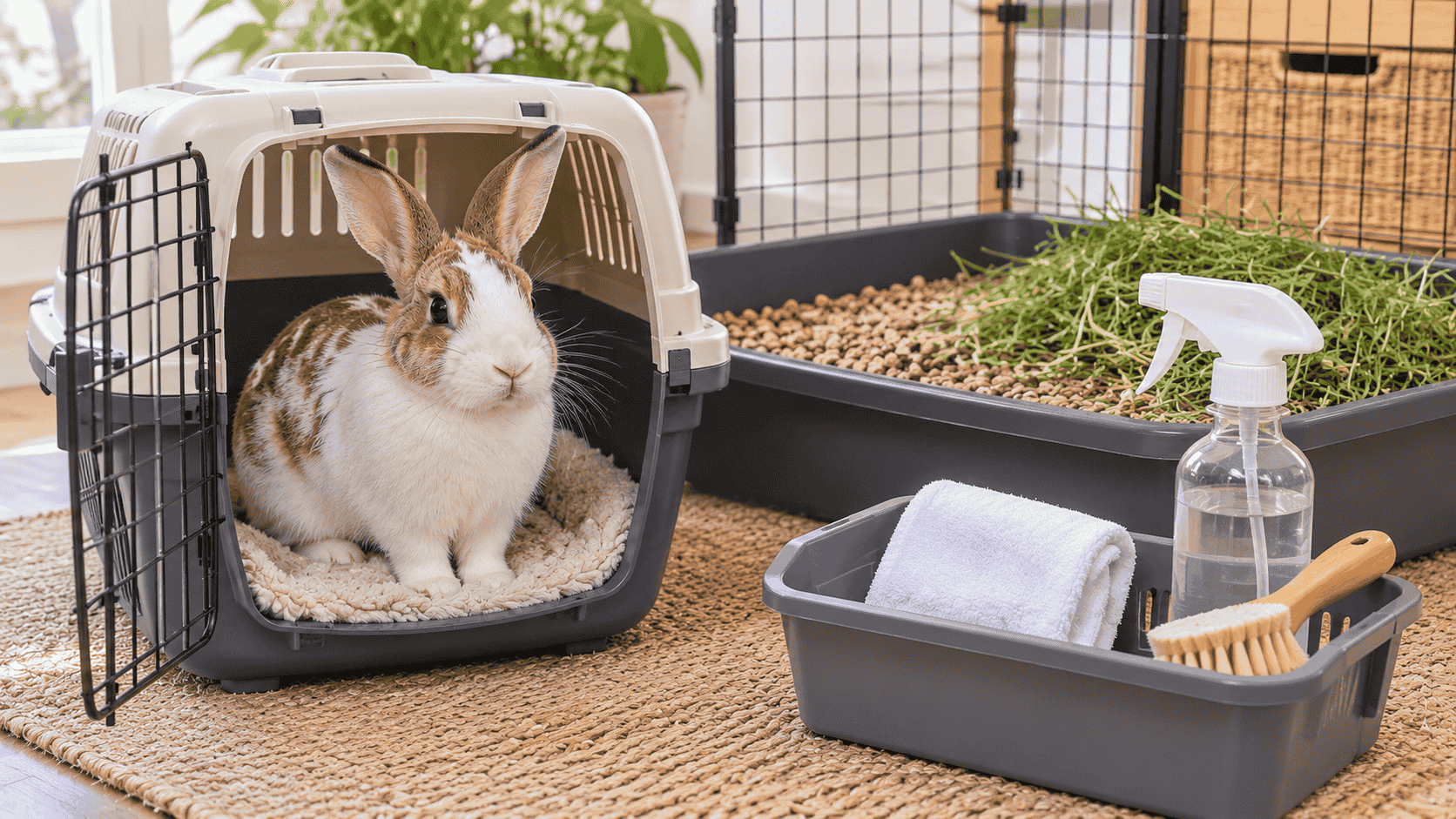
Learning how to clean a rabbit cage properly protects your rabbits from some of the deadliest preventable illnesses in domestic rabbit keeping. Rabbit urine breaks down quickly in warm air, releasing sharp ammonia gas that burns delicate airways and triggers bacterial respiratory infections (snuffles). Damp, manure-soiled floors breed microscopic Eimeria coccidiosis parasites in young kits, soften heel fur into bleeding sore hocks, and draw blowflies capable of causing fatal flystrike in under 12 hours.
The good news is that keeping a rabbit enclosure spotless does not require harsh industrial chemicals or hours of scrubbing every evening. A structured rhythm of 5-minute daily spot cleaning, 20-minute weekly washing, and a thorough monthly deep sanitisation keeps indoor pens, outdoor wooden hutches, and commercial wire cages clean, dry, and odour-free. Whether you keep a single house rabbit in Accra, manage a 30-doe backyard rabbitry in Kumasi or Tamale, or care for indoor pet rabbits in the UK, this guide gives you exact daily, weekly, and monthly cleaning checklists, safe rabbit-friendly disinfectants, step-by-step scrubbing instructions, odour-removal methods for chalky urine stains, and practical hygiene adaptations for Ghana’s tropical climate.
How Cage Hygiene Directly Protects Rabbit Health
Rabbits are naturally clean animals that groom their coats several times a day. However, even the cleanest rabbit cannot escape the health hazards created by an uncleaned hutch or overflowing litter box. Four serious medical problems stem directly from poor enclosure hygiene:
- Respiratory infections (snuffles): When urine sits in damp bedding or wooden corners, bacteria convert urea into volatile ammonia gas. Inhaling ammonia irritates the nasal lining and lungs, weakening natural defences and allowing Pasteurella multocida and Bordetella bacteria to cause chronic sneezing, thick white mucus, and pneumonia.
- Coccidiosis outbreaks: Microscopic Eimeria oocysts passed in rabbit droppings become infective within 24 to 48 hours in warm, damp conditions. Removing manure daily breaks the parasite’s life cycle before young weaned kits (aged 4 to 12 weeks) can ingest infective oocysts off contaminated cage floors or feeders.
- Sore hocks and urine scald: Sitting on wet straw, urine-soaked mats, or crusty wire mesh softens the skin on the bottoms of the hind feet and strips away protective heel fur, leading to painful bleeding ulcers and raw, red skin burns around the tail.
- Flystrike (myiasis): The smell of damp manure and stale urine draws blowflies rapidly during warm weather. Flies lay eggs on soiled hindquarters, and maggots hatch in less than 12 hours, burrowing into living tissue.
You can learn how to recognise early symptoms of snuffles, coccidiosis, sore hocks, and flystrike in our complete guide to common rabbit diseases, symptoms, and when to call a vet.
Rabbit-Safe Cleaning Supplies vs. Dangerous Household Chemicals
Because rabbits walk directly on cleaned surfaces, lick their furred paws during grooming, and chew wooden edges and plastic trays, chemical residues left behind by household cleaners can poison them or burn their lungs. Keep a dedicated bucket of rabbit-safe supplies separate from kitchen and bathroom chemicals.
| Cleaning Product or Tool | Safety Rating | Best Use | Important Safety Rule |
|---|---|---|---|
| Plain white distilled vinegar (diluted 1:1 with warm water) | Safe (Everyday Favourite) | Dissolving white chalky calcium urine stains, wiping trays, neutralising floor odours | Wipe or rinse cleanly with plain water and dry before returning your rabbit |
| Unscented mild dishwashing liquid | Safe (Good for Bowls) | Washing ceramic food bowls, heavy water crocks, sipper bottles, and washable plastic resting mats | Rinse thoroughly with clean running water until zero soap suds or smell remain |
| Veterinary rabbit-safe disinfectant (e.g. F10SC, Virkon S, or vet-approved chlorhexidine) | Safe (Monthly Deep Clean / Disease Control) | Sanitising empty hutches, quarantine cages, or enclosures after illness or parasites | Follow exact label dilution strictly; remove rabbit during spraying; rinse and air-dry fully |
| Diluted plain unscented household bleach (1 part bleach to 30 parts water) | Caution (Empty Outdoor Cages Only) | Heavy disinfection of empty metal wire cages or concrete floors after a confirmed viral or bacterial outbreak | Never mix with vinegar or ammonia (releases lethal chlorine gas); rinse multiple times and sun-dry until zero smell remains |
| Boiling water or handheld steam cleaner | Safe (Excellent for Coccidiosis) | Killing hardy coccidia oocysts on bare metal wire, concrete, or empty plastic trays (most chemical sprays do not kill coccidia) | Keep rabbits completely out of the area while steaming; allow surfaces to cool and dry fully |
| Pine-scented disinfectants (e.g. Pine-Sol, phenol-based cleaners, Dettol) | Unsafe (Never Use) | Not suitable for rabbit enclosures | Contains toxic phenols that damage rabbit airways and liver enzymes if inhaled or licked |
| Ammonia-based floor or glass cleaners | Unsafe (Never Use) | Not suitable for rabbit enclosures | Harsh fumes burn lungs, and ammonia smells like rabbit urine, encouraging repeat peeing on cleaned floors |
| Aerosol air fresheners, scented bleaches, and fabric softeners | Unsafe (Avoid) | Not suitable near rabbits | Strong artificial fragrances irritate delicate nasal passages and coat fleece liners so they stop absorbing urine |
Basic Physical Tools to Keep Ready
- A dedicated dustpan and stiff small hand brush (never share with outdoor dog or poultry areas).
- A sturdy plastic scraper or metal putty knife for lifting dried manure off wooden boards and wire corners.
- A small bottle brush for scrubbing inside water bottles and ceramic crocks.
- A 500 ml spray bottle filled with a 50/50 mix of plain white vinegar and warm water.
- Clean cotton cloths or paper towels, plus sturdy rubber gloves.
Daily, Weekly, and Monthly Rabbit Cage Cleaning Schedule
Consistency beats occasional marathon scrubbing. Breaking hygiene into three clear tiers keeps odour close to zero and makes every session quick.
| Frequency | Time Needed | Core Tasks |
|---|---|---|
| Daily (Morning & Evening) | 5 minutes | Remove damp uneaten greens; scoop heavily wet litter box corners; sweep stray pellets; wipe ceramic resting tiles; refresh clean cool water and top up dry hay; sweep manure under outdoor wire hutches |
| Every 2 to 3 Days (Every 48 hrs in hot weather) | 10 minutes | Empty litter boxes completely; spray and wipe plastic trays with diluted white vinegar; rinse, dry, and refill with fresh absorbent litter and hay |
| Weekly | 20 to 30 minutes | Move rabbit to a safe exercise pen or carrier; remove all bedding and washable rugs; vacuum/sweep corners; wash floor, bars, toys, ceramic bowls, and water bottles; wash fleece liners; inspect wood and wire for damage |
| Monthly (Deep Clean) | 45 to 60 minutes | Strip enclosure completely; scrub stubborn calcium buildup; sanitise with a veterinary-safe disinfectant or steam/hot water; sun-dry wooden boards and trays thoroughly; clean beneath and around the entire hutch area; check and refresh ant traps |
The 5-Minute Daily Rabbit Cage Cleaning Routine
Perform this quick five-step reset every morning (and take 60 seconds in the evening to remove leftover fresh greens and check water):
- Remove perishable leftovers immediately: Pick out any damp wilted grasses, leafy greens, or herbs left over from the previous meal. Moist plant matter rots rapidly in warm rooms and attracts flies.
- Inspect and spot-clean the toilet area: Glance at the faecal pellets before scooping, as healthy adult rabbits produce 200 to 300 firm, round, dry pellets daily. Scoop out heavily urine-soaked litter corners and damp hay, and add a fresh handful of clean dry hay at the front eating end of the tray.
- Sweep stray droppings and wipe resting mats: Brush scattered dry pellets off indoor mats or scrape manure off solid resting tiles and wooden boards inside wire cages.
- Wash and refill water containers: Empty stale water out of ceramic bowls, rub the inside rim cleanly with your fingers (removing invisible slippery bacterial biofilm), rinse with fresh water, and refill with cool clean water. If using a sipper bottle or farm nipple drinker, tap the spout to confirm water flows smoothly without jamming.
- Clear manure trays beneath outdoor hutches: On raised wire-bottom hutches, scrape or sweep droppings out of drop trays or off the ground below into a covered compost bin so ammonia fumes and flies never build up underneath your rabbits.
The Step-by-Step Weekly Rabbit Cage Cleaning Guide
Once every seven days, give the entire enclosure a thorough wash while keeping your rabbit relaxed in a safe secondary space.
Step 1: Move Your Rabbit to a Safe Holding Space
Never spray cleaning liquids or shake dusty bedding while your rabbit is sitting inside the cage. Let your rabbit hop into a rabbit-proofed exercise pen, a secure shaded lawn run, or a clean towel-lined pet carrier with a handful of fresh hay and a water bowl.
Step 2: Empty All Bedding, Litter, and Loose Accessories
Remove litter boxes, hay racks, ceramic bowls, resting tiles, wooden hideout boxes, and chew toys. Dump soiled litter and old bedding into a compost pile or waste bag. Shake washable fleece liners and cotton rugs thoroughly outdoors to remove trapped hay strands before washing them, because hay clogs washing machine drains quickly.
Step 3: Sweep, Scrape, and Vacuum Every Corner
Use your plastic scraper to loosen any dried droppings stuck to wooden slats, plastic corners, or wire joints. Sweep or vacuum all loose fur, hay dust, and pellet crumbs out of floor seams and around the outside of the pen. Pay extra attention to heavy shedding fur stuck to wire bars during moulting seasons.
Step 4: Spray and Scrub With Diluted White Vinegar
Spray the enclosure floor, lower walls, drop trays, and litter boxes evenly with your 50/50 white vinegar and warm water mix. Let it sit for 5 to 10 minutes so the mild acetic acid breaks down mineral deposits and neutralises urine odour. Scrub corners with a dedicated stiff brush, then wipe down completely with a clean cloth dampened in plain water.
Step 5: Wash Bowls, Bottles, and Resting Mats Separately
Wash ceramic food dishes, water bowls, and plastic resting tiles in warm water with a drop of unscented dish soap. Scrub inside water bottles with a bottle brush (or add a teaspoon of uncooked rice with warm soapy water and shake vigorously to scrub away green algae), then rinse every item thoroughly with clean running water.
Step 6: Dry Completely Before Reassembling
Moisture trapped beneath fresh bedding breeds mould and coccidia rapidly. Wipe surfaces dry with a clean towel and, for outdoor hutches or removable trays, place them in direct sunlight for 20 to 30 minutes. Sunlight acts as a free, natural mild sanitiser and guarantees every timber seam is bone-dry before you add fresh, safe bedding. To pick low-dust, high-absorbency refills for your freshly cleaned enclosure, check our guide on the best rabbit bedding materials for comfort and hygiene.
Step 7: Leave a Familiar Scent Cue
Rabbits feel calmer when their freshly washed home still smells lightly like themselves. After refilling the clean litter box, place a tiny pinch of clean dry hay or a single clean wooden toy back in its usual corner. Do not rearrange the entire cage layout every week, as keeping the litter box, hideout, and water bowl in predictable spots reduces territorial re-marking.
Monthly Deep Cleaning and Safe Disinfection Protocol
Vinegar removes mineral stains and neutralises odour well, yet vinegar is only a mild cleaner, not a broad-spectrum disinfectant. Once a month (and always before introducing a new rabbit into a previously used cage, or right after any illness or parasite outbreak), perform a full deep sanitisation:
- Clean off all organic debris first: Disinfectants cannot work through layers of dried manure, urine crust, or hair. Always scrape, sweep, and wash surfaces with warm soapy water or vinegar first.
- Apply a rabbit-safe veterinary disinfectant (or steam): Spray bare, cleaned surfaces with a veterinary disinfectant approved for small mammals (such as F10SC diluted strictly to manufacturer instructions) and allow the full required contact time (typically 10 to 15 minutes). For metal wire cages or bare plastic trays in commercial rabbitries with a history of coccidiosis, remember that standard bleach and many disinfectants do not kill hardy Eimeria oocysts; pouring boiling water slowly over empty metal wire and trays or using a high-temperature steam cleaner (above 70°C) is far more effective.
- Rinse and sun-dry thoroughly: Rinse disinfected surfaces with plenty of clean water where required by the product label, and air-dry completely in bright sunlight until zero chemical odour lingers.
- Sanitise the surrounding room or shed floor: Sweep, mop, or scrub the concrete floor, walls, and walkway around the hutch or pen, wash storage bins holding pellets or hay, and scrub the base of wooden hutch legs.
- Inspect structural safety: Check wire mesh for sharp rust spots or loose staples, tighten door hinges and barrel bolts, inspect wooden boards for deep chewing damage, and replace cracked plastic trays or frayed electrical cord protectors.
For further veterinary-reviewed standards on hygienic rabbit housing and disease control, you can consult the Rabbit Welfare Association & Fund (RWAF) rabbit housing hygiene guidance.
How to Clean Different Enclosure Types (Indoor Pens, Wooden Hutches, Wire Cages)
Different cage designs trap dirt in different places. Tailor your weekly and monthly routine to match your exact setup:
1. Indoor Exercise Pens (X-Pens and Free-Roam Setups)
With a litter-trained indoor rabbit, 90% of mess stays inside the rectangular litter tray. Sweep stray dry pellets and loose hay off woven mats or fleece daily with a rubber-bristle broom (rubber bristles pull rabbit hair out of rugs far better than standard brooms). Wash fleece liners and absorbent under-towels every 3 to 5 days in hot water using unscented detergent and half a cup of white vinegar in the rinse cycle (skip fabric softener completely). Wipe metal X-pen bars monthly with a damp vinegar cloth to remove dust and chin-gland marks. If your indoor rabbit is still peeing outside the tray and making daily cleanup hard, review our step-by-step guide on how to litter train a rabbit cleanly.
2. Outdoor Solid-Floor Wooden Hutches
Bare untreated timber absorbs urine permanently if left unprotected, leading to foul lingering odours and wood rot. Always line solid wooden floors with non-slip sheet vinyl tucked outside the frame or use a large corner litter box. During weekly cleaning, scrub soiled wooden corners with diluted white vinegar and a stiff brush, never soak raw wood heavily with buckets of water unless you can dry it completely in full sun for several hours, and check roof seams for rain leaks.
3. Raised Wire-Mesh Farm Cages (Commercial and Backyard Rabbitries)
Welded wire floors let most droppings fall through automatically, yet hair and dried manure still cling tightly along wire corners, around J-feeders, and under ceramic resting tiles. Every week, lift out ceramic resting tiles or plastic floor mats, scrub both sides with warm soapy water and vinegar, and brush wire intersections with a stiff wire brush so fur mats do not trap moisture and harbour coccidia. Every month, flush automatic water lines and nipple drinkers cleanly so biofilm and algae never block water flow. If you are designing or upgrading your hutch for easier weekly manure removal, check our drainage and drop-tray tips in how to build a low-cost rabbit hutch with easy-clean flooring.
How to Remove Chalky White Urine Stains and Stubborn Odours
Because rabbits excrete excess dietary calcium through their kidneys, dried rabbit urine leaves hard, chalky white or yellowish mineral crusts welded tightly onto plastic litter trays, ceramic tiles, and metal drop pans. Soap and water barely touch these mineral deposits.
Here is the fastest, safest way to dissolve them completely:
- Empty and rinse the tray lightly with warm water to remove loose litter.
- Pour undiluted plain white distilled vinegar (or place vinegar-soaked paper towels) directly over the white crusty stains. You will immediately see gentle fizzing as the mild acid breaks down the calcium carbonate crystals.
- Let the vinegar soak for 15 to 20 minutes (up to 30 minutes for thick old buildup).
- Scrub firmly with a stiff nylon brush or plastic scraper, and the hardened crust will lift away cleanly in seconds.
- Rinse thoroughly with clean water and dry in the sun. For stubborn wooden floor odours, sprinkle a light dusting of plain bicarbonate of soda (baking soda) onto the damp vinegar-wiped wood, scrub gently, rinse well once fizzing stops, and sun-dry completely so zero powder remains for your rabbit to inhale.
How to Keep Your Rabbit Calm and Safe During Cage Cleaning
Many rabbits grow tense, thump loudly, or lunge at hands during cleaning because they view their cage as their private burrow and feel threatened when you reach inside and remove their scent-marked belongings.
- Clean while your rabbit is out exercising: Open the enclosure door and let your rabbit hop out into a secure play area on its own rather than pulling it out forcibly while it watches you scrub its home.
- Never vacuum right next to a frightened rabbit: Loud vacuum noise triggers panic in prey animals. Move your rabbit to a quiet room behind a closed door before vacuuming up stray hay and fur.
- Keep chemical smells completely away: Even vinegar smells sharp while wet. Ventilate the room well and wait until every cleaned surface is rinsed and fully dry before letting your rabbit back in.
- Finish with a positive reward: Place a fresh handful of fragrant hay or a sprig of coriander inside the freshly cleaned pen so your rabbit eagerly hops back in and associates cleaning day with fresh food.
Cage Cleaning and Manure Management Tips for Ghana
Keeping rabbit cages spotless in Accra, Kumasi, Takoradi, Cape Coast, Sunyani, or Tamale involves managing warm tropical humidity, heavy rainy seasons, and valuable farm manure:
- Increase litter box changes during hot dry-season months (November to April): When afternoon temperatures pass 32°C to 36°C, rabbit urine ferments into pungent ammonia gas twice as fast as in cool climates. Empty indoor litter trays and scrape outdoor drop pans every 24 to 48 hours rather than waiting three to four days.
- Combat rainy-season dampness and mould (April to July and September to October): High tropical humidity slows down wood drying and accelerates coccidiosis in weaned kits. Keep a spare set of clean ceramic resting tiles or wooden resting boards so you can swap in completely dry boards immediately while the washed set sun-dries on a raised rack. Never put damp straw or damp washed tiles back into a hutch.
- Clean and disinfect between litters on commercial farms: Before moving a pregnant doe into a kindling cage or moving newly weaned 6-to-8-week-old kits into a grower pen, scrape all hair off the wire, wash with soapy water, pour boiling water over bare metal wire and wooden nest box interiors (or sanitise with a vet-approved disinfectant), and sun-dry for a full afternoon in bright Ghanaian sunlight.
- Turn rabbit manure into high-value garden fertiliser: Unlike poultry or cow manure, rabbit droppings are a “cold manure” rich in nitrogen, phosphorus, and potassium that will not burn plant roots. Sweep daily droppings and used paper/wood/straw litter into a covered compost bin well away from your rabbitry (to keep flies away from the cages) and use it directly on backyard vegetables, plantains, or sell bagged manure to local gardeners.
- Refresh leg ant traps monthly: During monthly deep cleaning of outdoor wooden hutches, wash out the water-and-oil tins under the four legs and refill them cleanly so stagnant water never breeds mosquitoes while still blocking soldier ants.
7 Common Rabbit Cage Cleaning Mistakes to Avoid
Avoid these seven frequent hygiene mistakes that endanger rabbit health or make cleaning harder than necessary:
- Mixing bleach with vinegar or ammonia: Combining bleach and vinegar creates toxic chlorine gas that is dangerous to both humans and rabbits. Never use two chemical cleaners together on the same surface.
- Returning a rabbit to a damp hutch or wet wooden floor: Trapped moisture under fresh bedding causes rapid mould growth, chills rabbits at night, and softens heel skin into sore hocks. Always dry completely first.
- Forgetting to scrub inside water bottles and bowls: Refilling a water bowl daily without wiping away the slimy bacterial film on the walls leads to foul-tasting water, lower water intake, and early GI stasis.
- Using pine-scented disinfectants or strong bleach sprays near rabbits: Even if you only clean one cage in a multi-cage shed, airborne bleach or pine fumes irritate the lungs of neighbouring rabbits in adjacent cages. Move animals out or clean removable trays outdoors.
- Skipping the bottom of wire floors and corners: Hair, food dust, and dried droppings caught on the underside of wire mesh attract blowflies and harbour coccidia oocysts right beneath your rabbit’s feet.
- Throwing away every familiar scent item at once in a nervous rabbit’s pen: Stripping 100% of scent cues can cause a territorial rabbit to mark the clean cage heavily with urine and scattered pellets right away. Leave one clean dry wooden chew or familiar toy untouched during weekly washes.
- Cleaning sick rabbits’ cages before healthy rabbits’ cages: Always feed and clean healthy rabbits first, and clean quarantine or sick-rabbit enclosures last, using separate brushes and washing your hands thoroughly afterwards so you never spread coccidiosis, ear mites, or respiratory bacteria across your herd.
Health Warning Signs to Watch For While Cleaning
Daily cage cleaning doubles as your best early-warning health monitor. Because you look directly at droppings, urine, food bowls, and resting mats every day, you will catch subtle signs of illness long before your rabbit stops moving. Check our baseline checklist in recognising the signs of a healthy rabbit at home, and contact a veterinarian promptly if cage cleaning reveals any of these warning signs:
- Tiny, dark, misshapen, or zero faecal pellets over a 10-to-12-hour period (emergency sign of early GI stasis).
- Watery, mucus-coated, or bloody diarrhoea soaking the tray or cage floor (immediate emergency, especially in young kits).
- Thick, chalky toothpaste-like white sludge caked heavily in the urine corner or distinct bright-red blood clots in the urine (potential bladder sludge, stones, or urinary infection).
- Untouched pellets or water levels unchanged since yesterday morning.
- Spots of blood on resting tiles or mats (check hind heels immediately for bleeding sore hocks or a torn toenail).
- Visible tiny white fly eggs or maggots in damp bedding corners or around the rabbit’s hindquarters (immediate life-threatening emergency).
Frequently Asked Questions About Cleaning a Rabbit Cage
1. How often should you clean a rabbit cage?
Spot-clean wet litter corners, remove uneaten damp greens, wipe resting tiles, and refresh water bowls daily. Do a complete litter tray empty and vinegar wash every 2 to 3 days (every 48 hours in hot tropical weather), perform a full cage wipe-down and bedding refresh weekly, and complete a thorough deep sanitisation once a month.
2. What is the safest cleaner to use for a rabbit cage?
A 50/50 mixture of plain white distilled vinegar and warm water is the safest, most effective everyday cleaner for rabbit cages, trays, and floors. It dissolves chalky white calcium urine stains, neutralises ammonia odour naturally, and leaves no toxic chemical fumes. For monthly deep disinfection or after illness, use a veterinary-approved small-animal disinfectant diluted strictly according to the label.
3. Can I use bleach to clean my rabbit’s cage?
Avoid using bleach for routine weekly cleaning, as harsh fumes irritate rabbit lungs. If you must use plain unscented household bleach to disinfect an empty metal or plastic cage after a confirmed infectious outbreak, dilute it strictly (1 part bleach to 30 parts water), move all rabbits well away from the area, never mix it with vinegar or ammonia, rinse thoroughly multiple times with clean water, and sun-dry until zero bleach smell remains.
4. How do I stop my rabbit’s cage from smelling like urine?
Strong urine odour almost always comes from using low-absorbency bedding (such as newspaper or straw alone), letting urine soak into bare wood, or waiting too long between litter box changes. Switch to unscented recycled paper pellets or kiln-dried untreated wood pellets inside a roomy litter tray, wash the tray with diluted white vinegar every 48 hours, ensure strong room or hutch airflow, and consider neutering intact adult rabbits whose hormonal urine smells noticeably sharper.
5. How do I clean white crusty stains out of a rabbit litter box?
Those hard white crusts are harmless calcium deposits from rabbit urine. Pour undiluted plain white distilled vinegar directly onto the crusty spots, let it fizz and soak for 15 to 20 minutes, scrub lightly with a stiff nylon brush, and rinse cleanly with warm water. The white buildup will dissolve effortlessly.
6. Can I use soap to wash my rabbit’s food and water bowls?
Yes. Wash ceramic food bowls, heavy water crocks, and plastic sipper bottles weekly with warm water and a small drop of mild, unscented dishwashing liquid to remove slippery bacterial biofilm and algae. Rinse thoroughly under clean running water until no soap residue or scent remains.
7. How do I disinfect a rabbit hutch after coccidiosis or another illness?
Standard household sprays and diluted bleach do not reliably destroy hardy Eimeria coccidia oocysts. After scraping and scrubbing away all organic manure and hair, treat bare metal wire, plastic trays, and empty wooden interiors with boiling water or a high-temperature steam cleaner (above 70°C), or consult your veterinarian for an oocyst-active veterinary disinfectant, followed by full sun-drying before restocking.
8. Is it safe to compost used rabbit bedding and droppings?
Yes, provided you use natural biodegradable litter such as paper pellets, untreated wood pellets, straw, hay, or rice husks (and never chemical clay litter). Rabbit manure is a nutrient-rich cold fertiliser that can be composted or added directly to garden beds, as long as your compost pile sits well away from the rabbit hutches so flies do not travel back to your animals.
Keeping a Simple Routine for Clean, Healthy Rabbits
Knowing how to clean a rabbit cage effectively comes down to steady habits rather than harsh chemicals. Spend five minutes every morning removing damp food leftovers, scooping wet toilet corners, wiping resting tiles, and refreshing cool water. Follow that with a calm 20-minute weekly vinegar wash and full bedding refresh, plus a monthly deep sanitisation and structural inspection.
Use plain diluted white vinegar for everyday stains and odour control, keep toxic pine and ammonia cleaners out of the rabbitry, dry every surface completely before returning your rabbits, and pay attention to what the litter tray tells you about their digestion each morning. A clean, dry, well-ventilated cage prevents respiratory infections, coccidiosis, sore hocks, and flystrike, keeping your home fresh and your rabbits healthy year-round.
