

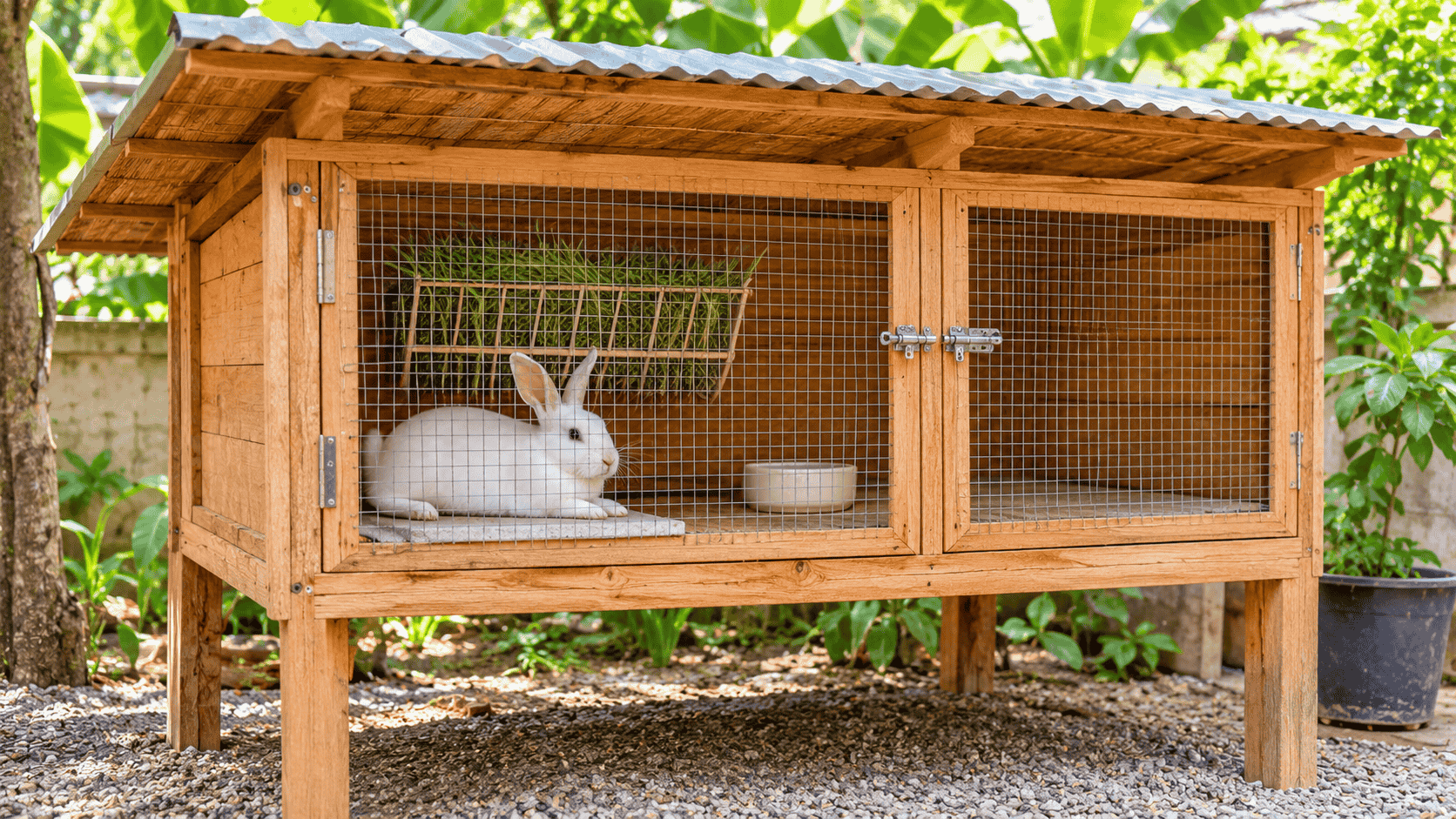
Knowing how to build a low-cost rabbit hutch lets you house healthy, comfortable rabbits without overspending on imported cages. A poorly built hutch with cramped dimensions, damp wood, bare wire flooring, or stagnant hot air leads directly to respiratory infections, sore hocks, coccidiosis, and heatstroke. By contrast, a smartly planned budget hutch built from locally sourced untreated timber, galvanised welded wire mesh, and a well-insulated overhanging roof can last five to eight years while keeping your rabbits cool, dry, and safe from predators.
Whether you are building your first backyard wooden hutch in Accra or Kumasi, setting up a multi-unit breeding shed in Tamale or Sunyani, or constructing an outdoor pet shelter in the UK, good hutch design always follows the same core principles: generous floor space, cross-ventilation without direct draughts, dry easy-to-clean flooring, and tight predator security. This guide walks you through ideal hutch dimensions, affordable materials available in Ghana and internationally, ventilation and roof insulation rules, a complete step-by-step building plan, estimated local material quantities, common construction mistakes, and practical maintenance tips.
Core Principles of Good Rabbit Hutch Design
Low-cost housing should never mean low-welfare housing. Cutting corners on wire gauge, roof overhang, or ventilation always costs more later in lost litters and veterinary bills. Before you buy a single plank of timber or roll of mesh, design your hutch around five non-negotiable standards:
- Adequate floor area and height: Your rabbit must be able to take at least three full hops across the enclosure, stretch out completely flat when resting, and sit upright on its hind legs without its ears touching the ceiling.
- Strong airflow without direct rain or wind blasts: Rabbit urine produces ammonia gas quickly in warm weather. Trapped ammonia burns the lining of the respiratory tract and triggers bacterial snuffles (pasteurellosis). Your hutch needs open wire-mesh sides for continuous cross-ventilation paired with a solid sheltered sleeping zone.
- Dry, foot-friendly flooring: Damp wood rots and breeds coccidiosis, while bare wire mesh causes painful sore hocks. Combining self-cleaning drainage with solid resting surfaces protects both hygiene and feet.
- Full predator and pest security: Rats, snakes, soldier ants, stray cats, and dogs exploit thin chicken wire and weak wooden latches easily. Heavy welded mesh and metal bolt latches are essential even on a tight budget.
- Effortless daily cleaning and feeding access: If a hutch is awkward to open or scrape clean, daily chores get skipped. Wide doors, removable manure trays or sloped drop boards, and exterior feeders save hours every week.
Recommended Low-Cost Rabbit Hutch Dimensions
Hutch size depends on whether you are housing indoor/outdoor pet rabbits (which need much larger living spaces plus an attached run) or managing individual breeding compartments on a small farm. Always build as generously as your space and budget allow. For full welfare sizing charts by breed weight, review our guide on the best rabbit cage size and space requirements.
| Housing Purpose | Minimum Compartment Size (L x W x H) | Recommended Leg Height | Key Layout Feature |
|---|---|---|---|
| Single backyard pet rabbit (with daily exercise run) | 150 cm x 75 cm x 60 cm (5 ft x 2.5 ft x 2 ft) | 75 cm to 90 cm off ground | Include a sheltered sleeping box on one side plus direct ramp access to a secure predator-proof run |
| Single commercial breeding doe (medium breed, 3.5 to 5 kg) | 90 cm x 60 cm x 50 cm (3 ft x 2 ft x 1.6 ft) | 80 cm to 90 cm off ground | Enough space to fit a 45 cm x 28 cm wooden kindling nest box comfortably without cramping the doe |
| Single commercial buck (medium breed) | 80 cm x 60 cm x 50 cm (2.6 ft x 2 ft x 1.6 ft) | 80 cm to 90 cm off ground | Solid resting mat required if using wire mesh floor to prevent sore hocks |
| Weaned grower pen (4 to 6 kits, 6 to 12 weeks) | 120 cm x 75 cm x 50 cm (4 ft x 2.5 ft x 1.6 ft) | 80 cm to 90 cm off ground | Wide feeder space so smaller kits are not pushed away from pellets or wilted grass |
| Two-compartment shared frame (popular budget farm unit) | 180 cm total length x 60 cm to 75 cm depth x 55 cm height | 80 cm to 90 cm off ground | Divided cleanly down the middle with solid board or double wire so adjacent bucks cannot bite noses |
Raising the hutch floor 75 cm to 90 cm (2.5 to 3 feet) off the ground delivers four instant benefits: it stops ground dampness from wicking into the timber, makes feeding and health checks comfortable at waist height, lets you sweep manure cleanly from underneath, and keeps rabbits out of easy reach of roaming dogs and snakes.
Choosing Safe, Low-Cost Materials (Ghana and International Options)
You do not need expensive imported timber or factory-welded battery cages to build a durable hutch. The smartest way to save money is buying sturdy local hardwoods, off-cut roofing sheets, and proper welded wire mesh while avoiding cheap materials that rot or poison rabbits.
| Component | Best Low-Cost Safe Materials | Materials to Avoid | Practical Reason |
|---|---|---|---|
| Structural Frame & Legs | Local untreated hardwood such as Wawa, Emire, Dahoma, or Ofram (in Ghana); kiln-dried untreated pine or spruce (UK/US) | Pressure-treated CCA lumber, painted scrap wood with flaking lead paint, weak damp pallet wood | Rabbits chew exposed wood edges; chemical wood preservatives and old paints are toxic if ingested |
| Side Walls & Door Mesh | 16-gauge or 18-gauge galvanised welded wire mesh with 12 mm x 12 mm (0.5 in) or 12 mm x 25 mm openings | Thin hexagonal poultry wire (“chicken wire”) | Dogs, rats, and snakes tear through thin chicken wire easily, and rabbits can chew through weak wire |
| Floor Mesh (If Wire-Bottom) | 14-gauge or 16-gauge galvanised welded wire mesh with 12 mm x 25 mm (0.5 in x 1 in) openings, laid smooth-side up | 25 mm x 25 mm large mesh (kits fall through) or thin sharp wire under 18-gauge | 12 mm x 25 mm lets adult droppings fall cleanly while supporting adult feet safely alongside a solid resting mat |
| Roofing Material | Corrugated galvanised zinc or aluminium sheets (Aluzinc) lined underneath with plywood, thatch, or bamboo matting | Uninsulated bare metal sheets sitting directly in full sun | Bare metal radiates intense afternoon heat downward; adding an air gap and lining cuts interior temperatures sharply |
| Back & Windbreak Panels | Exterior-grade plywood (12 mm), tongue-and-groove wooden planks, or clean corrugated plastic sheets | Thin cardboard or untreated MDF board | MDF swells and crumbles the first time rain or rabbit urine touches it, releasing glue dust |
| Fasteners & Hinges | Galvanised nails, wood screws, U-staples, metal barrel-bolt latches, and sturdy T-hinges | Weak plastic clips or flimsy hook-and-eye wires | Clever rabbits and persistent dogs can flip open simple hooks; sliding metal barrel bolts stay locked securely |
Smart budget tip: Visit local timber yards in Ghana (such as Timber Market in Accra or Sokoban Wood Village in Kumasi) or reclamation yards internationally to buy straight “second-grade” untreated hardwood battens (5 cm x 5 cm / 2 in x 2 in) and clean off-cut plywood sheets. Always inspect reclaimed wood closely for old nails, engine oil stains, or chemical smells before buying.
Rabbit Hutch Flooring Options Compared: Wire vs. Solid vs. Hybrid
Flooring is the most debated part of rabbit hutch design. Every floor style involves a trade-off between hygiene, foot comfort, and daily cleaning labour.
| Floor Type | Hygiene & Coccidiosis Control | Foot Comfort | Best Application |
|---|---|---|---|
| All-Solid Wooden Floor | Lower unless lined with waterproof sheet and cleaned daily; urine soaks into bare wood over time | High when covered with thick dry straw, hay, or safe bedding | Pet hutches with a dedicated litter box and removable vinyl/linoleum liner |
| Bare Wire-Mesh Floor Only | High (droppings and urine drop straight through immediately) | Poor; high risk of painful sore hocks in heavy breeds | Not recommended without adding a solid resting mat |
| Hybrid Floor (Recommended Low-Cost Design) | High (back 60% to 70% wire mesh or slatted floor for drainage, paired with a solid resting zone or removable resting mat covering 30% to 40%) | High; rabbits rest comfortably off the wire while toilet areas stay bone-dry | Ideal for both Ghanaian backyard farms and outdoor pet hutches |
If you choose a solid wooden floor for pet rabbits, cover the timber with an affordable sheet of textured, non-slip vinyl flooring (tucked securely outside the wood frame so rabbits cannot chew the edges) and line it with safe absorbent bedding. Check which safe, low-dust options work best in our guide on the best rabbit bedding materials for comfort and hygiene. If you use a wire floor for farm stock, always lay a perforated plastic bunny resting mat, a smooth ceramic floor tile (which also stays cool in hot weather), or a removable clean untreated wooden board inside every compartment.
Ventilation, Shade, and Roof Insulation for Hot Weather
Rabbits wear a dense fur coat year-round and cannot sweat to cool down. Poorly ventilated wooden boxes trap both body heat and ammonia fumes, creating the exact conditions that trigger heatstroke and bacterial pneumonia. In warm regions like Ghana, ventilation is even more critical than warmth.
Rules for Healthy Hutch Ventilation
- Open at least two sides with welded wire mesh: Make the entire front face and at least the upper half of both side walls open wire mesh so warm air flows freely across the hutch.
- Keep the back wall solid for shelter: A solid back wall and a partially enclosed sleeping corner protect rabbits from driving rain and harsh night wind gusts without blocking cross-breezes.
- Slope the roof cleanly toward the back: Build the front wall 8 cm to 10 cm taller than the back wall so rainwater drains cleanly off the rear away from you during feeding. Extend the roof overhang at least 25 cm to 30 cm past the front and sides to block midday sun and wind-blown rain.
- Create a roof air gap in hot climates: If you use metal zinc or Aluzinc roofing sheets, leave a 10 cm to 15 cm open ventilation gap between the wire ceiling of the hutch and the sloped roof above it, or line the underside of the metal with woven bamboo mats, dried thatch, or wooden ceiling boards. That simple air pocket drops inside cage temperatures by 4°C to 7°C on hot afternoons.
To pair good hutch ventilation with active hot-weather protection during Ghana’s dry season, read our detailed guide on how to keep rabbits cool in hot weather.
How to Build a Low-Cost Wooden Rabbit Hutch Step by Step
This practical plan builds a sturdy, raised two-compartment wooden and wire hutch measuring 180 cm long, 70 cm deep, and 55 cm high (giving each rabbit a generous 90 cm x 70 cm space, or you can omit the centre divider to create one spacious 180 cm pet hutch). You only need a hand saw, hammer, screwdriver or drill, wire cutters, tape measure, and pliers.
Step 1: Cut and Assemble the Four Corner Legs and Base Frame
- Cut four sturdy 5 cm x 5 cm (2 in x 2 in) hardwood legs: cut the two front legs to 145 cm (85 cm leg height + 60 cm front cage height) and the two back legs to 135 cm (85 cm leg height + 50 cm back cage height). That 10 cm height difference automatically builds a rain-shedding roof slope.
- Cut two horizontal front-and-back base rails (180 cm long) and three cross-supports (70 cm long: left, middle, and right).
- Screw or nail the base rails squarely onto the legs at 85 cm above the ground. Add simple diagonal corner braces on the lower legs so the hutch never wobbles when rabbits hop or thump.
Step 2: Install the Floor (Hybrid Wire or Solid Base)
- Staple 16-gauge galvanised welded wire mesh (12 mm x 25 mm) tightly across the top of the base frame, laying the smooth side upward so rough weld bumps do not rub rabbit feet.
- Nail thin 2 cm wooden cover strips over the cut wire edges along the frame perimeter so neither your hands nor your rabbits ever touch sharp wire points.
- Place a removable smooth wooden resting board (30 cm x 45 cm) or ceramic tile inside each compartment so each rabbit has a dry, flat resting area off the wire. (If building a solid-floor pet hutch, screw 12 mm exterior plywood across the base instead, cover with non-slip vinyl, and add a large litter box.)
Step 3: Frame the Top, Back Wall, and Centre Partition
- Attach the top front rail (180 cm) and top back rail (180 cm) connecting the tops of the legs, plus three sloped rafters (110 cm long so they extend 20 cm past both front and back edges for deep roof overhang).
- Fix solid 12 mm plywood or tightly fitted wooden planks across the back wall to block wind and driving rain.
- For a two-rabbit farm hutch, install a solid wooden divider panel across the centre (90 cm mark). Using solid wood instead of single wire between compartments stops adjacent rabbits from biting noses or spraying urine onto each other.
Step 4: Enclose the Sides and Build Wide Front Doors
- Cover both outer side walls with 12 mm x 12 mm galvanised welded wire mesh stapled tightly to the inside of the wooden frame (mounting wire on the inside stops rabbits from chewing through the wooden posts).
- Build two sturdy wooden door frames (each roughly 45 cm wide by 40 cm high) covered in 12 mm x 12 mm welded wire mesh. Wide doors let you lift rabbits out safely with two hands and slip kindling nest boxes in and out easily.
- Mount each door with two metal hinges and fit a sliding metal barrel bolt latch at both top and bottom corners so dogs or clever rabbits cannot push the door open.
- Attach external J-feeders (for pellets) and side-mounted wire hay racks onto the fixed front panels beside the doors so you can feed quickly without opening the hutch every time.
Step 5: Fit the Sloped, Insulated Roof
- Attach lightweight wooden purlins across the sloped rafters, leaving a ventilated air space above the wire ceiling of the hutch.
- Line the underside of the roof frame with woven bamboo matting, ceiling board, or plywood insulation if using metal roofing in a hot climate.
- Screw corrugated zinc or Aluzinc sheets firmly on top with roofing nails and rubber washers so rainwater never leaks through nail holes.
Step 6: Add Manure Management Underneath
Slide two removable galvanised sheet-metal or heavy plastic drop trays on wooden runners 15 cm beneath the wire floor, or place a sloped corrugated plastic sheet angled backward to funnel droppings and urine cleanly into a collection gutter or compost pit below. Keep the ground directly beneath outdoor hutches paved, gravelled, or swept bare so flies cannot breed in damp soil.
Sample Materials Checklist for a Single 2-Compartment Hutch
Take this shopping list to your local timber market and hardware shop to compare prices accurately before building:
| Item | Specification | Approximate Quantity |
|---|---|---|
| Untreated hardwood battens | 5 cm x 5 cm (2 in x 2 in), 3.6 m (12 ft) lengths | 6 to 7 lengths |
| Door frame & trim battens | 2.5 cm x 5 cm (1 in x 2 in), 3.6 m lengths | 3 lengths |
| Exterior plywood (back & divider) | 12 mm thickness (1.2 m x 2.4 m sheet) | 1 full sheet |
| Floor welded wire mesh | 16-gauge galvanised, 12 mm x 25 mm openings | 2 metres (90 cm width roll) |
| Side & door welded wire mesh | 16-gauge or 18-gauge galvanised, 12 mm x 12 mm openings | 3 metres (90 cm width roll) |
| Corrugated roofing sheet | Aluzinc or galvanised iron, 2.4 m length | 2 sheets |
| Hardware | 4 metal hinges, 4 sliding barrel bolts, 65 mm wood screws, wire U-staples, roofing nails | 1 hardware pack |
| Resting mats | Smooth ceramic tiles (30 cm x 30 cm) or plastic rabbit floor mats | 2 mats (1 per compartment) |
For further technical blueprints and agricultural engineering standards on low-cost tropical rabbit housing, you can consult the Food and Agriculture Organization (FAO) rabbit husbandry and housing resources.
Predator-Proofing and Pest Protection
A low-cost hutch fails completely if a stray dog, rat, or colony of soldier ants breaks in overnight. Add these four affordable safeguards during construction:
- Double-check every gap: Rats squeeze through openings as small as 20 mm. Using 12 mm x 12 mm welded mesh on walls and doors blocks rats, mice, and small snakes while allowing strong airflow.
- Install simple ant traps on the four legs: In tropical gardens, soldier ants (driver ants) can kill newborn litters inside nest boxes within an hour. Stand each wooden leg inside a clean empty paint tin or wide plastic container filled with water and two tablespoons of used cooking oil (or fit smooth cone-shaped sheet-metal baffles around each leg) so ants and rodents cannot climb up.
- Reinforce wire attachment with wood strips: Stapled wire alone can pull loose if a large dog jumps against the door. Screwing narrow wooden strips right over the stapled wire edges clamps the mesh like a vice.
- Use predator-proof latches: Always choose metal sliding barrel bolts or carabiner clips rather than simple twist-wire loops or magnetic catches.
Practical Hutch Building Tips for Ghanaian Climates
Building for Accra, Kumasi, Takoradi, Cape Coast, Sunyani, or northern Ghana requires designing specifically for intense dry-season heat, Harmattan winds, and heavy tropical rainstorms:
- Orient your hutch correctly: Position the solid back wall facing the prevailing storm direction (usually east or northeast during squalls) and place the hutch under natural tree shade (such as mango or neem trees) or inside a high, open-sided thatch-roofed shed. Never place a wooden hutch flush against a sun-baked concrete compound wall that radiates stored heat into the evening.
- Protect wooden legs from termites and ground rot: Rest the four hutch legs on concrete blocks or stones (or inside metal ant-guard tins) rather than directly on bare soil. Never paint the inside of the cage with toxic anti-termite chemicals; keep any treatment strictly on concrete base blocks well away from where rabbits can chew.
- Prepare removable rain and Harmattan curtains: Attach a simple roll-up polythene tarpaulin or woven sack curtain along the top front overhang. Roll it up completely during sunny weather for maximum ventilation, and drop it halfway down during heavy driving rainstorms (April to July and September to October) or dusty, chilly Harmattan nights (December to February).
- Use local cooling tiles inside wire cages: Buying rejected or leftover smooth ceramic floor tiles from a local building shop costs very little and gives each rabbit a cool, chew-proof resting surface that prevents sore hocks and absorbs body heat on 35°C afternoons.
7 Common Rabbit Hutch Building Mistakes to Avoid
Avoid these seven frequent DIY errors that shorten hutch lifespan and harm rabbit health:
- Using thin hexagonal chicken wire: Chicken wire rusts fast, tears under a dog’s paws, and lets rats slip through easily. Always spend a little extra on 16-gauge welded wire mesh.
- Mounting wire mesh on the outside of the wooden frame: When timber posts sit exposed on the inside, rabbits chew right through the corner beams within months. Staple mesh on the inside surface of the wood frame wherever possible.
- Building narrow doors that scrape hands and rabbits: Tiny 20 cm doors make lifting a 4 kg rabbit safely almost impossible and prevent you from fitting a proper kindling nest box inside. Make doors at least 40 cm wide.
- Stacking multi-tier hutches without solid urine trays between levels: In stacked 2-tier or 3-tier farm hutches, urine and droppings falling from top cages onto lower rabbits spread coccidiosis and burn eyes and coats immediately. Always fit watertight sloped drop sheets between tiers.
- Forgetting a roof overhang: Flush roofs allow rainwater to drip straight down the wire front, soaking feed, bedding, and rabbits. Add at least 25 cm of front overhang.
- Leaving sharp wire snips protruding inward: Always trim wire flush with the wood, file down sharp burrs, or cover cut edges with thin wooden battens so rabbits do not slice their noses or eyes.
- Building inside an airless enclosed concrete room: Placing hutches in a closed garage or windowless storeroom traps lethal heat and ammonia fumes. Rabbits need fresh moving air 24 hours a day.
Maintaining and Sanitising Your Low-Cost Hutch
Even the best budget hutch only stays healthy if you maintain a steady cleaning and inspection routine. Poor hutch hygiene is a direct driver of coccidiosis, ear mites, sore hocks, and bacterial respiratory infections; you can review how housing conditions affect illness in our complete guide to common rabbit diseases, symptoms, and prevention.
- Daily: Scrape droppings off solid resting boards, remove damp uneaten grass, check water bowls or nipple lines for leaks, and sweep manure out from beneath the hutch.
- Weekly: Wash resting tiles, feeders, and litter trays using warm water and diluted white vinegar (1 part vinegar to 1 part water) to dissolve chalky urine buildup, rinse cleanly, and sun-dry thoroughly. Inspect wire mesh, latches, and wooden corners for chewing damage or loose nails.
- Monthly: Perform a deep sanitisation of empty compartments and drop trays, replace worn resting boards, and top up water-and-oil ant traps on the legs. Follow a complete sanitisation schedule in our guide on how to clean a rabbit cage daily, weekly, and monthly.
Frequently Asked Questions About Building a Low-Cost Rabbit Hutch
1. What is the cheapest safe wood for building a rabbit hutch?
In Ghana, untreated local hardwoods such as Wawa, Emire, or Ofram bought as straight battens from local timber yards offer the best balance of low cost and durability. Internationally, kiln-dried untreated pine or spruce framing paired with exterior-grade plywood works well. Always avoid chemically pressure-treated lumber, painted scrap wood, and MDF.
2. What size wire mesh is best for a rabbit hutch floor?
For a wire-bottom hutch, 16-gauge (or heavier 14-gauge) galvanised welded wire mesh with 12 mm x 25 mm (0.5 in x 1 in) openings is the safest standard. It allows adult faecal pellets to drop cleanly through while supporting adult feet safely, provided you also place a solid resting mat or ceramic tile inside every cage.
3. How big should a backyard rabbit hutch be for one rabbit?
For a pet rabbit, aim for a minimum hutch floor of 150 cm x 75 cm x 60 cm high paired with a secure exercise run so it can hop and stretch freely. On commercial farms, individual breeding compartments for medium breeds (3.5 kg to 5 kg) should measure at least 90 cm x 60 cm x 50 cm high so a kindling nest box fits comfortably.
4. Can I build a rabbit hutch using pallets?
Only if you verify the pallet is stamped HT (Heat Treated) rather than MB (Methyl Bromide, a toxic chemical fumigant), and confirm it has no oil, chemical, or paint spills. Pull out all rusty nails completely, sand rough splinters smooth, and still use proper 16-gauge welded wire mesh for the walls and doors.
5. Should a rabbit hutch have a wire floor or a solid wooden floor?
A hybrid setup works best for most keepers. For commercial or outdoor backyard hutches in warm humid climates, a 12 mm x 25 mm welded wire floor paired with a large removable ceramic tile or plastic resting mat keeps rabbits clean and dry while preventing sore hocks. For pet hutches, a solid vinyl-lined floor with a roomy litter box offers top foot comfort if cleaned daily.
6. How do I stop my wooden rabbit hutch from rotting and smelling?
Raise the hutch 75 cm to 90 cm off the ground on concrete blocks, build a sloped roof with at least 25 cm of overhang to block rain, ensure open wire cross-ventilation on at least two sides, and keep urine off bare timber using a litter box, non-slip vinyl liner, or wire drainage area with removable drop trays.
7. How high off the ground should an outdoor rabbit hutch stand?
Position the floor of an outdoor hutch 75 cm to 90 cm (2.5 to 3 feet) off the ground. This height blocks ground dampness, keeps rabbits safely away from dogs and snakes, improves airflow underneath, and makes daily feeding and cleaning comfortable without bending over.
8. How do I keep a homemade hutch cool in hot weather like Ghana’s dry season?
Place the hutch under dense natural shade (never in direct sun), leave at least two sides open with welded wire mesh for cross-breezes, insulate beneath metal roofing sheets with bamboo mats or plywood leaving an air gap, and place a smooth ceramic resting tile plus a cloth-wrapped frozen water bottle inside during hot afternoons.
Building Smart on a Budget Keeps Rabbits Healthy
Building a low-cost rabbit hutch does not require fancy carpentry skills or expensive imported kits. Focus your budget on the four parts that directly protect your rabbits’ lives: sturdy untreated framing, genuine 16-gauge welded wire mesh, a shaded insulated overhanging roof, and foot-friendly hybrid flooring with easy cleaning access.
Raise the hutch off the ground, guard the legs against ants and rodents, keep airflow steady without direct rain blasts, and inspect the timber and latches every week. A thoughtfully built budget hutch pays for itself many times over through healthier litters, fewer veterinary emergencies, and years of reliable daily use.
