

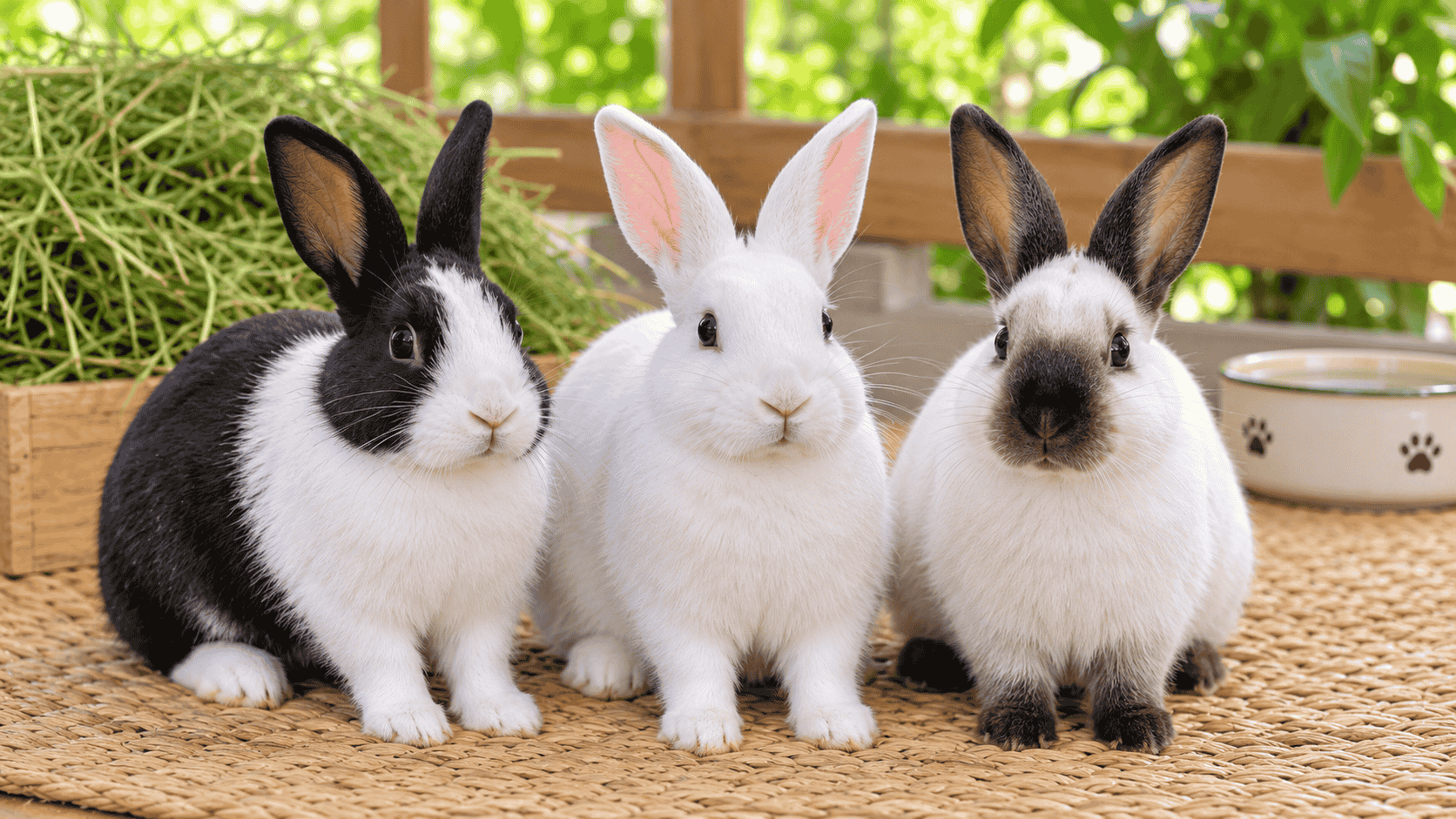
Choosing the best rabbit breeds for beginners sets you up for years of smooth, enjoyable rabbit keeping rather than constant grooming battles, fragile health, or territorial stress. Domestic rabbits come in more than 50 recognised breeds worldwide, with adult sizes spanning 1 kg dwarf pets up to 8 kg gentle giants. Every breed brings distinct differences in coat maintenance, temperament, heat tolerance, space requirements, and suitability for companion living or small-scale farming.
The right starter breed depends on your real goal. A first-time family keeping an indoor house rabbit in Accra or London needs a calm, short-coated, easy-to-handle companion, whereas a beginner starting a backyard rabbitry in Kumasi, Sunyani, or Tamale needs a hardy, heat-tolerant, productive breed with strong mothering instincts. This guide compares the ten best beginner-friendly rabbit breeds for both pets and farming, breaks down their weights, coats, and temperaments, explains which challenging breeds beginners should avoid at first, shares practical breed-selection advice for Ghana’s warm climate, and walks you through checking any rabbit before bringing it home.
What Makes a Rabbit Breed Good for Beginners?
Appearance is the worst way to choose your first rabbit. Many beginners fall in love with a fluffy Angora or a tiny, wide-eyed Netherland Dwarf at a market or pet shop, only to discover weeks later that long wool mats into painful skin knots within days or that nervous miniature breeds nip quickly when handled by children.
A genuinely beginner-friendly rabbit breed shares five practical traits:
- Calm, steady temperament: Relaxed breeds adapt faster to household noises, litter training, and gentle floor-level bonding without bolting or biting defensively.
- Low-maintenance short or medium coat: Flyback or rollback short fur needs only light weekly brushing (and daily brushing during seasonal moults), sparing beginners from daily detangling sessions and dangerous wool blockages in the gut.
- Hardy genetics and fewer breed-specific health flaws: Extremely flat-faced (brachycephalic) dwarf breeds and heavy lop-eared breeds carry higher risks of dental malocclusion, blocked tear ducts, and chronic ear infections. Medium-sized breeds with upright ears and well-proportioned skulls generally stay healthier and cost less in veterinary bills.
- Manageable adult weight (2 kg to 5 kg): Very tiny breeds (under 1.2 kg) have fragile bones and skittish energy, while giant breeds (over 6 kg) eat huge volumes of hay, need room-sized housing, and suffer sore hocks easily on hard floors. Medium breeds hit the sweet spot for safe handling and space.
- Good climate adaptability: Especially for readers in Ghana and other warm regions, short-coated breeds with long, upright ears shed body heat far more effectively than dense-furred or lop-eared breeds.
Quick Comparison: 10 Best Rabbit Breeds for Beginners
Use this reference table to compare adult weight, coat type, temperament, heat tolerance, and primary purpose across the ten strongest starter breeds.
| Rabbit Breed | Adult Weight | Coat & Grooming | Typical Temperament | Best Purpose | Warm-Climate Suitability |
|---|---|---|---|---|---|
| Dutch | 1.6 kg to 2.5 kg | Short glossy coat; low grooming | Friendly, intelligent, lively, easy to train | Indoor / family pet | Good |
| Mini Rex | 1.4 kg to 2.0 kg | Short velvety plush coat; very low grooming | Calm, affectionate, gentle, curious | Indoor pet | Good (needs soft mats for thin foot fur) |
| Mini Lop | 2.0 kg to 3.0 kg | Dense medium coat; weekly brushing | Playful, outgoing, sociable, loves floor time | Indoor / family pet | Moderate (monitor ears and heat closely) |
| Holland Lop | 1.3 kg to 1.8 kg | Soft medium coat; weekly brushing | Sweet, compact, energetic, affectionate | Apartment / indoor pet | Moderate (watch dental and ear health) |
| Harlequin | 3.0 kg to 4.3 kg | Short sleek coat; low grooming | Docile, inquisitive, playful, hardy | Pet or dual-purpose | Good |
| Flemish Giant | 6.0 kg to 8.0+ kg | Short dense coat; weekly brushing | Very docile, patient, relaxed (“gentle giant”) | Free-roam indoor pet | Low to moderate (heavy body heats up fast) |
| New Zealand White | 4.0 kg to 5.5 kg | Short dense white coat; low grooming | Docile, steady, calm, excellent mothering | Farming (meat/breeding) & calm pet | High (widely proven in Ghana) |
| Californian | 3.6 kg to 4.8 kg | Short dense white coat with dark points; low grooming | Calm, shy at first but gentle, very hardy | Farming (meat/breeding) & dual-purpose | High (widely proven in Ghana) |
| Chinchilla (Standard / American) | 2.5 kg to 5.0 kg | Soft dense grey-black coat; weekly brushing | Calm, hardy, quiet, adaptable | Farming & backyard pet | Good |
| Local Crossbred (Mixed Breed) | 2.5 kg to 4.5 kg | Usually short coat; low grooming | Varies; often resilient, alert, and hardy | Backyard farming & budget pet | Very high (adapted to local heat and forage) |
Top 6 Beginner Rabbit Breeds for Indoor and Family Pets
If your main goal is a clean, affectionate companion rabbit living indoors in an exercise pen or rabbit-proofed room, these six breeds offer the best mix of personality and manageable daily care.
1. Dutch Rabbit
The Dutch rabbit is widely regarded as one of the finest all-around pet breeds for first-time owners. Easily recognised by its neat white blaze on the face, white saddle across the shoulders, and solid coloured hindquarters (black, blue, chocolate, grey, or tortoiseshell), the Dutch weighs a compact 1.6 kg to 2.5 kg. Dutch rabbits are bright, food-motivated, quick to master litter box training, and naturally healthy with upright ears and well-shaped jaws that rarely develop inherited dental deformities. Their short, sleek coat needs only a quick weekly brush.
2. Mini Rex
Famous for its plush, velvet-like fur that stands upright rather than lying flat, the Mini Rex weighs 1.4 kg to 2.0 kg and has a calm, affectionate, easygoing nature. Because its velvety coat is very short, it sheds less visibly than dense-furred breeds and needs minimal grooming (use a soft rubber brush or damp hands rather than sharp wire slicker brushes, which can damage Rex fur). One specific care note for beginners: Mini Rex rabbits have thinner fur covering the bottoms of their hind feet than standard breeds, so they must live on soft cotton rugs, woven mats, or thick dry bedding (never bare wire mesh) to prevent sore hocks.
3. Mini Lop
Weighing roughly 2.0 kg to 3.0 kg (note that the US Mini Lop is slightly larger than the UK Mini Lop, which weighs 1.5 kg to 1.6 kg), the Mini Lop combines sturdy build with an outgoing, puppy-like curiosity. Mini Lops love exploring living rooms, tossing cardboard toys, and sitting beside owners for forehead rubs. Because their long ears hang downward over the ear canals, beginners should inspect inside the ear flaps weekly for wax buildup, moisture, or ear mites, and avoid letting them overheat in warm rooms.
4. Holland Lop
The Holland Lop is one of the smallest lop-eared breeds (1.3 kg to 1.8 kg) and a favourite for apartment dwellers. They are sweet-natured, sociable, and energetic. Because Holland Lops have a rounder, shorter face than upright-eared breeds like the Dutch, beginners must prioritise unlimited long-stem grass hay (at least 80% of the diet) and annual veterinary dental checks to keep cheek teeth worn down evenly.
5. Harlequin
Strikingly patterned in alternating bands of orange and black, blue, or chocolate, the Harlequin is an underrated beginner gem weighing 3.0 kg to 4.3 kg. Harlequins are hardy, intelligent, playful, and far less skittish than miniature dwarf breeds. Their upright ears, medium size, and short coat make them easy to groom, straightforward to health-check, and naturally resilient in both indoor pens and shaded outdoor setups.
6. Flemish Giant
If you have plenty of indoor floor space and want a remarkably calm, laid-back companion, the Flemish Giant (6.0 kg to 8.0+ kg) earns its nickname as the “gentle giant”. Flemish Giants are patient, slow-moving, and often tolerate gentle strokes far better than nervous small breeds. However, beginners must plan honestly for their size: they cannot live in standard cages (they need a large rabbit-proofed room or huge pen), they eat roughly triple the hay and pellets of a Dutch rabbit, their lifespan is slightly shorter (typically 5 to 8 years compared to 8 to 12 years in small/medium breeds), and they require thick soft flooring to protect their heavy heels.
Whichever companion breed you pick, building calm floor-level trust during the first month makes a bigger difference than breed alone; follow our step-by-step routine in how to bond with your rabbit and build lasting confidence.
Top 4 Beginner Rabbit Breeds for Backyard and Commercial Farming
If you are starting a backyard meat rabbitry or small commercial farm (especially in Ghana or West Africa), focus on fast growth, good feed conversion (turning hay, wilted local grasses, and pellets efficiently into lean meat), large healthy litters of 7 to 10 kits, strong maternal instincts, and proven heat tolerance.
1. New Zealand White
The New Zealand White is the global benchmark for commercial and backyard rabbit farming, and also makes a surprisingly calm, docile pet. Adult weights average 4.0 kg to 5.5 kg, with wide meaty loins, rapid 10-to-12-week fryer growth, calm handling temperaments, and reliable mothering instincts. Their long upright ears and short dense coat handle shaded tropical heat far better than heavy-wooled breeds. Explore full feeding, housing, and breeding benchmarks in our dedicated New Zealand White rabbits characteristics and farming guide.
2. Californian
Recognised instantly by its crisp white body paired with dark charcoal or black markings on the nose, ears, feet, and tail, the Californian (3.6 kg to 4.8 kg) rivals the New Zealand White as a top beginner farming breed. Californians have a high meat-to-bone ratio, steady growth rates, hardy digestive systems, and good adaptability to humid tropical climates. Many successful Ghanaian farms cross New Zealand White does with Californian bucks (or vice versa) to produce vigorous hybrid offspring that grow even faster than purebred lines. Read full management details in our Californian rabbits characteristics, feeding, and breeding guide.
3. Chinchilla (Standard and American Chinchilla)
With its distinctive slate-grey, pearl, and black ticked coat, the Chinchilla rabbit (2.5 kg to 3.4 kg for Standard; 4.0 kg to 5.5 kg for American) is prized by backyard farmers for its hardiness, calm nature, and efficient foraging on local grasses and fibrous weeds. Does are dependable mothers, and kits show strong survival rates when raised in clean, dry hutches.
4. Local Crossbred (Mixed-Breed) Rabbits
Beginners on a tight budget often overlook well-bred local crossbreeds (such as New Zealand White x Californian x Chinchilla crosses). Crossing two unrelated healthy breeds creates hybrid vigour (heterosis): crossbred kits frequently show stronger immunity, higher tolerance to local heat and humidity, lower initial purchase cost, and strong foraging efficiency. If you do not plan to enter pedigree shows, starting your first rabbitry with healthy local crossbreeds lets you master daily feeding, hygiene, and weaning before investing in expensive purebred breeding stock.
5 Rabbit Breeds Beginners Should Usually Avoid at First
No rabbit breed is “bad”, yet certain specialised breeds demand hours of daily grooming, strict climate control, or advanced handling experience that quickly overwhelm first-time keepers.
- English, French, and Giant Angoras: Angoras grow dense wool that reaches several centimetres long and must be thoroughly groomed or clipped several times a week. Missed grooming leads rapidly to tight skin mats, painful skin tearing, lethal heatstroke in warm climates like Ghana, and severe wool blockages in the gut.
- Netherland Dwarf (for families with young children): Weighing only 0.9 kg to 1.1 kg, Netherland Dwarfs look adorable, yet they are high-strung, fast, easily startled, and quick to nip when handled roughly. Their very short flat faces also make them prone to overgrown front teeth and molar spurs.
- Lionhead (in hot climates or without daily brushing): Lionheads carry a fluffy mane around the head and shoulders (and sometimes wool on the flanks) that traps heat and tangles easily with hay and droppings if not brushed several times a week.
- Belgian Hare: Despite its name, this is a true domestic rabbit bred to resemble a wild hare. It is lean, athletic, extremely energetic, and easily stressed by cramped cages or clumsy handling.
- Checkered Giant: A large, high-energy giant breed (5 kg to 6+ kg) that can be noticeably more territorial and demanding of space than the calmer Flemish Giant.
How to Choose the Right Breed for Your Home, Budget, and Goals
Narrow down your choice cleanly by answering four honest questions before visiting a breeder or rescue:
- Are you keeping a companion pet or starting a farm? For indoor family pets, prioritise medium size, calm personality, and short coats (Dutch, Mini Rex, Harlequin, Mini Lop). For meat production and breeding income, choose proven commercial lines (New Zealand White, Californian, Chinchilla, or healthy crosses of those three).
- How much permanent floor space do you have? Never buy a 6 kg Flemish Giant if you only have space for a 1.8 m indoor pen. Check exact minimum floor dimensions by breed weight in our guide on the best rabbit cage size and space requirements before picking your breed.
- Who will handle the rabbit daily? Households with respectful older children do best with sturdy, patient medium breeds (Dutch, Mini Lop, New Zealand White, Harlequin) rather than tiny 1 kg dwarf breeds whose delicate bones fracture easily if dropped.
- How much time can you spend grooming every week? If you want 5 minutes of weekly brushing, stick strictly to short-coated breeds. Only choose long-haired breeds if you genuinely enjoy daily brushing and live in a cool, climate-controlled home.
Best Rabbit Breeds for Ghana and Warm Tropical Climates
In Ghana (across Accra, Tema, Kumasi, Takoradi, Cape Coast, Sunyani, and Tamale), ambient temperatures climb above 32°C to 38°C during the dry season (November to April), while heavy rainy seasons (April to July and September to October) bring high humidity. Breed selection makes a huge practical difference in survival and profitability:
- Top performers in Ghana: New Zealand White, Californian, Chinchilla, Dutch (for pets), and local crossbreeds of these lines consistently perform best across Ghanaian conditions. They are widely available from established breeders, adapt well to wilted local grasses (such as guinea grass, Tridax procumbens, and sweet potato vines) paired with commercial pellets, and carry short coats with long upright ears that shed heat efficiently.
- Breeds to skip in Ghana’s climate: Avoid long-wool breeds (Angoras, Jersey Woolies, heavy-coated Lionheads) and massive 7+ kg giant breeds unless you keep them strictly inside an air-conditioned indoor home. In outdoor shaded hutches, heavy wool and huge body mass raise heatstroke mortality sharply during February and March.
- Start small with a 1-buck, 2-or-3-doe trio for backyard farming: Rather than buying 20 rabbits on day one, Ghanaian beginners succeed far more often by starting with one healthy breeding buck and two or three unrelated does of a hardy breed (such as New Zealand White or Californian). Master daily feeding, coccidiosis prevention, nest box care, and local marketing first, then expand using your best-performing offspring.
- Never buy related bucks and does from the same litter: Inbreeding causes small litters, weak immune systems, splayed legs, and genetic dental defects. Buy your starter buck from a different reputable breeder than your starter does, and keep simple ear-tag or cage-card records of parentage.
Purebred vs. Mixed-Breed (Crossbred) Rabbits for Beginners
Beginners often wonder whether they need to pay extra for purebred pedigree rabbits. The honest answer depends on your goals:
| Factor | Purebred Rabbits | Mixed-Breed (Crossbred) Rabbits |
|---|---|---|
| Predictability of adult size & coat | High; you know exact adult weight, ear shape, and coat type in advance | Moderate; adult weight and coat can vary within the same litter |
| Purchase price | Higher, especially from registered pedigree breeders | Lower and more accessible for first-time keepers |
| Health & hardiness | Strong if sourced from ethical breeders avoiding inbreeding; extreme show types can carry genetic flaws | Often very hardy thanks to hybrid vigour (wider genetic pool) |
| Best suited for | Breeders selling purebred breeding stock, show enthusiasts, or owners wanting a specific known size/coat | First-time pet adopters (rescue rabbits) and commercial meat farmers crossing NZW x Californian lines |
Where to Get Your First Rabbit and Basic Health Checks
Where you source your rabbit matters just as much as which breed you choose. Whenever possible for pet rabbits, consider adopting a neutered, health-checked adult rabbit from a reputable animal rescue or shelter, as rescuing lets you meet a rabbit whose adult personality, size, and litter habits are already known. For further independent guidance on adopting and choosing a healthy companion rabbit, you can review the RSPCA veterinary and welfare advice on choosing a rabbit.
If you are buying pet or breeding stock from a local breeder or farm (especially in Ghana), inspect both the farm environment and the individual rabbit carefully before paying:
- Inspect the rabbitry hygiene first: Clean, dry cages with minimal smell, fresh water in every compartment, and calm, alert rabbits signal a responsible breeder. Walk away immediately if you see wet manure piled high, sneezing rabbits, or overcrowded cages.
- Confirm minimum weaning age (8 weeks): Never buy a tiny 4-to-5-week-old baby rabbit, no matter how cute it looks. Kits separated too early frequently die of weaning diarrhoea within days of arriving home.
- Perform a quick 60-second health check: Confirm bright clear eyes, a clean dry nose, clean dry fur on the inside of the front paws (no matted mucus), clean pink inner ears with zero brown crusty scabs, aligned straight front incisors, dense fur on the hind heels, a clean dry tail area, and firm smooth body condition along the spine. Follow our full buyer’s inspection checklist in how to choose healthy rabbits for breeding or pets before handing over money.
- Ask for a small transition bag of current pellets: Switching feed brands abruptly triggers diarrhoea and GI stasis. Mix the breeder’s pellets with your own brand gradually over 7 days.
6 Common Mistakes Beginners Make When Selecting a Rabbit Breed
Avoid these six frequent errors that lead to disappointment or avoidable health problems:
- Choosing strictly by photos or colour: A stunning fluffy white Angora or tiny spotted dwarf may look impressive online yet turn out to be a poor fit for a hot climate, busy schedule, or young family.
- Assuming small breeds are easier than medium breeds: Many beginners buy a 1 kg Netherland Dwarf assuming “smaller means easier”, when in reality sturdy 2 kg to 4 kg breeds like the Dutch, Harlequin, or New Zealand White are noticeably calmer, tougher, and easier to handle safely.
- Buying two unneutered rabbits of unknown sex at a market: Young rabbits are famously difficult to sex accurately before 8 to 10 weeks. Thousands of beginners buy “two females” only to wake up to a surprise litter of eight babies two months later. Always verify sexes carefully and separate intact bucks and does by 10 to 12 weeks.
- Ignoring ear and skull health in extreme show breeds: Ultra-flat-faced dwarf breeds and very heavy-eared lops require extra vigilance for molar spurs and ear infections. If you choose a lop, budget for annual veterinary dental and ear exams.
- Skipping quarantine when bringing home a second rabbit: Even a healthy-looking rabbit from a reputable farm can carry silent coccidia or ear mites. Keep any newly bought rabbit in a separate quarantine cage for 21 to 30 days before introducing it near existing rabbits.
- Forgetting the 8-to-12-year commitment for pet breeds: A well-cared-for indoor Dutch or Mini Rex can live 10 years or longer. Choose a breed whose space, hay, and veterinary needs you can comfortably support long term.
Frequently Asked Questions About Rabbit Breeds for Beginners
1. What is the friendliest rabbit breed for first-time owners?
The Dutch, Mini Rex, Mini Lop, Harlequin, and New Zealand White are consistently among the friendliest, calmest breeds for beginners. Remember that individual personality, gentle floor-level bonding, spacious housing, and neutering matter just as much as breed in shaping a friendly pet.
2. What is the best rabbit breed for beginners in Ghana?
For backyard or commercial farming in Ghana, the New Zealand White, Californian, Chinchilla, and healthy crossbreeds of these lines are the strongest choices because they handle shaded tropical heat well, grow fast, and raise large litters. For indoor family pets in Accra or Kumasi, the short-coated Dutch, Mini Rex, or calm young New Zealand White are top options.
3. Which rabbit breed is best for children?
Sturdy, calm medium breeds such as the Dutch, Mini Lop, Harlequin, or New Zealand White handle family life far better than tiny, fragile dwarf breeds like the Netherland Dwarf. Regardless of breed, adults must always supervise interactions and teach children to pet rabbits calmly at floor level rather than standing up and carrying them.
4. What is the easiest rabbit breed to groom and care for?
Short-coated, upright-eared breeds such as the Dutch, New Zealand White, Californian, and Harlequin require the least grooming (typically just a 5-minute gentle brush once a week, plus daily brushing during seasonal moults) and have fewer inherited ear and dental problems than long-haired or extreme flat-faced breeds.
5. Are lop-eared rabbits harder to care for than upright-eared rabbits?
Slightly, yes. While Mini Lops and Holland Lops have wonderful, affectionate personalities, their folded ear canals trap wax and moisture more easily than upright ears, increasing the risk of ear infections, and their rounder skulls carry a higher rate of dental issues. Weekly ear checks and a high-fibre hay diet keep them healthy.
6. Should a beginner get one rabbit or two?
Rabbits are naturally social animals, and pet rabbits thrive in neutered, properly bonded pairs if you have the space (at least 3 m x 2 m) and budget for veterinary care and neutering. However, never house two unneutered adult rabbits together, as fighting or accidental breeding will happen quickly. For commercial farming, adult breeding bucks and does are housed in individual compartments.
7. Which rabbit breed lives the longest?
Small-to-medium, genetically hardy breeds with upright ears (such as the Dutch, Mini Rex, Harlequin, and healthy mixed breeds) typically live the longest, averaging 8 to 12 years indoors with high-fibre nutrition, neutering, and prompt veterinary care. Giant breeds like Flemish Giants average shorter lifespans of roughly 5 to 8 years.
8. How much does it cost to feed different rabbit breeds?
Feed cost scales directly with adult body weight. A 2 kg Dutch or Mini Rex eats roughly 1.5 to 2 tablespoons of high-fibre pellets daily plus unlimited grass hay and a cup of leafy greens, whereas a 5 kg New Zealand White or 7 kg Flemish Giant eats two to three times as much hay and pellets every day. Factor ongoing feed and bedding costs (not just the initial purchase price) into your breed choice.
Starting Your Rabbit Journey With the Right Breed
Selecting one of the best rabbit breeds for beginners comes down to matching a rabbit’s real physical needs to your home, climate, and daily schedule. Short-coated, upright-eared medium breeds (like the Dutch, Mini Rex, and Harlequin for indoor companions, or the New Zealand White, Californian, Chinchilla, and hardy local crosses for Ghanaian backyard and commercial farms) give first-time keepers the smoothest learning curve, lower grooming effort, and stronger everyday health.
Prepare a roomy, well-ventilated enclosure before bringing your rabbit home, inspect any prospective rabbit carefully head to tail, insist on a minimum 8-week weaning age, and invest quiet patience during the first few weeks of bonding. Starting with a healthy, well-matched breed makes every part of rabbit care (feeding, litter training, handling, and breeding) far more rewarding.
