

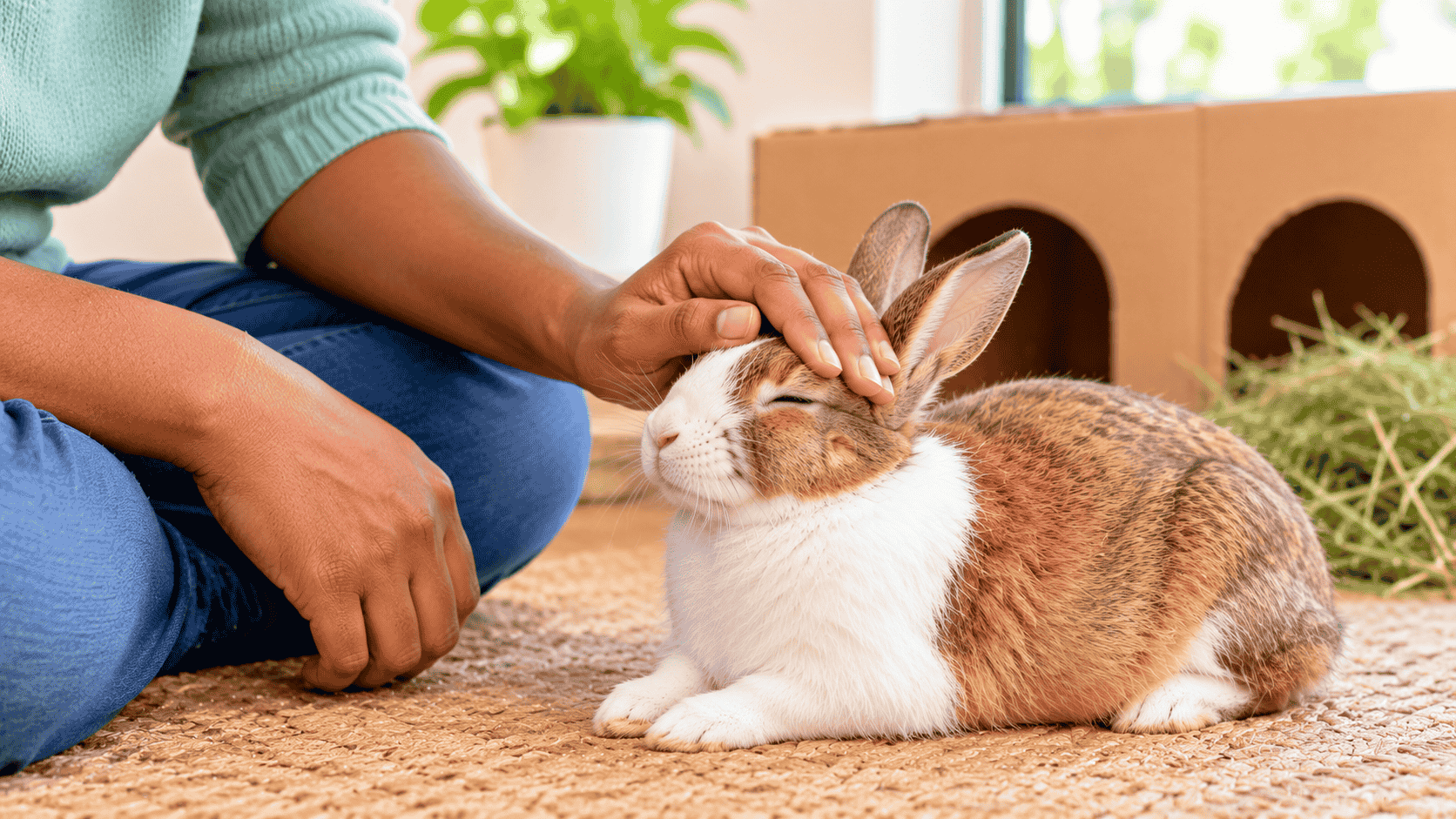
Learning how to bond with your rabbit takes patience, quiet consistency, and an understanding of how prey animals see the world. Unlike dogs, rabbits do not automatically trust humans on day one. In the wild, large creatures reaching down from above mean danger. Until your rabbit learns that your voice, scent, and hands predict safety and food rather than capture, it will stay cautious, freeze when you approach, or dash into its hideout.
The reward for respecting your rabbit’s pace is a deeply affectionate, curious companion that runs to greet you, nudges your ankles for head rubs, flops comfortably beside you on the floor, and cooperates calmly during health checks. Whether you have just brought home a nervous young rabbit in Accra, adopted an older hutch rabbit in Kumasi or Tamale, or share your living room with an indoor rabbit in the UK, this guide gives you a clear, practical roadmap. You will learn how rabbit trust works, how to set up a stress-free space, a step-by-step 30-day bonding plan, how to read signs of affection, practical adjustments for Ghanaian homes and hutches, and common mistakes that quietly stall progress.
How Rabbits Build Trust (Prey-Animal Psychology)
To bond successfully with a rabbit, you must first stop expecting it to act like a puppy or kitten. Puppies are social predators that welcome being scooped up, rolled over, and hugged. Rabbits are ground-dwelling prey animals whose entire survival relies on staying alert, keeping all four feet on solid ground, and having an open escape route at all times.
Three instincts shape every interaction you have with your rabbit:
- Height equals threat: Standing tall over a rabbit and reaching straight down mimics a hawk or dog pouncing. Sitting or lying flat on the floor instantly makes you look smaller, calmer, and far less threatening.
- Control creates confidence: A rabbit relaxes only when it knows it can hop away freely. Forcing a rabbit to sit on your lap or trapping it in a corner spikes adrenaline and teaches it to avoid your hands.
- Routine builds security: Rabbits thrive on predictable schedules. Hearing your footsteps, soft voice, and the rustle of fresh hay at the same times every morning and evening trains your rabbit to associate your presence with safety and comfort.
Once you honour these three instincts, your rabbit’s natural curiosity takes over. Within days or weeks, a cautious rabbit will begin stepping closer to investigate your shoes, sniff your knees, and eventually rest its chin on your hand for strokes.
Preparing a Calm Environment Before Bonding Starts
Trying to bond with a rabbit living in a tiny, bare, noisy cage rarely works. A stressed rabbit spends all its mental energy scanning for danger instead of forming social bonds. Before starting daily bonding sessions, get the basics of its living space right:
- Provide generous living and exercise space: Confining a rabbit to a cramped hutch builds frustration and territorial defensiveness. Check our guide on the best rabbit cage size and exercise space requirements to ensure your rabbit can hop freely, stretch out fully, and stand upright without hitting the roof.
- Include at least one two-door hideout box: Place a sturdy untreated cardboard box or wooden shelter inside the pen with two separate entrance holes cut out. Having a back exit stops your rabbit from feeling trapped when you enter the room, which paradoxically makes it braver about coming out to greet you.
- Keep the bonding area quiet and non-slip: Choose a calm room or shaded pen away from barking dogs, loud televisions, and slamming doors. Lay down a cotton rug, woven sisal mat, or textured foam mat if your floor has smooth tiles, because rabbits panic when their furred feet slide uncontrollably.
- Establish a clean litter station early: A clean, odour-free pen makes sitting on the floor with your rabbit far more pleasant for you both. If your rabbit is not yet using a tray reliably, follow our step-by-step guide on how to litter train a rabbit cleanly alongside your bonding routine.
How to Bond with Your Rabbit: 8 Practical Steps
Consistent, low-pressure daily sessions beat occasional long handling sessions every single time. Follow these eight steps in order, letting your rabbit set the speed.
Step 1: Give Your New Rabbit 48 to 72 Hours to Settle
When a rabbit arrives in a new home, every smell, shadow, and sound feels unfamiliar. For the first two to three days, keep handling to an absolute minimum. Speak softly whenever you enter the room, refill hay, pellets, and water calmly, and sit quietly nearby without reaching into its shelter. Giving your rabbit space during the first 72 hours proves you are not a threat.
Step 2: Spend 20 Minutes a Day Sitting Silently on the Floor
This is the single most effective bonding technique for any rabbit. Sit or lie down on the floor inside or beside your rabbit’s exercise pen with a book, notebook, or phone on silent. Keep your movements slow and ignore your rabbit completely. Do not reach out when it hops over to sniff your socks or nudge your elbow. Letting your rabbit explore you while you stay still and predictable builds rapid confidence.
Step 3: Pair Your Presence With High-Value Food
Rabbits are strongly food-motivated. Instead of dumping all daily pellets into a bowl and walking away, keep half of your rabbit’s daily measured pellet ration and fresh leafy herbs (such as coriander, parsley, basil, or clean wilted dandelion leaves) to hand-feed during your floor sessions. Start by dropping a single pellet 30 cm away from your knee, gradually placing each piece a little closer until your rabbit takes food gently off your flat open palm. Hold long leafy stems by the far end so your rabbit does not accidentally nip your fingertips.
Step 4: Speak in a Soft, Steady Voice
Rabbits have sensitive hearing and quickly learn to recognise individual human voices and simple cue words. Use a gentle, calm tone every time you approach, saying your rabbit’s name or a consistent phrase such as “dinner time” or “good bunny” before opening the enclosure door. Avoid sudden clapping, whistling, or shouting near your rabbit.
Step 5: Offer Your Hand at Nose Level Before Petting
Never swoop a hand directly over a rabbit’s eyes or grab from above. Instead, rest the back of your hand slowly on the floor a few centimetres in front of your rabbit’s nose so it can sniff you first. Because rabbits have a blind spot directly in front of their chin, approach slightly from the side where they can see your hand clearly. If your rabbit lowers its head flat to the floor and tucks its nose slightly forward, it is actively asking you to groom its forehead.
Step 6: Use Short, Gentle Strokes Along the Head First
Begin with two or three slow strokes across the bridge of the nose, forehead, and cheeks using one or two fingers. Pause for three seconds and watch your rabbit’s reaction. If it stays relaxed, closes its eyes slightly, or nudges your fingers with its nose, continue gently. If it hops away or flattens its ears tensely, let it leave without chasing it. Ending sessions while your rabbit still feels comfortable keeps every interaction positive.
Step 7: Keep All Four Feet on the Ground During Bonding
Many beginners accidentally undo weeks of bonding by trying to pick their rabbit up and cuddle it on the sofa too soon. Most rabbits dislike being lifted because leaving the ground feels frightening. Focus on floor-level affection first. When you genuinely need to lift your rabbit for a nail trim, weekly health check, or veterinary visit, use safe, spine-supporting grips outlined in our guide on how to handle a rabbit safely without causing stress.
Step 8: Share Interactive Play and Grooming
Once your rabbit comfortably approaches you for treats and forehead rubs, introduce calm shared activities. Hide small pinches of pellets inside a crumpled brown paper bag or cardboard toilet-roll tube, offer safe untreated apple or guava twigs to chew while sitting beside you, or teach simple target training (touching your fingertip with its nose to earn a single pellet). Gentle brushing with a soft bristle brush during moulting seasons also mimics how bonded rabbits groom each other.
A Realistic 30-Day Rabbit Bonding Schedule
Every rabbit has a unique personality. An outgoing young Dutch or New Zealand White may climb into your lap by week two, while a shy rescue rabbit may need six to eight weeks. Use the 30-day schedule below as a flexible guide, moving to the next phase only when your rabbit stays relaxed at the current step.
| Timeframe | Daily Bonding Activity | Duration | Sign You Are Ready to Advance |
|---|---|---|---|
| Days 1 to 3 | Quiet settling period; speak softly during feeding; sit 1 metre outside pen reading calmly; zero forced lifting | 15 to 20 mins twice daily | Rabbit eats normally in your presence and stops bolting into its hideout every time you enter the room |
| Days 4 to 10 | Sit flat on the floor inside or right beside the open pen; ignore the rabbit while placing pellets and long herbs near your knees | 20 to 30 mins daily | Rabbit approaches willingly, sniffs your shoes or legs, and takes herbs from your flat open palm |
| Days 11 to 18 | Present hand slowly at nose level; give 2 to 5 gentle forehead and cheek strokes while hand-feeding measured pellets | 20 to 30 mins daily | Rabbit leans into forehead strokes, relaxes its ears, or softly chatters its teeth (tooth purring) |
| Days 19 to 25 | Extend petting along the shoulders and back; introduce cardboard foraging toys, gentle brushing, and calm lap-stepping with a pellet trail | 30 mins daily | Rabbit rests or flops near your legs, hops onto your lap voluntarily for food, and greets you at the pen door |
| Days 26 to 30+ | Maintain daily floor time, simple recall training (coming when called for pellets), and calm weekly floor-level health checks | 30+ mins daily | Consistent, relaxed affection, curious interaction, and smooth cooperation during daily care |
Where Rabbits Love to Be Petted (And Where to Avoid)
Knowing which body zones feel soothing and which feel threatening prevents sudden jumps, scratches, or defensive nips.
| Body Area | Typical Rabbit Reaction | Practical Tip |
|---|---|---|
| Forehead & bridge of the nose | Favourite spot for almost all rabbits | Mimics mutual grooming between bonded rabbits; stroke gently starting at the nose and moving upward between the eyes |
| Cheeks & base of the ears | Very relaxing for most rabbits | Use light circular rubs around the jaw muscles and behind the ears |
| Shoulders & upper back | Enjoyed once trust is established | Use slow, smooth strokes following the direction of the fur |
| Under the chin & dewlap | Sensitive; many rabbits dislike direct pokes here | Let your rabbit chin you voluntarily rather than poking beneath its mouth |
| Belly & chest | Vulnerable prey zone; usually disliked | Avoid rubbing the belly during petting; touch only gently during necessary health checks |
| Feet, paws, & tail | Strongly disliked by most rabbits | Avoid tickling toes or tugging the tail, as this often triggers a quick kick or warning nip |
10 Clear Signs Your Rabbit Trusts and Loves You
Rabbits show affection subtly compared to dogs. Once you know what to look for, you will spot clear daily proof that your bond is growing stronger:
- Running to greet you: Hopping eagerly to the pen door or circling your feet when you walk in, even when it is not mealtime.
- Licking your hands, sleeves, or socks: Mutual grooming is the highest form of social affection in rabbit colonies. If your rabbit licks your skin or clothes, it considers you part of its family.
- Soft tooth purring: A light, gentle clicking or vibrating chatter of the teeth while you stroke its forehead (distinct from loud, harsh pain grinding).
- The bunny flop: Rolling dramatically onto its side with legs outstretched right beside you. A prey animal only exposes its soft belly when it feels 100% safe.
- Binkies and zoomies: Bursting into fast laps around the room and leaping into the air with a joyful mid-air twist of the body and ears.
- Chinning your shoes, hands, or phone: Rubbing the underside of its chin against your belongings using scent glands to claim you calmly as “mine”.
- Nudging your hand with its nose: Pushing your fingers gently upward to ask for more head rubs or politely telling you to pay attention.
- Resting or sleeping near you: Stretching out flat like a loaf or “splooting” with hind legs straight behind it while you sit nearby.
- Lowering its head flat to the floor: Tucking its nose under your palm to request grooming.
- Eating calmly right next to you: Munching hay or grooming its own face and ears while sitting beside your legs without nervously watching your every move.
If your rabbit instead flattens its ears, freezes, or bangs its hind feet sharply against the floor, it is communicating fear or displeasure rather than comfort. Learn to decode these alerts quickly in our guide on why rabbits thump their feet and what rabbit body language means.
Bonding with Shy, Fearful, or Previously Mishandled Rabbits
If you adopted an adult rabbit from a busy livestock market, rescued a neglected pet, or brought home a naturally timid breed, bonding still works; it simply takes a slower pace and extra empathy.
- Shrink every step: If your rabbit hides the moment you sit inside its pen, start by sitting outside the pen bars for the first week while reading aloud softly. Drop a small pinch of oats or herbs near the bars and let the rabbit collect them once it feels brave enough.
- Use consistent sound cues: Say the exact same soft phrase every time before opening the hutch latch so you never startle a shy rabbit awake.
- Avoid direct staring: Predators lock their eyes directly onto prey before attacking. When sitting near a fearful rabbit, angle your body sideways and look slightly past it rather than staring straight into its eyes.
- Respect territorial boundaries: Shy rabbits often lunge or nip when a hand enters their shelter because they feel trapped. Open the cage door and let the rabbit come out into a quiet pen on its own before cleaning. If your rabbit shows defensive lunging or nipping, combine patience with the practical steps in our guide on why rabbits bite and how to stop biting humanely.
- Consider spaying or neutering: Teenage and adult unneutered rabbits often struggle to settle down during bonding due to strong territorial and mating hormones. Neutering through a rabbit-experienced veterinarian usually produces a noticeably calmer, friendlier temperament within 4 to 8 weeks.
Bonding with Pet and Hutch Rabbits in Ghana
Across Ghana (including indoor apartments in Accra and Tema and shaded compounds in Kumasi, Cape Coast, Takoradi, and Tamale), many rabbits live in outdoor raised wooden or wire hutches while others live indoors on ceramic tiled floors. You can build a strong, calm bond in either setup with a few local adjustments:
- Time your bonding sessions for cooler hours: Between November and April, afternoon temperatures regularly pass 32°C to 36°C. Hot rabbits feel sluggish, uncomfortable, and irritable during midday. Schedule your 20-minute bonding and hand-feeding sessions during cooler early mornings (6:00 AM to 8:00 AM) or evenings (5:00 PM to 7:00 PM), when rabbits are naturally active, alert, and eager to interact.
- Bonding with outdoor hutch rabbits: If your rabbit lives in a raised backyard hutch, do not try to pull it out suddenly from above. Pull up a low stool right beside the open hutch door at eye level, offer fresh wilted local favourites such as Tridax procumbens, sweet potato vines, young moringa leaves, or guinea grass stems by hand, and let it step forward to sniff your fingers. Once it trusts you, create a shaded, predator-proof temporary exercise pen on clean grass or a veranda mat so you can sit on the ground together safely away from roaming neighbourhood dogs and cats.
- Cover slippery Ghanaian floor tiles: Polished porcelain and ceramic tiles inside homes give rabbits zero paw traction, making nervous indoor rabbits freeze in place. Lay a clean woven straw mat, cotton rug, or rubber-backed bath mat over your bonding corner so your rabbit can hop toward you confidently without splaying its legs.
- Benefits for Ghanaian rabbit farmers too: Even on small commercial rabbitries, spending 30 seconds speaking softly and offering a stalk of wilted grass before checking nest boxes or weighing stock pays off. Calm, human-socialised breeding does experience less handling stress, nurse litters more reliably, and are far easier and safer to examine during routine weekly health checks.
Common Mistakes That Break a Rabbit’s Trust
Even loving owners sometimes slow down bonding without realising it. Avoid these seven common errors:
- Picking up and hugging your rabbit constantly during the first month: Forced cuddles feel terrifying to a prey animal. Earn trust on the floor first; many rabbits never love being carried, yet will happily snuggle right beside you for hours on the rug.
- Chasing your rabbit around the room to catch it: Running after a rabbit activates full predator-escape panic. Instead, herd it calmly toward its pen or lure it into a front-opening carrier using a small trail of pellets.
- Reaching straight into the hideout box to pull the rabbit out: Your rabbit’s hideout must remain a 100% safe zone (except during genuine medical emergencies). Pulling it out destroys its sense of security.
- Overfeeding sugary fruits and carrots to “buy” affection: Too much banana, pawpaw, apple, or carrot upsets caecal bacteria and causes soft stools or GI stasis. Use your rabbit’s normal measured daily pellets and leafy herbs as bonding rewards instead.
- Allowing young children to chase, squeeze, or shout near the rabbit: Fast movements and high-pitched squeals terrify rabbits. Teach children to sit cross-legged on the floor with open hands and let the rabbit hop over to them.
- Flipping a rabbit onto its back (“trancing”): Turning a rabbit upside down triggers tonic immobility, a fear-induced freeze response that raises heart rate and stress hormones. Never trance a rabbit to cuddle it.
- Losing patience after one week: Trust in prey animals builds in small layers over weeks, not hours. Staying calm and predictable every day produces far better results than rushing.
Welfare, Health Checks, and When to Call a Vet
A strong bond is also a major health advantage: a rabbit that trusts you stays calmer during weekly ear, tooth, foot, and weight checks, and you will notice subtle behavioural changes the very day they start. Always remember that a sudden shift in social behaviour can signal physical illness rather than moodiness.
Contact a rabbit-experienced veterinarian promptly if a previously friendly, bonded rabbit suddenly starts hiding all day, refuses its favourite hand-fed herbs for 10 to 12 hours, sits tightly hunched with narrowed eyes, grinds its teeth loudly, or snaps defensively when you stroke a specific area such as its jaw, ears, or back. For additional evidence-based guidance on rabbit social needs, companionship, and welfare standards, you can consult the Rabbit Welfare Association & Fund (RWAF) rabbit behaviour and welfare advice.
Also keep in mind that rabbits are naturally social animals that benefit greatly from living with a neutered, properly bonded rabbit companion if you have the space and resources. Human companionship is wonderful, yet having a calm rabbit partner provides 24-hour mutual grooming and comfort while you are at work or asleep.
Frequently Asked Questions About Bonding with Your Rabbit
1. How long does it take to bond with a rabbit?
Most friendly young or adult rabbits begin showing clear trust (approaching you willingly, eating from your hand, and enjoying forehead rubs) within 2 to 4 weeks of consistent daily floor sessions. Shy, fearful, or previously mishandled rabbits may take 2 to 3 months of steady patience before relaxing completely.
2. Why does my rabbit run away when I try to pet it?
Rabbits run away when they feel startled by tall towering movements, fast hands reaching over their eyes, or past experiences of being grabbed and lifted. Sit flat on the floor, let your rabbit approach you first, offer your hand slowly at nose level from the side, and avoid picking it up during bonding time.
3. Can you bond with a rabbit without picking it up?
Yes, and in fact most rabbits bond much faster when you keep all four feet on the floor. Sitting at floor level, hand-feeding herbs and pellets, and giving gentle forehead strokes builds deep affection without triggering the fear of being lifted off the ground.
4. Do rabbits recognise their owners?
Yes. Rabbits recognise their owners reliably through a combination of voice, footsteps, scent, and daily routines. Many bonded rabbits respond to their own names, run to greet their primary caretaker, and act noticeably more cautious around unfamiliar visitors.
5. What is the best treat to use when bonding with a rabbit?
The healthiest and most practical bonding rewards are your rabbit’s regular daily measured pellets (fed one by one by hand instead of all in a bowl) and fragrant safe leafy herbs such as fresh coriander, parsley, basil, mint, or clean wilted dandelion leaves. Save sweet fruits like banana or apple for tiny occasional fingernail-sized treats once or twice a week.
6. Why does my rabbit lick me?
Licking your hands, arms, clothes, or socks is mutual grooming behaviour, which is one of the clearest signs that your rabbit trusts you deeply and considers you part of its social group. Simply stay relaxed and gently stroke its forehead in return.
7. Can you bond with an older rabbit?
Absolutely. Older rabbits (even 4 to 7 years old) can form very close, affectionate bonds with patient owners. Older rabbits are often calmer and more appreciative of quiet company and gentle cheek rubs than hyperactive babies, though they may take a few extra weeks to let go of old cage habits.
8. Does neutering or spaying help a rabbit bond with humans?
Yes. Spaying or neutering removes intense hormonal territoriality, circling, urine spraying, and mood swings that often appear between 4 and 12 months of age. Once hormone levels settle 4 to 8 weeks after surgery, most pet rabbits become calmer, cleaner with their litter box, and far more receptive to gentle bonding.
Building a Calm, Lifelong Relationship with Your Rabbit
Bonding with a rabbit is less about training tricks and more about proving day after day that you are safe, gentle, and predictable. Give your rabbit a roomy, non-slip living area with a secure hideout, spend 20 quiet minutes on the floor every day letting it approach at its own pace, hand-feed measured pellets and fragrant herbs on an open palm, and focus your strokes on its forehead and cheeks.
Skip forced lifting, avoid chasing, respect warning signs like flattened ears or thumping, and celebrate small milestones: a curious sniff today becomes a relaxed flop beside your knees next month. With steady patience and respect for your rabbit’s nature, you will earn a loyal, trusting companion for years to come.
