

Knowing the signs of a healthy rabbit is the most reliable way to protect your pets or breeding stock from sudden, preventable losses. Rabbits are quiet prey animals that mask pain and early illness until a condition becomes severe. When you know exactly what healthy eyes, ears, teeth, droppings, posture, and appetite look like, you spot small changes early enough for a veterinarian to step in successfully.
You do not need expensive medical equipment to check your rabbit’s health at home. Whether you keep a single house rabbit in Accra, manage a backyard hutch in Kumasi, or care for indoor rabbits in the UK, a simple weekly head-to-tail check paired with a quick daily feeding observation takes less than five minutes. This guide walks you through every physical and behavioural sign of good health, provides a practical step-by-step home examination routine, explains normal vital signs, and clarifies which subtle warning signs mean it is time to call a veterinarian.
Why Establishing Your Rabbit’s Normal Baseline Works
Every rabbit has its own normal habits. One buck may sprint to the cage door every morning at 6:00 AM, while a calmer doe waits until you open the latch before stretching and hopping over. Some rabbits drink 150 ml of water a day, while larger breeds or lactating does drink 400 ml or more. If you only look closely at your rabbit when something seems wrong, you will struggle to tell whether a quiet afternoon or a slightly smaller appetite is unusual for that specific animal.
Checking your rabbit while it is completely well trains your eyes and hands. You learn how firm its belly normally feels, how much fur covers its heels, how clean its ears look, and how many faecal pellets fill the tray overnight. If you are planning to expand your herd or buy your first pet, these same checks also help you avoid bringing sick animals home; you can review our buyer’s checklist on how to choose healthy rabbits for breeding or pets before making a purchase.
Quick-Reference Table: Healthy vs. Unhealthy Signs in Rabbits
Use this comparison table during your daily feeding routine and weekly hands-on inspection to separate normal healthy traits from warning signs that require veterinary attention.
| Body Area or Habit | Signs of a Healthy Rabbit | Early Warning Signs of Illness |
|---|---|---|
| Appetite & Thirst | Eats hay or grass steadily throughout the day; greets meals eagerly; drinks consistently | Ignores favourite greens or pellets; drops chewed food; stops eating for 10 to 12 hours; sudden drop or huge spike in water intake |
| Droppings | Plentiful, round, uniform, dry, golden-brown to dark-brown fibrous pellets | Tiny, misshapen, or absent pellets; watery, mucus-coated, or bloody diarrhoea; frequent uneaten soft caecotrophs stuck to fur |
| Eyes | Bright, clear, wide open, dry around the rims, no squinting | Watery discharge, crusty eyelids, cloudy surface, bulging eyeball, squinting in normal light |
| Nose & Breathing | Clean, dry nostrils; quiet, regular breathing; nose twitches steadily | White, cream, or yellow nasal mucus; frequent sneezing; rattling breath; open-mouth breathing; matted inner front paws |
| Ears | Clean pinkish skin inside; upright or naturally lopped; warm but not scorching hot | Thick brown crusts or scabs inside ear canal; foul odour; violent head shaking; holding one ear down; hot red ears with panting |
| Mouth & Chin | Dry fur under chin; even, aligned front incisors; comfortable chewing | Wet, matted, or green-stained chin; drooling; overgrown curved front teeth; lumps along the lower jawline |
| Coat & Skin | Glossy, dense, clean fur; smooth skin free of flakes, scabs, or parasites | Dull, rough, or patchy coat; heavy white dandruff; bald spots; red inflamed skin; visible fleas, ticks, or swellings |
| Feet & Hindquarters | Thick fur covering the bottoms of hind feet; trim nails; clean, dry tail area | Red, bald, cracked, or bleeding sores on heels; overgrown curling nails; urine-soaked or faeces-matted fur around tail |
| Posture & Movement | Smooth, balanced hopping; relaxed lounging on side or stretched out; alert posture | Hunched, tense sitting with narrowed eyes; limping; dragging back legs; head tilt; pressing belly hard to the floor |
1. Healthy Behaviour, Alertness, and Appetite
Behaviour is almost always the first thing to change when a rabbit feels unwell, often hours before any physical discharge or swelling appears. A healthy rabbit is curious, responsive, and food-motivated, especially at dawn and dusk when rabbits are naturally most active (crepuscular).
What Healthy Activity Looks Like
During active hours, a healthy rabbit explores its enclosure, rearranges hay, chews safe wooden sticks, grooms itself neatly, and reacts promptly when you approach with fresh greens or pellets. During midday rest periods, healthy rabbits stretch out comfortably with their hind legs extended behind them or flop gently onto their side. This relaxed posture is very different from a sick rabbit, which sits tightly bunched into a rigid ball with its weight shifted forward, eyes half-closed, and ears pressed flat against its back.
Healthy Eating and Drinking Patterns
Because rabbits are continuous grazers, a healthy adult eats grass hay or properly wilted fibrous grasses on and off throughout all 24 hours. It should come eagerly for measured pellets and safe leafy greens and finish them without dropping pieces repeatedly. If your rabbit suddenly refuses meals or ignores a favourite herb for more than 6 to 12 hours, do not wait overnight; read our urgent guide on why a rabbit stops eating and what to do immediately.
Water intake is equally revealing. A healthy 2 kg to 3 kg rabbit typically drinks around 100 ml to 300 ml of water per day, depending on how much fresh leafy forage it eats and how warm the weather is. Make sure you check water levels every morning and evening. A sudden refusal to drink can point to a jammed bottle spout or oral pain, while extreme, sudden thirst paired with soaked litter trays can indicate kidney issues or urinary tract problems.
2. Normal Rabbit Droppings, Caecotrophs, and Urine
Inspecting the litter tray or hutch drop pan is the single most informative health check you can perform every day. Your rabbit’s droppings tell you directly how well its digestive tract is moving.
Healthy Faecal Pellets
A healthy adult rabbit produces roughly 200 to 300 firm, round, dry faecal pellets every 24 hours. They should be fairly uniform in size (about the size of a pea or chickpea, depending on breed size), light golden-brown to medium brown when the rabbit eats plenty of high-fibre hay, and almost odourless. If you crumble a dry pellet gently with a gloved finger, it should look like tightly packed, finely ground sawdust or dried grass.
Watch closely for changes:
- Smaller, darker, or fewer pellets: Early sign of dehydration, low fibre intake, or slowing gut motility (early GI stasis).
- Pellets strung together with fur (“pearl necklace” droppings): Signals heavy shedding and swallowed fur. Increase brushing and ensure unlimited hay and water.
- True watery or mucus-coated diarrhoea: A serious medical emergency, especially in young kits aged 4 to 12 weeks, often linked to intestinal coccidiosis or bacterial enterotoxaemia.
Understanding Normal Caecotrophs
Rabbits produce a second, completely normal type of dropping called caecotrophs (sometimes called night faeces). Caecotrophs look like tiny, glossy, dark-brown clusters shaped like miniature blackberries and have a stronger, slightly pungent smell. They are packed with essential B vitamins, amino acids, and beneficial microbes. A healthy rabbit eats its caecotrophs directly from its bottom as they are produced, so you rarely see them left behind.
If you regularly find squashed, smelly caecotrophs smeared on the cage floor or stuck to your rabbit’s fur, it usually means the diet is too rich in pellets, starchy scraps, or sugary fruits, or the rabbit is too overweight or arthritic to reach its rear end to groom properly.
Normal Rabbit Urine Colours
New owners often panic when they see orange, amber, or rusty-red rabbit urine. In most cases, reddish or orange urine is completely normal and comes from harmless plant pigments (porphyrins) found in leafy greens, carrots, dandelion leaves, or certain grasses. Rabbit urine is also naturally slightly cloudy because rabbits excrete excess dietary calcium through their kidneys.
However, urine is not normal if you see:
- Distinct streaks or clots of bright red blood suspended in clear urine.
- Thick, gritty, toothpaste-like white sludge that leaves chalky crusts on the floor or fur.
- Straining in the litter box, squeaking while urinating, or tiny frequent dribbles that soak the back legs (urine scald).
3. Clear Eyes, Dry Nose, Clean Ears, and Healthy Teeth
Many serious rabbit infections and dental problems show their earliest physical clues on the head. Check each feature methodically every week.
Eyes
Healthy rabbit eyes are bright, glossy, wide open, and symmetrical. The skin around the eyelids should be dry and covered with clean fur. Rabbits have a third eyelid (nictitating membrane) tucked into the inner corner of the eye; it should stay mostly hidden when the rabbit is calm. Watery eyes, thick white discharge, crusty fur below the inner corner, or a bulging eye can indicate a blocked tear duct caused by overgrown molar roots, conjunctivitis, or a scratch from sharp hay stems.
Nose and Inner Front Paws
A healthy rabbit’s nose is clean, dry, and twitches steadily as it smells its surroundings. Always check the fur on the inside of the front paws right after checking the nose. Rabbits wipe away nasal mucus using their front wrists, so stiff, yellow, or matted fur on the inner forelegs often exposes a bacterial respiratory infection (snuffles) even when the nostrils themselves look clean at that moment.
Ears
Gently lift each ear flap (never pull or hold a rabbit by its ears) and look down into the ear canal in good light. Healthy inner ears have clean, pale-pink skin with minimal wax and no strong smell. Dry, flaky brown crusts inside the ear canal point to ear mites (Psoroptes cuniculi), while head shaking, tilting the head to one side, or pus deep in the canal suggests a middle or inner ear infection. In warm weather, also feel ear temperature: ears act as a rabbit’s cooling radiators, so they naturally feel slightly warm, but scorching hot, bright red ears paired with rapid breathing signal dangerous heat stress.
Teeth and Chin
You can inspect the front incisors gently by lifting the upper lip while supporting the rabbit securely. Healthy incisors are clean, ivory-white, and aligned neatly so the upper incisors rest slightly in front of the lower incisors. They should not curve outward, slant sideways, or chip unevenly. You cannot see the back cheek teeth (molars) without a veterinary otoscope, so check for indirect signs of healthy molars instead: completely dry fur under the chin and on the chest, smooth chewing without dropping food, and a smooth, lump-free lower jawline when you run your fingers gently along both sides of the jaw.
4. Smooth Coat, Clean Skin, and Ideal Body Condition
A rabbit’s fur and body weight reflect both its nutrition and internal organ health.
Coat Quality and Skin Checks
A healthy coat feels dense, soft, and lies flat against the body (except in naturally fluffy breeds like Angoras or Lionheads, which still should be free of tight mats). Healthy rabbits moult heavily two to four times a year, which can temporarily create uneven “moult lines” where new shorter fur grows beneath shedding older fur. Normal moulting does not leave raw, red, flaky, or scabby skin underneath.
Part the fur gently over the neck, shoulders, and lower back to check the skin directly. Healthy skin is smooth and clean. Heavy white flaking along the shoulders signals fur mites (Cheyletiella), circular crusty bald patches can indicate ringworm (a fungal infection that can spread to humans), and firm lumps beneath the skin may be bacterial abscesses or bite-wound infections.
Assessing Healthy Body Condition (The Rib and Spine Test)
Thick fur easily hides severe weight loss or obesity. Never judge a rabbit’s weight by sight alone. Run your hands gently along the ribcage, spine, and hips once a week:
- Ideal healthy weight: You can feel the ribs and spine easily under a light, smooth layer of flesh, similar to feeling the flat bones on the back of your own hand with your fingers relaxed. The hips feel rounded, not sharp.
- Underweight: The spine feels like a sharp ridge of individual bony bumps, the ribs feel very prominent, and the hip bones stick out sharply. Unexplained weight loss requires veterinary investigation; read our guide on why rabbits lose weight and how vets diagnose it.
- Overweight or obese: You have to press firmly to find the ribs, heavy fat pads sit over the shoulders and rump, and the rabbit struggles to groom its bottom cleanly. (Note: Many healthy adult female rabbits naturally have a soft fold of skin under the chin called a dewlap, which is normal and does not automatically mean obesity.)
5. Healthy Feet, Trimmed Nails, and Clean Hindquarters
Many rabbit keepers forget to check underneath the rabbit because rabbits dislike being turned over. Yet foot sores and soiled hindquarters are among the most common preventable emergencies.
Bottoms of the Hind Feet
Rabbits lack fleshy paw pads; thick fur protects the bones of their heels. In a healthy rabbit, the soles of all four feet are covered in dense, dry fur. A tiny, pale-pink, flat callus on the heel can be normal in older or heavier rabbits, provided the skin is intact and dry. Red, swollen, hairless, cracked, or bleeding patches indicate sore hocks (ulcerative pododermatitis), which commonly develops on bare wire-mesh cage floors or damp bedding.
Nail Length
Healthy nails sit nearly straight and extend only slightly past the fur of the toes. When nails grow long and curve sideways, they snag on wire or fabric, tear painfully, and push the rabbit’s weight backward onto its heels, triggering sore hocks. Trim nails every 4 to 6 weeks, cutting only the clear tip well in front of the pink blood vessel (quick).
Clean Hindquarters and Scent Glands
Check the area around the tail, anus, and genital opening every week (and twice daily during hot, humid weather). Healthy fur here is completely dry, clean, and free of odour. Urine-soaked or faeces-matted fur burns the delicate skin and attracts blowflies within hours, leading to fatal flystrike (myiasis). On each side of the genital area sit two small skin pockets called scent glands; healthy scent glands stay mostly clean, though occasional small amounts of dry brown waxy buildup can be wiped gently with a damp cotton pad dipped in warm water.
Normal Rabbit Vital Signs: Temperature, Breathing, and Heart Rate
Knowing normal physiological ranges helps you recognise subtle distress early and report accurate details to your veterinarian. Because taking a rectal temperature at home risks injuring a struggling rabbit, leave rectal temperature checks to a veterinarian unless your vet has trained you specifically on safe technique.
| Vital Sign | Normal Healthy Range | Notes for Rabbit Keepers |
|---|---|---|
| Rectal Body Temperature | 38.5°C to 40.0°C (101.3°F to 104.0°F) | Below 37.8°C signals hypothermia/shock (emergency); above 40.5°C signals fever or heatstroke (emergency) |
| Respiratory Rate (Breathing) | 30 to 60 breaths per minute at rest | Breathing should be silent and through the nose only; open-mouth breathing is always an immediate emergency |
| Heart Rate | 180 to 250 beats per minute (up to 300 when stressed) | Rabbits have a naturally rapid heartbeat; a slow, weak pulse in a limp rabbit signals severe shock |
| Daily Faecal Output | 200 to 300 firm round pellets per 24 hours | Should remain steady every day; zero droppings for 10 to 12 hours is an emergency |
| Daily Water Intake | 50 ml to 150 ml per kg of body weight daily | Varies with fresh green forage intake, lactation, and hot weather |
How to Do a 5-Minute Home Rabbit Health Check Step by Step
Performing a calm, consistent health check once a week keeps your rabbit relaxed and ensures you never miss a subtle symptom. Before lifting your rabbit, make sure you use safe, spine-supporting grips; if your rabbit struggles when picked up, follow our guide on how to handle a rabbit safely without causing stress.
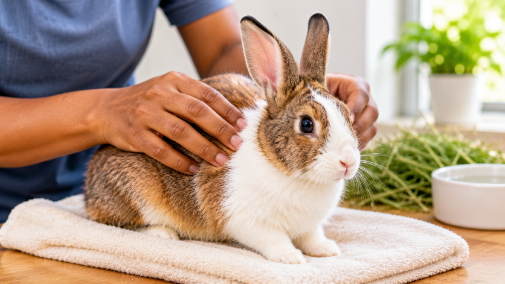
- Prepare a non-slip surface: Spread a clean, thick cotton towel over a sturdy table or sit on the floor with your rabbit in a quiet, well-lit room. Rabbits panic on slippery tiles or bare tabletops because their feet cannot grip.
- Observe posture and breathing first: Before touching your rabbit, watch it sit and move for 30 seconds. Count its breaths gently by watching its nostrils or flanks, and confirm it hops evenly without favouring any leg.
- Check the head methodically: Inspect both eyes for clarity and dry rims. Check the nostrils for dryness, then glance at the inner sides of both front paws for matted fur. Gently lift the upper lip to verify the front incisors meet evenly. Run your fingertips slowly along the lower jawbone on both sides to feel for any hidden lumps or wet chin fur.
- Inspect both ears: Gently fold back each ear flap and look inside the canal for clean pink skin, checking for brown crusts, redness, or bad odour.
- Feel body condition, skin, and abdomen: Stroke firmly down the spine, ribs, and hips to confirm steady weight. Part the coat over the shoulders and lower back to inspect the skin for dandruff or scabs. Gently cup your hands under the belly: a healthy belly feels soft and slightly doughy, never rock-hard, tight like a drum, or painful when touched.
- Check the feet, nails, and rear end: Support your rabbit’s chest and hindquarters firmly against your body (never flip a rabbit onto its back into a “trance”, as tonic immobility causes severe stress and spikes heart rate). Tilt the rabbit slightly upright against your chest or have a helper gently lift the front paws while you inspect the hind heels for sore hocks, check nail length, and verify the tail area is dry and clean.
- Weigh your rabbit and record the result: Place your rabbit inside a lightweight plastic basket or carrier on a digital kitchen scale (zeroing out the basket weight first) once every two to four weeks. Write down the weight in grams or kilograms in a simple notebook or phone note. A steady weight confirms healthy nutrition, while a drop of 5% to 10% catches hidden illness weeks before it looks obvious.
- Reward with a small healthy treat: Finish every check with a sprig of fresh coriander, parsley, or a pinch of safe herbs so your rabbit associates handling with calm, positive experiences.
Extra Health Checks for Rabbits in Ghana and Warm Climates
If you keep rabbits in Accra, Kumasi, Takoradi, Tamale, or any warm, humid tropical region, seasonal weather creates extra health pressures that deserve specific attention during your home checks:
- Afternoon heat-stress checks (November to April): During the dry season and hot midday hours when temperatures climb past 30°C, check your rabbits’ breathing rate and ear temperature between 1:00 PM and 4:00 PM. Healthy rabbits in a well-shaded, breezy hutch rest calmly with normal breathing; hot, bright-red ears, flared nostrils, and drooling mean your cooling setup needs immediate improvement.
- Twice-daily flystrike checks in humid weather: Blowflies breed quickly in warm, damp conditions. Check the hindquarters of every rabbit morning and evening during the rainy season (April to July and September to October), especially for pregnant does, older rabbits, or heavy breeds that have trouble grooming underneath.
- Wire-floor foot checks on commercial farms: Many Ghanaian rabbitries use welded wire-mesh cages for hygiene. Inspect the hind feet of breeding bucks and heavy does (such as New Zealand Whites and Californians) every week for early pink wear spots, and make sure every wire cage contains a clean plastic resting mat or smooth wooden board.
- Weaned kit checks (4 to 12 weeks old): Check young weaned kits daily for pot-bellied swelling, rough staring coats, or dampness around the tail, as intestinal and liver coccidiosis spread rapidly in warm, humid hutches.
- Forage and pellet freshness checks: Before every feeding, smell your bagged pellets for mustiness and confirm cut local grasses like guinea grass (Panicum maximum) or Tridax procumbens are clean, uncontaminated by weedkillers, and wilted properly in the shade.
Common Mistakes Rabbit Owners Make During Health Checks
Even attentive owners sometimes misread normal rabbit traits or accidentally cause stress during home examinations. Avoid these five common mistakes:
- Confusing tonic immobility (“trancing”) with relaxation: Flipping a rabbit onto its back often makes it go completely still. This is not sleep or calm relaxation; it is a fear-induced freeze response that raises stress hormones and heart rate. Keep your rabbit upright or supported gently against your chest during foot and bottom checks.
- Ignoring small changes in dropping size because the rabbit is still eating a little: A rabbit that eats half its usual hay and passes tiny, dry droppings is already slipping into early GI stasis. Waiting until eating stops completely wastes valuable hours.
- Checking only the front teeth and assuming dental health is fine: A rabbit can have straight, neat front incisors while suffering from razor-sharp molar spurs cutting its tongue at the back of the mouth. Always combine incisor checks with watching for drooling, watery eyes, jaw lumps, and weight loss.
- Panicking over normal red-orange urine while missing chalky sludge: Pigmented orange urine from leafy greens is harmless, whereas thick, gritty white calcium sludge that cakes onto fur signals a dietary imbalance or bladder issue that needs attention.
- Guessing body weight by sight alone: Long or dense fur makes a thin rabbit look plump until muscle wasting becomes severe. Using your hands to feel the ribs and recording monthly scale weights removes all guesswork.
When Home Checks Are Not Enough: Calling a Veterinarian
Home health checks are designed for early detection, never as a substitute for qualified veterinary diagnosis and treatment. If your weekly check uncovers any abnormality, review our full overview of common rabbit diseases, symptoms, and when to call a vet so you know what to watch for, and contact a veterinarian promptly. For additional guidance on rabbit welfare standards and preventive veterinary care, you can also consult the RSPCA rabbit health and welfare advice.
Seek immediate emergency veterinary care if your home check reveals any of the following:
- No food eaten or no droppings passed for 10 to 12 hours.
- Watery, foul-smelling, or bloody diarrhoea.
- Open-mouth breathing, gasping, or pale/bluish gums.
- A hard, painfully bloated abdomen or loud tooth grinding.
- Sudden head tilt, loss of balance, dragging legs, or collapse.
- Visible maggots or fly eggs on the skin.
- Severe heatstroke signs (scorching hot ears, panting, drooling, limp body).
Book a same-day or prompt veterinary appointment for sneezing or nasal mucus, crusty scabs inside the ears, red or bleeding sore hocks, wet chin fur, watery eyes, firm skin lumps, or gradual weight loss. If you live in Ghana, save the phone number of your District Veterinary Officer (Ministry of Food and Agriculture) or a trusted small-animal clinic before an urgent problem arises.
Frequently Asked Questions About Checking Rabbit Health at Home
1. How often should I check my rabbit’s health at home?
Perform a quick 2-minute visual check every day during feeding time to confirm normal appetite, water intake, alertness, and faecal pellets. Follow this with a thorough 5-minute hands-on head-to-tail check once a week, and weigh your rabbit on a digital scale every two to four weeks.
2. What does a healthy rabbit’s poop look like?
Healthy rabbit faecal pellets are round, firm, dry, uniform in size, light golden-brown to dark brown, and almost odourless. A healthy adult produces 200 to 300 pellets daily. Rabbits also produce soft, glossy, berry-like clusters called caecotrophs, which they normally eat directly from their bottom for essential nutrients.
3. Is it normal for a healthy rabbit’s ears to feel warm?
Yes. Rabbits regulate their body heat through blood vessels in their ears, so ear temperature changes throughout the day depending on room temperature and activity. Mildly warm ears on a calm rabbit are completely normal. Ears that feel scorching hot and look bright red alongside rapid breathing signal heat stress, while icy-cold ears on a hunched, lethargic rabbit can signal shock or hypothermia.
4. Why is my rabbit’s urine orange or red? Does that mean it is sick?
Usually not. Orange, amber, or rusty-red urine is commonly caused by natural plant pigments from leafy greens, carrots, dandelion leaves, or certain grasses. True blood in the urine typically appears as distinct bright-red streaks, drops, or clots and is often accompanied by straining or pain while urinating, which requires prompt veterinary care.
5. How can I tell if my rabbit is in pain?
Rabbits rarely cry out when hurt. Common signs of pain include sitting rigidly hunched in a corner with narrowed eyes, pressing the belly flat against the floor, refusing favourite foods, loud harsh tooth grinding, hiding more than usual, and reluctance to move or hop.
6. What is the difference between a rabbit purring and grinding its teeth in pain?
When a healthy rabbit is relaxed and being stroked gently, it may softly chatter or click its teeth lightly (tooth purring), while its body stays loose and comfortable. Painful tooth grinding (bruxism) is noticeably louder, harsher, and crunchier.
