

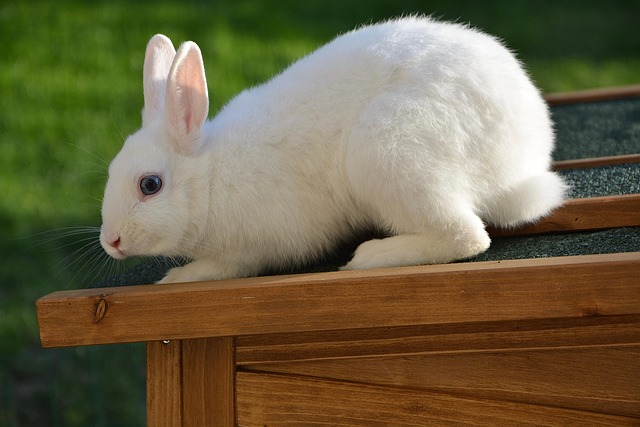
If you have ever watched your rabbit during the daytime, you may have wondered whether it is sleeping, resting or simply watching everything around it.
Rabbit sleep can be surprisingly difficult to recognise.
Unlike humans, rabbits do not usually have one long period of uninterrupted sleep. They take a series of naps throughout the day and night and may rest with their eyes partly closed, sit in a loaf position or completely stretch out when they feel comfortable.
Rabbits are also prey animals, which influences how they rest. Even when relaxed, they are naturally prepared to respond to unfamiliar sounds, movement or possible danger.
Understanding how rabbits sleep can help you recognise normal behaviour, create a comfortable resting environment and notice when unusual inactivity could indicate illness.
When Do Rabbits Sleep?
Rabbits are generally described as crepuscular.
This means they tend to be especially active around:
- Dawn
- Dusk
They are not strictly nocturnal animals.
A rabbit may eat, explore, run or play during the night, but it can also be active during daytime hours.
Likewise, rabbits sleep during both the day and night.
PDSA describes rabbits as polyphasic sleepers, meaning that instead of sleeping in one long block, they take numerous naps throughout a 24-hour period.
This is why your rabbit may appear sleepy during the afternoon but suddenly become energetic in the evening.
How Many Hours Do Rabbits Sleep?
Many rabbits accumulate approximately 6–8 hours of sleep during a 24-hour period.
Some relaxed pet rabbits may sleep closer to 10 hours.
However, this should not be treated as an exact target.
Sleep patterns can vary according to:
- Age
- Individual personality
- Environment
- Activity
- Companionship
- Health
- Noise
- Temperature
- How secure the rabbit feels
Unlike a person who may sleep continuously for seven or eight hours, a rabbit’s total sleep is usually divided into shorter periods.
PDSA notes that rabbits may take naps lasting approximately 30–60 minutes, with even shorter periods occurring as they move between sleep, rest and alertness.
Why Do Rabbits Sleep in Short Periods?
Rabbits evolved as prey animals.
Remaining lightly alert while resting can help an animal respond quickly if it detects danger.
Domestic rabbits retain much of this behaviour even when there are no predators inside the home.
You may therefore see a rabbit:
- Doze
- Wake briefly
- Look around
- Groom
- Eat some hay
- Rest again
This does not mean your rabbit is unable to sleep properly.
It can be completely normal rabbit behaviour.
Do Rabbits Sleep With Their Eyes Open?
Rabbit sleep can be difficult to identify from the eyes alone.
A rabbit may rest or doze with:
- Eyes fully closed
- Eyes partially closed
- Eyes appearing nearly open
PDSA specifically notes that rabbits frequently doze with half-closed eyes. Rabbits also have a third eyelid, in addition to their upper and lower eyelids.
For this reason, do not decide whether a rabbit is asleep based only on whether its eyes appear open.
Consider the entire body.
A sleeping or deeply resting rabbit may have:
- Relaxed muscles
- Still ears
- A comfortable posture
- Slow, calm breathing
- Reduced response to ordinary activity
A relaxed rabbit closing its eyes fully can indicate that it feels secure enough to lower its vigilance.
However, eye closure alone should not be interpreted as proof that the rabbit is healthy.
A sick rabbit may also sit quietly with narrowed eyes.
Context matters.
Common Rabbit Sleeping Positions
Rabbits can rest in several different positions.
Learning these positions can prevent unnecessary worry.
1. The Loaf Position
A rabbit loafs by sitting with its legs tucked beneath the body.
From the side, the rabbit can resemble a small loaf of bread.
A relaxed loaf may include:
- Soft body posture
- Comfortable ears
- Partially closed eyes
- Normal breathing
PDSA identifies the loaf as one of the common relaxed rabbit positions.
However, loafing needs to be distinguished from a painful hunched posture.
A rabbit in pain may appear:
- Very tense
- Unwilling to move
- Less responsive
- Uninterested in food
- Unusually quiet
A normal loaf is comfortable.
A painful hunch looks uncomfortable.
2. The Flop
Few rabbit behaviours alarm new owners as much as the first dramatic flop.
A rabbit may suddenly throw itself onto its side and remain there.
For a healthy rabbit behaving normally, this is usually a sign of considerable relaxation.
The rabbit may stretch its:
- Front legs
- Back legs
- Entire body
and appear almost unconscious.
That can be completely normal.
Flopping Is Not the Same as Collapsing
This distinction is extremely important.
A healthy rabbit that voluntarily flops usually appears comfortable and can get up normally.
A rabbit that collapses may:
- Be unable to stand
- Appear weak
- Breathe abnormally
- Become poorly responsive
- Show abnormal movement
Collapse is not a sleeping position.
It requires urgent attention.
3. Stretched-Out Sleeping
Some rabbits lie on their stomach with their hind legs stretched behind them.
Others extend both their front and rear legs.
A loose, stretched body generally indicates that the rabbit feels comfortable enough to relax.
A frightened rabbit is more likely to maintain a posture that allows rapid escape.
4. Sleeping Beside Another Rabbit
Bonded rabbits may sleep:
- Beside each other
- Touching
- With one rabbit’s head resting against the other
- Closely grouped together
Resting in physical contact is a normal social behaviour among compatible rabbits.
Rabbits are social animals, and a compatible companion can contribute to feelings of security.
Do Rabbits Dream?
Rabbit sleep includes different sleep states, and observations of sleeping rabbits may include:
- Small facial movements
- Ear movements
- Whisker twitching
- Small movements of the feet
- Rapid eye movements
RSPCA behavioural material notes that sleeping rabbits may show facial twitching and rapid eye movements.
It is tempting to describe this as dreaming.
Rabbits do experience different stages of sleep, including REM-associated sleep, but we cannot know the actual subjective content of a rabbit’s experience.
So if your rabbit twitches slightly while comfortably asleep, it does not automatically indicate a problem.
How Can You Tell Whether a Rabbit Is Sleeping?
Look at several signs together.
A resting or sleeping rabbit may:
- Remain relatively still
- Relax its body
- Partially or fully close its eyes
- Hold its ears in a relaxed position
- Lie stretched out
- Loaf comfortably
- Flop onto its side
- Respond less to ordinary quiet activity
Do not rely on whether the nose is twitching.
Rabbit facial and nose movement can vary even while the animal is resting.
What Does Gentle Tooth Chattering During Rest Mean?
Some relaxed rabbits make very quiet tooth movements while being stroked or resting.
Owners sometimes call this tooth purring.
A soft, gentle tooth chatter can accompany contentment.
However, strong or loud tooth grinding can indicate pain, particularly when combined with:
- Poor appetite
- Hunched posture
- Reduced movement
- Unusual quietness
RSPCA similarly notes that gentle tooth chattering can accompany happiness while tooth grinding may also indicate pain.
Always interpret the sound together with the rest of the rabbit’s behaviour.
Where Do Rabbits Like to Sleep?
Rabbits generally benefit from somewhere:
- Quiet
- Secure
- Dry
- Comfortable
- Protected
- Well ventilated
They should have access to hiding places where they can retreat voluntarily.
A suitable hide might include:
- A cardboard box
- Rabbit shelter
- Tunnel
- Enclosed resting compartment
For bonded rabbits, make sure shelters are large enough or numerous enough that one rabbit cannot constantly block the other.
Rabbits Need the Choice to Hide
Do not remove hiding places because you want to see or interact with the rabbit more often.
A rabbit that knows it can retreat somewhere safe may actually become more confident about exploring.
Resting areas should be part of a larger environment that also provides room for:
- Exercise
- Foraging
- Eating
- Digging
- Exploring
- Social interaction
A tiny sleeping cage should not be the rabbit’s entire world.
What Should Rabbits Sleep On?
The answer depends partly on whether the rabbit lives indoors or outdoors.
Possible comfortable surfaces can include:
- Suitable nonslip flooring
- Clean paper bedding
- Clean straw
- Appropriate washable mats
- Other rabbit-safe resting materials
The sleeping surface should remain:
- Clean
- Dry
- Comfortable
- Low in dust
Do not automatically cover an entire indoor enclosure in deep loose bedding.
A litter-trained indoor rabbit may be comfortable with nonslip flooring, designated soft resting areas and a separate litter tray.
Our Best Bedding for Rabbits guide explains the options in greater detail.
Do Rabbits Need Darkness to Sleep?
Rabbits do not require complete darkness every time they sleep.
They commonly nap during daylight hours.
However, they should have access to a sheltered area where they can escape:
- Bright direct light
- Noise
- Constant disturbance
PDSA recommends providing rabbits with a dark, quiet, sheltered sleeping area as part of their environment.
The important point is choice.
The rabbit should be able to move between lighter areas and protected resting areas rather than being forced to remain under bright light continuously.
Don’t Leave Bright Lights on Constantly
Rabbits benefit from a normal day-and-night cycle.
There is no reason to keep their enclosure brightly illuminated throughout the night.
Normal household lighting followed by appropriate darkness or low light overnight is more natural.
Should You Wake a Sleeping Rabbit?
There is usually no reason to deliberately wake a comfortably sleeping rabbit.
Allowing undisturbed rest is good practice.
However, the rule should not be:
“Never wake a rabbit under any circumstances.”
Sometimes you may need to wake or move a rabbit for:
- Medication
- Veterinary appointments
- Emergencies
- Safety
- Necessary health checks
When necessary, approach calmly.
Avoid suddenly grabbing or startling a sleeping rabbit.
Speak softly and allow the rabbit to notice your presence before handling it when possible.
Rabbits Need Quiet, but Not Complete Silence
A rabbit’s environment does not have to be completely silent.
Rabbits living in a normal household can become accustomed to ordinary sounds.
The bigger problem is repeated startling disturbance such as:
- Shouting
- Sudden banging
- Loud speakers beside the enclosure
- Dogs repeatedly barking at them
- Children constantly disturbing the sleeping area
Provide somewhere the rabbit can retreat when household activity becomes too intense.
A Predictable Routine Can Help
Rabbits often benefit from predictable routines.
Try to keep important activities reasonably consistent, including:
- Feeding
- Cleaning
- Exercise
- Quiet periods
PDSA recommends a calm environment and predictable routine and notes that allowing activity around dawn and dusk fits rabbits’ natural activity pattern.
You do not need to follow an exact minute-by-minute schedule.
The aim is to avoid unnecessary disruption.
Let Rabbits Be Active at Dawn and Dusk
Because rabbits are naturally most active around twilight, avoid designing their life entirely around human convenience.
If possible, make sure they have access to adequate exercise space early in the morning and during the evening.
Do not lock a rabbit into a tiny sleeping compartment simply because you are going to bed.
Rabbits may continue:
- Eating
- Moving
- Grooming
- Exploring
during hours when people are asleep.
How Temperature Affects Rabbit Sleep
Rabbits need somewhere comfortable enough to rest without overheating or becoming excessively cold.
Heat is particularly important because rabbits tolerate high temperatures poorly.
A rabbit that is too hot may:
- Stretch out
- Become less active
- Breathe faster
- Seek cool surfaces
Stretching alone may simply be relaxation, so again, look at context.
If the environment is hot and the rabbit develops abnormal breathing or weakness, heat stress needs to be considered.
Rabbit Sleeping Areas in Ghana and Hot Climates
For rabbits in Ghana and other tropical environments, a sleeping area should not simply be made dark and enclosed without considering ventilation.
A poorly ventilated wooden sleeping box can become dangerously hot.
Focus on:
- Shade
- Airflow
- Dry flooring
- Ventilation
- Clean drinking water
- Protection from direct sun
- Cool resting surfaces
During hot weather, avoid unnecessarily deep bedding that traps heat.
The rabbit should still have somewhere private to rest, but that area must not become a heat trap.
Our How to Keep Rabbits Cool in Hot African Weather guide covers this in greater detail.
Do Rabbits Sleep More as They Get Older?
Individual sleep and activity patterns can change with age.
Older rabbits may spend more time resting than younger, highly energetic rabbits.
However, do not automatically dismiss major inactivity as “old age.”
An elderly rabbit may move less because of:
- Arthritis
- Dental disease
- Obesity
- Pain
- Other illness
A noticeable change from the rabbit’s normal routine deserves attention.
Do Baby Rabbits Sleep More?
Young animals often spend substantial time resting while growing.
However, newborn and very young rabbits have different care requirements from independent adult rabbits.
Baby rabbits should not simply be evaluated using adult sleep patterns.
If young rabbits appear:
- Weak
- Cold
- Constantly inactive
- Poorly fed
seek experienced veterinary or breeder guidance appropriate to their age.
How to Tell the Difference Between Sleep and Illness
This is one of the most important parts of understanding rabbit sleep.
A comfortably sleeping rabbit should eventually wake and behave normally.
A sick rabbit may appear to be “sleeping all day” when it is actually lethargic.
Warning signs include:
- Refusing food
- Eating much less
- Producing fewer droppings
- Producing no droppings
- Remaining hunched
- Hiding much more than normal
- Difficulty breathing
- Weakness
- Abnormal balance
- Reluctance to move
- Loud tooth grinding
PDSA advises veterinary assessment when a rabbit shows an unexplained change in normal behaviour because rabbits commonly hide illness.
Sleeping Rabbit vs Painful Rabbit
Relaxed sleeping rabbit
Usually shows:
- Loose posture
- Normal breathing
- Comfortable resting position
- Normal appetite when awake
- Normal droppings
- Normal movement when active
Rabbit that may be ill
May show:
- Tight hunched posture
- Reduced appetite
- Fewer droppings
- Reluctance to move
- Persistent hiding
- Loud tooth grinding
- Abnormal breathing
One sign alone may not provide the answer.
Look at the whole situation.
When to Contact a Veterinarian
Contact a rabbit-experienced veterinarian if an apparent change in sleep occurs together with:
- Loss of appetite
- Very few or no droppings
- Severe lethargy
- Difficulty breathing
- Collapse
- Abnormal movement
- Significant pain
- True diarrhoea
Do not assume a rabbit that suddenly spends nearly all its time lying still simply needs more sleep.
How to Help Your Rabbit Sleep Comfortably
You do not need to “put a rabbit to bed.”
Instead, create an environment where it can choose when and where to rest.
Provide:
- Adequate living space
- At least one secure hiding area
- Dry comfortable flooring
- Good ventilation
- Protection from extreme temperature
- Fresh water
- Plenty of suitable hay
- Compatible companionship
- Reasonably predictable routines
Avoid repeatedly disturbing the rabbit when it chooses to rest.
Make Sure the Hide Is Safe
A sleeping box or hide should:
- Be stable
- Have adequate ventilation
- Be large enough
- Be free from sharp edges
- Remain dry
For multiple rabbits, consider shelters with more than one entrance so one rabbit cannot easily trap another inside.
Frequently Asked Questions
Are Rabbits Nocturnal?
No.
Rabbits are generally crepuscular, meaning they tend to be most active around dawn and dusk.
How Long Do Rabbits Sleep?
Many rabbits sleep approximately 6–8 hours in total over 24 hours, although relaxed pet rabbits may reach around 10 hours.
This sleep is normally divided into multiple shorter periods rather than one continuous block.
Do Rabbits Sleep at Night?
Yes.
Rabbits sleep during both daytime and nighttime hours.
They may also wake and become active during the night.
Do Rabbits Sleep During the Day?
Yes.
Late morning and afternoon are common resting periods for pet rabbits.
Do Rabbits Sleep With Their Eyes Open?
Rabbits may doze with their eyes partly open or half-closed.
Do not use eye position alone to decide whether a rabbit is sleeping.
Why Does My Rabbit Sleep With Its Eyes Closed?
A relaxed rabbit may fully close its eyes while sleeping.
Combined with a loose body posture, this can indicate that the rabbit feels comfortable and secure.
Why Does My Rabbit Flop on Its Side?
A voluntary flop in an otherwise healthy rabbit is generally associated with deep relaxation.
Collapse, weakness or inability to stand is different and needs urgent attention.
Why Does My Rabbit Sleep in a Loaf?
The loaf is a common rabbit resting position.
If the rabbit looks loose and comfortable, it can be completely normal.
A tense hunched rabbit refusing food may be experiencing pain instead.
Should Rabbits Sleep in a Cage?
A traditional small cage should not be the rabbit’s entire living environment.
Rabbits need enough permanent space to exercise, stretch, forage, hide and interact normally.
A sleeping shelter can be part of this larger environment.
Should I Cover My Rabbit’s Cage at Night?
Completely covering an enclosure is generally unnecessary and can reduce ventilation.
Provide a sheltered hiding area instead.
In warm climates, maintaining airflow is particularly important.
Does a Rabbit Need a Bed?
Not necessarily a commercial pet bed.
It needs a comfortable, clean and dry place to rest.
Some rabbits prefer mats, bedding, hay, straw or simply a comfortable nonslip surface.
Should I Wake My Rabbit to Feed It?
Healthy rabbits should already have continuous access to suitable hay and clean water.
There is normally no need to wake a sleeping rabbit just to offer food.
Why Is My Rabbit Suddenly Sleeping Much More?
A minor change can occur because of routine or age, but significant unexplained inactivity can also indicate illness or pain.
Check appetite, droppings, breathing, movement and general behaviour.
Final Thoughts
Understanding how rabbits sleep helps you recognise behaviours that may initially look strange.
Rabbits generally do not sleep in one long period.
Instead, they take multiple naps throughout the day and night and are usually most active around dawn and dusk.
Many rabbits accumulate around six to eight hours of sleep per day, although relaxed individuals may sleep longer.
Normal sleeping positions include:
- Loafing
- Stretching out
- Lying on the side
- Resting beside a bonded companion
A relaxed flop can look dramatic but is normally a positive sign when the rabbit is otherwise healthy.
The most important lesson is to learn what is normal for your individual rabbit.
A sleeping rabbit should still eat, move and produce normal droppings when awake.
If your rabbit suddenly becomes much quieter, stops eating, produces very few droppings or develops abnormal breathing or movement, do not assume it is simply sleeping more.
Rabbits often hide illness, which makes unexplained behavioural changes worth taking seriously.
Provide a secure, dry and quiet resting area, but also make sure the rabbit has sufficient space to exercise and behave naturally when awake.
In hot climates such as Ghana, combine privacy with good ventilation and shade so the sleeping area remains comfortable rather than becoming a heat trap.
Sources and Further Reading
For more information about rabbit sleep and behaviour, readers can consult:
- PDSA — Are Rabbits Nocturnal?
- PDSA — Rabbit Body Language
- RSPCA — Rabbit Behaviour & Body Language
- RSPCA — Rabbit Housing and Welfare
This article provides general educational information. Unusual inactivity accompanied by appetite loss, reduced droppings, breathing problems, pain or weakness should be assessed by a rabbit-experienced veterinarian.
