

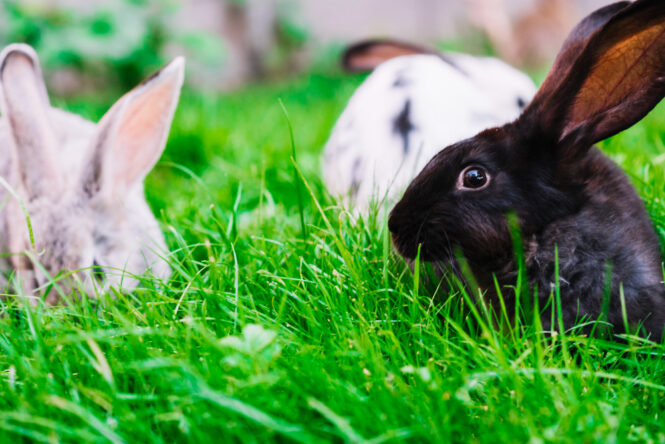
Rabbits can be surprisingly good at hiding illness. A rabbit that looks quiet may simply be resting, but subtle changes in eating, droppings, movement, grooming, or behaviour can sometimes be the first sign that something is wrong.
That is why learning how to tell if your rabbit is healthy is an important part of responsible rabbit care.
Rather than waiting until a rabbit looks seriously sick, owners should become familiar with what is normal for their individual rabbit. Knowing your rabbit’s usual appetite, activity level, droppings, weight, breathing, and behaviour makes it easier to notice changes early.
A healthy rabbit is generally alert, interested in food, moving comfortably, producing normal droppings, grooming normally, and maintaining a stable body condition.
However, no single sign can prove that a rabbit is completely healthy. Regular veterinary examinations remain important, and sudden changes should never be ignored.
Here are 10 useful things to check.
1. Your Rabbit Is Eating Normally
Appetite is one of the most important things to monitor in a rabbit.
A healthy rabbit should regularly eat appropriate food, especially hay or grass, along with its normal portion of leafy greens and pellets where these form part of its diet.
You should become familiar with how much your rabbit normally eats.
Be concerned if your rabbit suddenly:
- Refuses food
- Eats much less than usual
- Stops eating hay
- Shows interest in food but cannot eat properly
- Begins choosing only soft foods
- Drops food while chewing
Reduced appetite can be associated with several problems, including dental pain, digestive disorders, stress, injury, or another illness.
For rabbits, complete loss of appetite should not simply be watched for several days.
Their digestive system depends on regular food intake, and a significant reduction or complete loss of appetite can become serious quickly.
If your rabbit suddenly stops eating, contact a rabbit-experienced veterinarian promptly.
2. Check the Droppings
A rabbit’s droppings can tell you a great deal about what is happening with its digestive system.
Normal hard droppings are generally round, fairly uniform, dry, and made largely from digested plant fibre.
The exact colour can vary depending on diet.
Rabbit owners should pay attention to changes in:
Smaller or fewer droppings than normal can sometimes accompany reduced food intake or slowing of the digestive system.
Complete absence of droppings together with loss of appetite is especially concerning and requires prompt veterinary attention.
What About Soft Droppings?
Rabbits also produce caecotrophs, which are different from ordinary hard droppings.
Caecotrophs are soft, nutrient-rich droppings that rabbits normally eat directly from the anus.
Owners may therefore rarely see them.
Occasionally finding a caecotroph is not automatically diarrhoea.
However, persistent soft material stuck around the rabbit’s rear, true watery diarrhoea, or a sudden major change in droppings should be investigated.
Watery diarrhoea can be serious, particularly in young rabbits, and veterinary advice should be obtained.
3. Look at the Eyes
Healthy rabbit eyes should generally appear:
- Bright
- Clear
- Open normally
- Free from persistent discharge
- Free from obvious swelling
Watch for problems such as:
- Frequent watering
- Thick discharge
- Redness
- Swelling
- Squinting
- Keeping one eye closed
- Cloudiness
- A suddenly prominent third eyelid
Eye problems can have several causes.
Importantly, persistent runny eyes can sometimes be connected to dental disease because of the close relationship between rabbit tooth roots and tear ducts.
Do not assume every watery eye is a minor irritation.
If discharge, redness, pain, swelling, or other eye changes persist, arrange veterinary assessment.
4. Check the Nose and Breathing
A healthy rabbit’s nose should generally be free from persistent discharge.
Rabbits often use the inside of their front paws to wipe their faces and noses, so nasal discharge may not always be obvious.
Check the front paws for:
- Wetness
- Matted fur
- Crusty material
These can sometimes indicate nasal or eye discharge.
Also listen to your rabbit’s breathing.
Healthy breathing should not normally involve obvious effort.
Seek veterinary help if you notice:
- Persistent nasal discharge
- Frequent unexplained sneezing
- Noisy breathing
- Difficulty breathing
- Obvious effort when breathing
- Open-mouth breathing
Severe breathing difficulty is an emergency.
5. Check the Mouth and Teeth
Rabbit teeth grow continuously throughout life.
Correct diet and normal chewing help wear them down, but rabbits can still develop dental problems.
You can gently lift the lips to look at the front teeth.
The incisors should meet in a way that allows normal eating and should not appear excessively long, broken, or badly misaligned.
However, remember that you cannot properly examine all of a rabbit’s back teeth at home.
Possible signs of dental trouble include:
- Reduced appetite
- Dropping food
- Choosing softer foods
- Drooling
- Wet fur around the mouth or chin
- Weight loss
- Swelling around the jaw
- Runny eyes
- Difficulty chewing
- Teeth grinding associated with discomfort
If you suspect a dental problem, veterinary examination is necessary.
Do not attempt to cut or clip overgrown rabbit teeth yourself.
Dental problems may involve teeth that cannot be properly assessed without specialist examination.
6. Examine the Ears
Healthy ears should generally be clean and free from heavy crusting, discharge, inflammation, or unpleasant odour.
Some wax may be normal.
Watch for:
- Thick wax buildup
- Dark or crusty material
- Persistent scratching
- Head shaking
- Redness
- Swelling
- Strong odour
- Signs of pain when the ears are touched
Dark crusting can sometimes occur with ear mites or other ear conditions.
Do not push cotton buds or other objects deep into the ear canal.
If the outer ear needs gentle cleaning, follow advice from your veterinarian and avoid applying unapproved products into the ear.
A rabbit with substantial crusting, pain, discharge, or repeated head shaking should be examined by a veterinarian.
7. Look at the Coat and Skin
A healthy rabbit should normally maintain its coat through regular grooming.
The appearance of the coat varies by breed and season, especially during moulting, but you should still check your rabbit’s fur and skin regularly.
Look for:
- Bald patches
- Excessive dandruff
- Scabs
- Redness
- Open wounds
- Swelling
- Parasites
- Matted or unusually dirty fur
Run your hands gently over the rabbit’s body so you can notice lumps, wounds, painful areas, or changes beneath the coat.
Long-haired rabbits require particularly careful grooming because matting can hide skin problems.
If you notice parasites, do not automatically use a flea or tick product intended for dogs or cats.
Some products used for other pets may be unsafe for rabbits.
Ask a veterinarian which treatment is appropriate.
8. Check the Feet and Hocks
A rabbit’s feet should be examined regularly, particularly the underside of the hind feet.
The fur underneath provides important protection.
Look for:
- Redness
- Broken skin
- Swelling
- Bleeding
- Open sores
- Matted or wet fur
- Excessively long nails
Sore hocks can develop when the skin beneath the hind feet becomes inflamed or damaged.
Housing conditions, flooring, body weight, mobility problems, and other factors may contribute.
A small area where the fur is naturally thinner may not necessarily mean disease, but red, painful, broken, or infected skin should be assessed by a veterinarian.
Do not remove the protective fur from underneath the rabbit’s feet.
Also keep the nails at an appropriate length. Overgrown nails can affect normal movement and foot positioning.
If you are uncertain how to trim rabbit nails safely, ask a veterinarian or experienced rabbit professional to demonstrate.
9. Monitor Weight and Body Condition
A rabbit may lose weight before obvious illness becomes visible.
Regularly monitoring body weight can therefore help identify changes.
Using the same suitable scale at regular intervals can make gradual weight loss easier to notice.
Unexplained weight loss can be associated with problems including:
- Dental disease
- Reduced appetite
- Digestive problems
- Chronic illness
- Pain
- Mobility problems
- Inappropriate diet
Weight alone does not provide the full picture.
A rabbit can also become overweight, which may make grooming, movement, and general health more difficult.
If your rabbit’s weight changes significantly without an obvious reason, arrange a veterinary check.
10. Observe Behaviour and Movement
Knowing your rabbit’s normal personality is extremely useful.
Healthy rabbits often show natural behaviours such as:
- Exploring
- Eating
- Grooming
- Resting comfortably
- Interacting with bonded companions
- Responding to familiar people or sounds
- Moving normally
- Showing curiosity
Every rabbit has a different personality, so the important thing is noticing a change from normal behaviour.
Potential warning signs include:
- Hiding much more than usual
- Becoming unusually quiet
- Sitting hunched for long periods
- Reluctance to move
- Sudden aggression
- Losing interest in food
- Difficulty walking or hopping
- Reduced grooming
- Unusual tooth grinding
- Avoiding a bonded companion
- Becoming less responsive than normal
Because rabbits are prey animals, they may hide pain and illness.
A behavioural change can therefore be an early warning sign even when there is no obvious injury.
Check the Rabbit’s Rear End
The area underneath the tail should be clean and dry.
Check regularly for:
- Faeces stuck to the fur
- Wetness
- Urine staining
- Red or irritated skin
- Strong odour
- Fly eggs or maggots
A dirty bottom is not something to ignore.
It can occur because of dietary problems, obesity, dental disease, arthritis, mobility problems, urinary disease, or other health conditions.
During warm weather, dirty or damp fur around the rear also increases the risk of flystrike.
Flystrike occurs when flies lay eggs on or near the rabbit and maggots develop. It is a serious emergency that requires immediate veterinary attention.
What Does Healthy Rabbit Urine Look Like?
Rabbit urine can naturally vary in colour.
Depending on diet and other factors, it may appear yellow, orange, brownish, or sometimes reddish.
A red colour does not automatically mean that the rabbit is bleeding.
However, you should seek veterinary advice if your rabbit:
- Strains to urinate
- Appears painful while urinating
- Produces very little urine
- Has obvious blood within the urine
- Frequently has a wet bottom
- Suddenly changes normal urination habits
Do not diagnose urinary problems from colour alone.
How Often Should You Check Your Rabbit?
You do not need to perform a complicated medical examination every day.
However, basic observation should become part of your normal routine.
Every day, notice:
- Is the rabbit eating?
- Is fresh water being consumed?
- Are normal droppings being produced?
- Is the rabbit moving normally?
- Does its behaviour look normal?
- Are the eyes and nose clean?
- Is the rear end clean?
You can perform a more detailed hands-on check periodically, including checking weight, skin, coat, feet, nails, ears, and front teeth.
Regular veterinary health checks are also important.
Your veterinarian can examine areas that owners cannot properly assess at home, including the back teeth.
Warning Signs That Need Veterinary Attention
Contact a rabbit-experienced veterinarian if your rabbit develops a significant or unexplained change such as:
- Sudden loss of appetite
- No droppings
- Severe diarrhoea
- Difficulty breathing
- Open-mouth breathing
- Severe weakness
- Collapse
- Seizures
- Significant injury
- Persistent eye or nasal discharge
- Drooling
- Sudden difficulty walking
- Rapid unexplained weight loss
- Severe pain
- A dirty rear with fly eggs or maggots
Some rabbit illnesses can worsen quickly.
When in doubt, contacting a veterinarian early is generally safer than waiting for obvious severe illness.
Keep a Simple Rabbit Health Record
Keeping basic health records can help you notice changes over time.
You can record:
- Weight
- Appetite
- Changes in droppings
- Vaccinations where applicable
- Veterinary visits
- Medication
- Dental problems
- Previous illnesses
- Changes in diet
This can also provide useful information to your veterinarian if your rabbit becomes ill.
For people keeping several rabbits or operating a rabbit farm, individual or group health records become even more useful.
Healthy Rabbits in Ghana and Tropical Environments
Rabbit health monitoring is important everywhere, but local environmental conditions can create additional challenges.
Rabbit owners and farmers in Ghana and similar tropical environments should pay particular attention to:
- Heat stress
- Reliable access to clean water
- Ventilation
- Parasites
- Flies
- Damp housing during the rainy season
- Hygiene
- Feed quality
- Predator protection
Housing should remain clean, well ventilated, protected from direct sun, and appropriate for local weather conditions.
Health checks should be combined with good feeding, suitable housing, hygiene, and access to veterinary care where required.
Final Thoughts
Learning how to tell if your rabbit is healthy begins with knowing what is normal for your individual rabbit.
Pay attention to appetite, droppings, behaviour, weight, movement, eyes, nose, teeth, ears, skin, and feet.
A rabbit does not have to look extremely sick before something is wrong.
Changes such as eating less, producing fewer droppings, hiding more than usual, losing weight, developing eye or nasal discharge, or moving differently can all provide useful early warning signs.
Regular observation gives you a better chance of noticing problems before they become severe.
Most importantly, do not rely on an online checklist to diagnose an illness.
If your rabbit suddenly stops eating, stops passing droppings, has difficulty breathing, develops severe diarrhoea, collapses, or shows other serious symptoms, contact a qualified veterinarian promptly.
Sources and Further Reading
For additional guidance about rabbit health checks and recognising illness, readers can consult reputable resources including:
- Rabbit Welfare Association & Fund — Rabbit health and welfare guidance
- MSD Veterinary Manual — Signs of illness in rabbits
- Best Friends Animal Society — Rabbit health check guidance
This article provides general educational information and does not replace examination, diagnosis, or treatment by a qualified veterinarian.
