

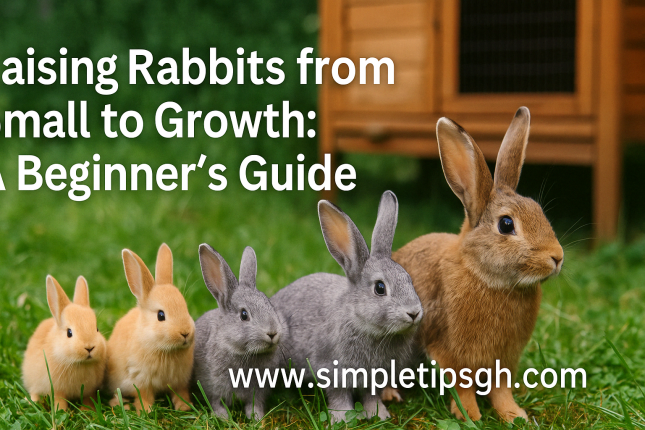
Raising rabbits successfully requires different care at different stages of growth.
A newborn rabbit does not have the same housing, feeding or health needs as an eight-week-old juvenile or an adult rabbit. One of the most common mistakes beginners make is treating every rabbit the same regardless of age.
Whether you are raising rabbits as pets or managing a small rabbit farm, understanding these growth stages can help you avoid feeding mistakes, reduce losses and notice health problems earlier.
This guide explains how to raise rabbits from birth to adulthood, including newborn care, weaning, feeding, housing, sexing, hygiene and the transition into adult management.
What Is a Baby Rabbit Called?
A newborn rabbit is called a kit or kitten.
A group of kits born at the same time is called a litter.
Domestic rabbit kits are born:
- Blind
- Deaf
- With very little or no visible fur
- Unable to regulate their body temperature effectively during the earliest days
Fur begins developing shortly after birth, and the eyes and ears generally open at around 10 days.
During these first weeks, the doe and nest environment provide most of what the kits need.
Stage 1: Newborn Rabbits — Birth to Around 10 Days
The first days of life are one of the most delicate stages.
Newborn kits need:
- Their mother
- A dry nest
- Appropriate warmth
- Protection from predators
- Minimal unnecessary disturbance
- Daily observation
They do not need bowls of vegetables, pellets or treats.
Their mother’s milk is their primary food.
Don’t Panic If the Mother Is Not Sitting With Her Babies
Rabbit mothers behave differently from cats and dogs.
A doe normally does not remain inside the nest feeding her kits throughout the day.
MSD Veterinary Manual notes that does commonly nurse their kits only once or twice each day, and a feeding can last only a few minutes.
This behaviour helps avoid attracting attention to the nest in the wild.
So a mother rabbit staying away from the nest does not automatically mean she has abandoned her babies.
How to Tell Whether Newborn Kits Are Being Fed
Check the litter calmly.
Well-fed kits usually appear:
- Warm
- Relatively quiet
- Rounded rather than severely sunken around the abdomen
- Grouped comfortably in the nest
A kit that is:
- Cold
- Weak
- Constantly distressed
- Severely thin
- Separated from the litter
needs closer attention.
If you suspect that the mother is not feeding the litter, contact a rabbit-experienced veterinarian rather than immediately attempting hand-feeding.
Hand-rearing newborn rabbits is difficult and has a significant risk of failure.
Keep the Nest Dry
Moisture is particularly dangerous for very young rabbits.
The nest box should remain:
- Dry
- Protected
- Clean
- Free from sharp edges
- Appropriately ventilated
Replace heavily wet or contaminated nesting material while avoiding unnecessary destruction of the whole nest.
A doe normally pulls some of her own fur to line the nest before giving birth.
Newborn Rabbits Need Warmth, Not Excessive Heat
Very young kits have limited ability to regulate their own temperature.
MSD reports that neonatal rabbits are not able to thermoregulate effectively until approximately the first week of life.
However, this does not mean placing the nest under dangerously hot lamps in Ghanaian weather.
The goal is a stable, protected nest—not overheating.
In tropical climates, ventilation remains essential.
Can You Touch Baby Rabbits?
The old belief that a mother rabbit will automatically reject her babies because a human touched them is too simplistic.
RSPCA recommends gentle positive handling from around 10 days old, while very young kits should generally be disturbed only when necessary for health and welfare checks.
When handling is necessary:
- Wash your hands
- Move slowly
- Support the kit carefully
- Keep handling brief
- Return it to the nest promptly
Never allow young children to carry newborn kits around.
Stage 2: Around 10 Days to 3 Weeks
At around 10 days, the eyes typically begin opening.
The kits become increasingly aware of their surroundings and gradually become more mobile.
During this period, you may notice them:
- Crawling around the nest
- Exploring short distances
- Interacting with littermates
- Beginning to investigate food
RSPCA advises that gentle handling from around 10 days can help young rabbits become accustomed to positive human contact.
Keep sessions short and calm.
Introduce Hay Early
Good-quality hay can be made available as kits begin exploring solid food.
RSPCA notes that hay may be introduced from approximately 10 days old and should remain continuously available thereafter.
The young rabbits will continue nursing while gradually investigating solid food.
Do not force-feed hay or vegetables.
Allow natural transition alongside the mother’s milk.
Stage 3: 3 to 5 Weeks — Exploration and Dietary Transition
From roughly three weeks onward, young rabbits become considerably more active.
RSPCA recommends providing plenty of safe space for exploration, exercise and interaction from around three weeks of age.
This is no longer a stage where the kits should simply remain confined inside a tiny nest box.
Provide a secure environment where they can:
- Move around
- Explore
- Eat hay
- Rest
- Return to their mother
- Interact with littermates
Feeding During This Stage
Dietary changes must be handled carefully.
Young rabbits have a developing digestive system and can be particularly vulnerable during the transition from milk to solid food.
Good-quality hay should remain available.
RSPCA advises that once kits are around five weeks old and eating hay well, small amounts of appropriate nuggets and greens may begin to be introduced gradually, one food at a time.
Do not suddenly give young rabbits:
- Large bowls of vegetables
- Fruit
- Multiple unfamiliar greens
- Random farm leaves
- A sudden new pellet brand
Rapid dietary changes can cause serious digestive problems.
Keep the Mother’s Diet Consistent Too
A nursing doe has much higher nutritional requirements than an ordinary maintenance adult.
MSD’s rabbit nutrient guidance shows that growth and especially lactation require different levels of energy and protein from adult maintenance.
Make sure a nursing doe has:
- Adequate nutrition
- Clean water continuously
- Suitable forage
- Appropriate feed for her reproductive stage
Do not put her on a restrictive adult-pet diet while she is nursing a litter.
Stage 4: Weaning
Weaning is the process by which young rabbits stop depending on their mother’s milk and become fully independent on solid food.
This is an important transition.
For pet and welfare-focused management, RSPCA advises keeping kits with their mother until approximately eight weeks old, by which point they should be fully weaned.
Commercial rabbit systems sometimes use earlier weaning schedules, but early weaning requires careful nutritional, disease and stress management.
For a beginner, there is no advantage in unnecessarily rushing this stage.
Don’t Separate Kits Suddenly Without a Reason
Weaning already involves major changes to:
- Diet
- Gut microorganisms
- Social environment
Adding unnecessary stress increases risk.
Maintain:
- Familiar food
- Familiar hay
- Clean water
- Stable housing
- Good hygiene
Avoid changing the pellet, enclosure and social group all on the same day where possible.
RWAF particularly warns that baby rabbits and animals undergoing environmental stress are vulnerable to digestive problems from sudden feed changes and recommends gradual feed transitions.
Stage 5: Around 8 Weeks — Independent Young Rabbits
By approximately eight weeks, appropriately developed kits should be independent from their mother.
This is a useful point to review:
- Sex
- Weight
- Body condition
- General health
- Housing
- Diet
- Future breeding or neutering plans
Learn to Sex Young Rabbits Correctly
Do not wait until rabbits begin mating to determine which are male and female.
RSPCA demonstrates sex identification at around eight weeks and recommends obtaining veterinary help if you are unsure.
A mistake at this stage can result in:
- Unexpected pregnancies
- Sibling mating
- Fighting as rabbits mature
If you are not confident, ask a veterinarian or genuinely experienced rabbit professional.
Stage 6: 2 to 4 Months — Juvenile Growth
This is a period of rapid growth and increasing independence.
Young rabbits need enough nutrition to support development.
Their feeding requirements are not identical to those of a mature rabbit simply maintaining body weight.
MSD specifically lists growth and finishing as a different nutritional stage from adult maintenance.
Monitor:
- Growth
- Appetite
- Droppings
- Activity
- Coat
- Body condition
Don’t Restrict Growing Rabbits Using an Adult Diet Without Reason
Advice such as “give only a handful of pellets” can be inappropriate when applied blindly to every growing rabbit.
The correct quantity depends on:
- Age
- Breed
- Weight
- Feed formulation
- Growth rate
- Whether the animal is a pet or production rabbit
Use a balanced rabbit feed appropriate to the life stage and obtain nutritional advice where necessary.
Hay or suitable forage remains important.
Sexual Maturity Begins Earlier Than Many Beginners Expect
Puberty can begin from approximately three to five months, depending on breed and individual development.
Smaller breeds may mature earlier than larger rabbits.
That means you need a plan before obvious mating starts.
Consider:
- Correct sex identification
- Neutering for pet rabbits
- Separation where necessary
- Planned breeding only when appropriate
Do not keep an intact young male and female together simply because they are siblings.
Rabbits will mate with relatives.
Housing Growing Rabbits
There is no universal rule such as:
“Never keep more than four rabbits in a cage.”
Four rabbits in a huge enclosure may have adequate room.
Two rabbits in a tiny cage may be severely overcrowded.
Housing should instead be based on:
- Rabbit size
- Number of rabbits
- Age
- Sex
- Compatibility
- Ventilation
- Climate
- Ability to move normally
MSD stresses that rabbit housing needs good ventilation, shade and predator protection and that rabbits need enough room and environmental enrichment for activity.
Don’t Start With Unsecured Open-Roaming
The original article suggested beginners could simply start rabbits in an open place before obtaining proper housing.
I would remove that advice.
Unsecured outdoor rabbits face risks from:
- Dogs
- Cats
- Snakes
- Birds of prey
- Theft
- Escape
- Contaminated plants
- Pesticides
- Weather
Prepare safe housing before obtaining rabbits.
A secure exercise area can be excellent, but it should be designed intentionally rather than used because proper housing is not yet available.
Good Rabbit Housing Should Include
A suitable setup should provide:
- Shade
- Good ventilation
- Protection from rain
- Predator security
- Dry resting areas
- Safe flooring
- Enough space for movement
- Clean feeding equipment
- Continuous water
- Enrichment
Do not rely on a small cage as the rabbit’s entire environment.
Avoid Permanent Exposed Wire Resting Surfaces
Where wire-floor systems are used, rabbits need comfortable solid resting areas.
For pet rabbits, spacious pens with solid, nonslip flooring are generally easier to manage for welfare.
Check the feet regularly for:
- Hair loss
- Redness
- Thickened skin
- Wounds
Raising Rabbits in Ghana
Ghana’s climate creates additional management challenges.
The major concerns often include:
- Heat
- Humidity
- Flies
- Rainy-season dampness
- Feed storage
- Predator control
MSD notes that high temperature combined with humidity can increase heat-exhaustion risk and that good ventilation is essential.
Rabbit housing in Ghana should prioritise:
- Permanent shade
- Cross-ventilation
- Reliable clean water
- Good drainage
- Dry bedding/resting areas
- Protection from afternoon sun
Do not create closed wooden boxes with very little airflow.
Water Is Essential During Every Growth Stage
Rabbits should always have access to potable water once independently drinking.
Water is especially important during:
- Hot weather
- Growth
- Pregnancy
- Lactation
MSD notes that rabbits consume substantial quantities of water and should have continuous access to it.
Check bowls and bottles more than once a day.
A bottle that looks full can still have a blocked drinking valve.
Bowls or Bottles?
Both systems can work.
A heavy stable bowl allows natural drinking.
A bottle can reduce contamination in some farm setups but requires frequent checking.
Whichever method you choose:
- Keep it clean
- Prevent algae
- Prevent faecal contamination
- Make sure the rabbit can reach it
- Confirm water actually flows
Hygiene for Growing Rabbits
Cleanliness matters, but a rabbitry does not need to smell strongly of disinfectant.
Daily management should include:
- Removing wet waste
- Removing spoiled feed
- Checking water
- Checking droppings
- Keeping feeding surfaces clean
Perform deeper cleaning regularly according to the system.
Cleaning and Disinfection Are Different
Cleaning removes visible:
- Urine
- Faeces
- Feed
- Dirt
Disinfection is used to reduce disease-causing organisms.
Do not continually spray insecticides and disinfectants around rabbits as a substitute for good management.
Strong-smelling chemicals can irritate animals and some pesticides can be toxic.
Use products according to label instructions and remove rabbits where required.
Handling Young Rabbits
Rabbits can learn to tolerate and even enjoy human interaction, but handling should be gentle.
RSPCA recommends:
- Slow movement
- Quiet interaction
- Supporting the body properly
- Positive early socialisation
Rabbits are prey animals and may become frightened when repeatedly lifted off the ground.
When carrying is necessary:
- Support the chest
- Support the hindquarters
- Keep the rabbit close to your body
Never lift a rabbit by:
- The ears
- One leg
- The scruff alone
Handling Does Not Automatically Cause Miscarriage
The claim that a slight touch can make a pregnant rabbit miscarry is inaccurate.
Pregnant rabbits should certainly be handled calmly and without unnecessary stress.
But gentle routine handling does not normally cause pregnancy loss.
MSD notes that abortion or fetal resorption can occur with problems such as disease or nutritional deficiencies.
Avoid rough restraint, falls and excessive stress—not normal gentle care.
Health Checks During Growth
Spend time observing young rabbits every day.
Monitor:
- Appetite
- Droppings
- Water intake
- Activity
- Breathing
- Eyes
- Nose
- Coat
- Weight
- Movement
Knowing normal behaviour makes problems easier to detect.
Young Rabbit Warning Signs
Contact a rabbit-experienced veterinarian when a young rabbit develops:
- Refusal to eat
- Very few or no droppings
- True watery diarrhoea
- Severe bloating
- Weakness
- Difficulty breathing
- Persistent nasal discharge
- Severe eye discharge
- Collapse
- Failure to gain weight
Young rabbits can deteriorate quickly.
Do not wait several days if a rabbit stops eating.
Soft Caecotrophs Are Not Always Diarrhoea
Rabbits produce ordinary dry faecal pellets and nutrient-rich caecotrophs that are normally eaten directly.
Sticky caecotrophs left around the enclosure are not the same as watery diarrhoea.
During weaning, however, abnormal digestive signs need particularly careful attention because young rabbits are undergoing major dietary and microbial changes.
Grooming Growing Rabbits
Grooming requirements depend on breed.
Short-haired rabbits generally require less coat maintenance than breeds such as:
- Angora
- Lionhead
- Other long-haired rabbits
Check the coat regularly for:
- Mats
- Parasites
- Wounds
- Dirty fur
During shedding, increase brushing as needed.
Nail Care
Do not automatically trim nails every month.
Growth rates differ.
Check nails regularly and trim when necessary.
If you are unsure where the blood vessel inside the nail is located, ask a veterinarian or experienced professional for a demonstration.
Dental Health
Rabbit teeth grow continuously.
Suitable hay and grass encourage prolonged chewing and contribute to normal dental wear.
Watch for:
- Reduced hay intake
- Drooling
- Weight loss
- Dropping food
- Facial swelling
Do not attempt to clip overgrown rabbit teeth at home.
Dental disease requires veterinary assessment.
Vaccinations
Rabbit vaccination recommendations depend on:
- Country
- Disease prevalence
- Vaccine availability
Diseases such as rabbit haemorrhagic disease and myxomatosis are important in some countries, and vaccination is standard in those areas.
Do not copy a foreign vaccination schedule automatically into a Ghanaian rabbitry.
Ask a veterinarian what diseases and vaccines are relevant locally.
Parasite Control
Do not automatically apply flea medicine because a rabbit lives outdoors.
Dog and cat flea treatments are not automatically safe for rabbits.
Some products can be dangerous.
If you notice:
- Fleas
- Mites
- Heavy dandruff
- Ear crusts
- Severe itching
obtain rabbit-appropriate treatment.
Choosing Rabbits for a Small Farm
The best breed depends on your goal.
Ask yourself whether you are raising rabbits primarily for:
- Pets
- Meat
- Breeding stock
- Showing
- Fibre/wool
There is no single “best rabbit breed” for everyone.
New Zealand Rabbits
New Zealand rabbits are widely used in meat and production systems because of their:
- Size
- Growth
- Commercial history
They may be suitable for a production-focused beginner when good stock and proper management are available.
Californian Rabbits
Californian rabbits are another established production breed.
They are commonly used for meat production and crossbreeding.
Flemish Giant
Flemish Giants become considerably larger than ordinary meat breeds.
Their size means they also need:
- More space
- More feed
- Suitable housing
Do not choose them solely because “bigger must mean more profitable.”
Feed conversion, growth rate and local market demand matter.
Angora Rabbits
Angoras are raised primarily for their wool and require much more coat maintenance.
They are not the easiest choice for someone who does not have time for frequent grooming.
Small Pet Breeds
Breeds such as Netherland Dwarfs and Mini Rex may appeal to the pet market, but production goals are different from commercial meat farming.
Breed choice should follow your purpose.
Don’t Choose a Breed by Appearance Alone
Before buying breeding stock, consider:
- Health
- Body condition
- Reproductive history
- Genetics
- Teeth
- Feet
- Temperament
- Local climate
- Availability of veterinary support
A healthy crossbred rabbit can be more useful to a small farm than a poorly bred pedigree animal.
Keep Growth Records
Record keeping is especially useful for rabbit farming.
For each rabbit or litter, consider recording:
- Date of birth
- Parents
- Litter size
- Weaning date
- Weight
- Feed changes
- Illness
- Medication
- Mortality
- Breeding history
These records help reveal patterns.
For example, if one breeding pair repeatedly produces:
- Poor growth
- Dental abnormalities
- Small litters
- High mortality
you can make better breeding decisions.
Weigh Young Rabbits Regularly
Visual appearance alone can be misleading.
A rabbit with thick fur may look large while having poor body condition.
Regular weighing can help monitor whether young rabbits are growing as expected.
A sudden failure to gain weight or actual weight loss should be investigated.
Don’t Breed Rabbits Simply Because They Reach Puberty
Sexual maturity does not automatically mean the rabbit is physically appropriate for breeding.
Age, breed, body condition, genetics and overall health need consideration.
Avoid breeding:
- Underweight animals
- Sick rabbits
- Animals with serious inherited problems
- Very immature does
Responsible production is about healthy offspring and good maternal welfare rather than producing the maximum number of litters possible.
How Many Litters Should a Doe Produce?
There is no need for this beginner article to promise that one female rabbit can produce 50 rabbits per year.
Biologically intensive breeding schedules exist, but maximum reproductive output is not automatically good management.
Frequent breeding places significant nutritional and physical demands on the doe.
A breeding programme should account for:
- Body condition
- Litter size
- Lactation
- Recovery
- Nutrition
- Health
- Production goals
A doe losing excessive condition should not simply be rebred because a calendar says it is time.
When Does a Rabbit Become an Adult?
The exact timing depends on breed.
Smaller rabbits generally mature earlier, while giant breeds develop more slowly.
Puberty may begin around three to five months, but physical maturity can occur later.
As rabbits mature, reassess:
- Diet
- Housing
- Social groups
- Body weight
- Breeding status
- Neutering
An adult maintenance rabbit does not necessarily need the same concentrated diet used during rapid growth.
Transitioning to an Adult Diet
Do not abruptly switch food because a rabbit reaches a specific birthday.
Diet transitions should be gradual.
For healthy adult pet rabbits, the diet should eventually become centred around:
- Suitable grass hay and/or grass
- Appropriate greens
- Measured adult pellets
- Fresh water
Production rabbits should receive a diet appropriate to their stage of production.
Our How to Feed a Rabbit Properly guide explains adult feeding in detail.
Pet Rabbits vs Farm Rabbits
The biological needs of the animal do not disappear because the rabbit has a commercial purpose.
All rabbits still require:
- Food
- Water
- Appropriate housing
- Protection from extreme weather
- Disease management
- Space for normal movement
- Humane handling
However, feeding and management can differ according to purpose.
A pet rabbit maintained for ten years and a growing production rabbit will not always receive exactly the same concentrate ration.
Make those distinctions clear rather than mixing instructions from pet websites and commercial farming systems.
A Simple Rabbit Growth Timeline
Birth to 10 Days
- Primarily mother’s milk
- Nest-dependent
- Eyes closed initially
- Keep warm and dry
- Minimal unnecessary disturbance
Around 10 Days to 3 Weeks
- Eyes open
- Increasing movement
- Hay becomes available
- Short positive handling can begin
3 to 5 Weeks
- More exploration
- Increasing solid-food intake
- Still nursing
- Avoid sudden diet changes
5 to 8 Weeks
- Weaning transition
- Hay remains important
- Other foods introduced carefully
- Monitor digestive health closely
Around 8 Weeks
- Fully independent in welfare-focused pet management
- Confirm sex
- Monitor weight and health
- Plan future housing
2 to 4 Months
- Rapid juvenile growth
- Life-stage-appropriate nutrition
- Puberty may begin
- Prevent accidental breeding
Young Adult
- Transition gradually to adult feeding
- Review breeding or neutering status
- Continue preventive care
Common Beginner Mistakes
Avoid:
- Buying rabbits before housing is ready
- Assuming a doe has abandoned kits because she does not sit with them
- Hand-feeding newborns unnecessarily
- Separating kits too early without a management reason
- Suddenly changing feed at weaning
- Giving very young rabbits large amounts of vegetables
- Keeping males and females together until mating is observed
- Housing rabbits according to an arbitrary number per cage
- Ignoring heat and ventilation
- Using strong pesticides around housing
- Assuming every soft dropping is diarrhoea
- Breeding as frequently as biologically possible
- Ignoring record keeping
- Treating young rabbits like adult maintenance rabbits
Frequently Asked Questions
How Long Should Baby Rabbits Stay With Their Mother?
For pet and welfare-focused management, keeping kits with their mother until approximately eight weeks is a sensible approach. RSPCA recommends that kits generally remain with the doe until eight weeks, when they should be fully weaned.
When Do Baby Rabbits Open Their Eyes?
Usually around 10 days after birth.
How Often Does a Mother Rabbit Feed Her Babies?
A doe may nurse her litter only once or twice daily, often for only a few minutes. This can be normal.
When Can Baby Rabbits Start Eating Hay?
Hay can be made available from around 10 days as kits begin exploring food.
Can Baby Rabbits Eat Vegetables?
Do not feed very young kits according to an adult vegetable diet. New greens should be introduced gradually at an appropriate developmental stage. RSPCA suggests beginning small amounts around five weeks once kits are eating hay well.
When Can You Touch Baby Rabbits?
Necessary health checks can be performed carefully, but RSPCA recommends routine positive handling from approximately 10 days old.
When Can Rabbits Start Breeding?
Puberty can begin around three to five months, depending on breed and individual development.
Do not use the start of puberty as the automatic recommended breeding age.
How Many Rabbits Can Stay in One Cage?
There is no responsible universal number.
It depends on enclosure size, rabbit size, age, sex, social compatibility and management.
Can I Raise Rabbits Without a Cage?
Rabbits can be raised in secure pens, rooms and colony-style systems; traditional cages are not the only option.
However, any system must protect the rabbits from escape, predators, weather and unsafe plants.
Do not simply release newly purchased rabbits into an unsecured open area.
What Is the Best Breed for Rabbit Farming?
New Zealand and Californian rabbits are commonly used in production systems, but the best breed depends on local availability, feed costs, climate, market goals and the quality of breeding stock.
When Should a Growing Rabbit See a Veterinarian?
Seek veterinary attention for major problems such as:
- Appetite loss
- No droppings
- Watery diarrhoea
- Severe weakness
- Difficulty breathing
- Abnormal swelling
- Persistent weight loss
Young rabbits can become seriously ill quickly.
Final Thoughts
Successful rabbit raising from birth to adulthood is not about one feeding formula or one type of cage.
Each stage has different needs.
Newborn kits depend almost entirely on their mother and nest.
As their eyes open and they begin exploring, hay and safe space become increasingly important.
The weaning period requires especially careful feeding because sudden dietary changes can cause digestive trouble.
By around eight weeks, young rabbits should be becoming fully independent, and owners need to know their sex and have a plan to prevent accidental breeding.
During juvenile growth, nutrition must support development without sacrificing fibre, water or good digestive health.
As the rabbit approaches adulthood, management changes again.
For rabbit farmers in Ghana, good housing must also account for heat, humidity, predators, ventilation and locally available feeds.
Most importantly, avoid trying to maximise numbers at the expense of animal health.
Good rabbit production comes from:
- Healthy breeding stock
- Appropriate nutrition
- Clean water
- Secure housing
- Careful weaning
- Good records
- Disease prevention
- Daily observation
Raise each stage correctly, and the transition from a vulnerable newborn kit to a healthy adult becomes much easier to manage.
Sources and Further Reading
- MSD Veterinary Manual — Management of Rabbits
- MSD Veterinary Manual — Nutrition of Rabbits
- MSD Veterinary Manual — Housing of Rabbits
- RSPCA — Pregnant Rabbits and Baby Rabbit Care
- RSPCA — Handling Rabbits
- RSPCA — Sexing Rabbits
- Rabbit Welfare Association & Fund — Rabbit Care and Nutrition
This article provides general educational information. Newborn, sick or poorly growing rabbits may require individual veterinary assessment.
