

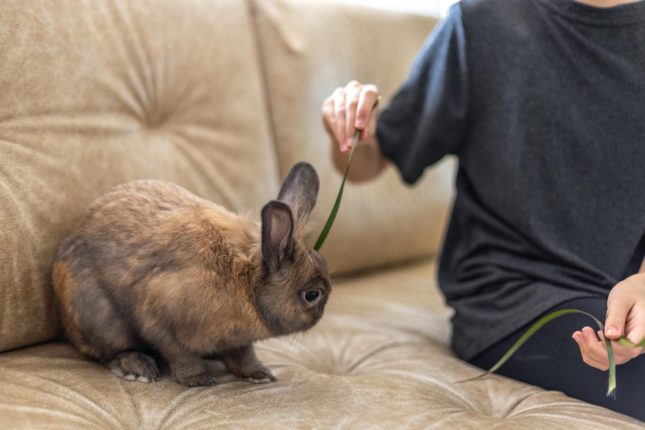
Training Rabbits: A Guide to Building a Strong Bond
Rabbits are intelligent animals that can learn much more than many people expect.
With patience and positive reinforcement, a rabbit can learn to:
- Come when called
- Enter a carrier
- Return to its enclosure
- Use a litter tray
- Touch a target
- Spin in a circle
- Stand on its hind legs
- Follow simple cues
Training is not about forcing a rabbit to obey.
Good rabbit training gives the animal a choice, rewards useful behaviour and builds communication between the rabbit and the person caring for it.
Training can also provide mental stimulation and make everyday activities such as veterinary visits, grooming and returning to the enclosure less stressful.
This guide explains how to train a rabbit safely, including trust building, rewards, clicker training, recall, carrier training, target training and simple tricks.
Can Rabbits Really Be Trained?
Yes.
Rabbits can learn associations between:
- Actions
- Sounds
- Hand signals
- Locations
- Rewards
For example, a rabbit can learn that coming toward you after hearing its name leads to a reward.
It can also learn that entering a carrier voluntarily is more rewarding than being chased and caught.
Every rabbit learns at a different pace.
Some are:
- Bold
- Food-motivated
- Curious
while others are:
- Shy
- Easily distracted
- Cautious around people
Do not compare one rabbit’s progress with another.
Why Train a Rabbit?
Training can have several practical benefits.
1. Training Improves Communication
A rabbit cannot understand human language in the same way another person can.
However, it can learn that certain sounds or gestures predict particular activities.
This makes communication easier.
2. Training Provides Mental Stimulation
Learning gives rabbits another opportunity to:
- Explore
- Think
- Make choices
- Receive rewards
Training can therefore form part of a good enrichment programme.
3. Training Can Make Handling Easier
Rather than chasing a rabbit every time you need to move it, you may teach it to:
- Come when called
- Enter a carrier
- Return to its enclosure
These are practical skills.
4. Training Can Strengthen Trust
When training is voluntary and reward-based, the rabbit learns that interacting with you produces positive experiences.
5. Training Can Help With Cooperative Care
Some rabbits can gradually learn to cooperate with activities such as:
- Stepping onto a scale
- Entering a carrier
- Moving to a particular location
- Accepting simple body checks
This can reduce stress.
Training Is Not a Replacement for Good Rabbit Care
Training cannot solve every problem.
A rabbit that constantly chews electrical cables does not simply need better obedience training.
Electrical wires must still be physically protected.
Likewise, training does not replace:
- Enough living space
- Appropriate companionship
- Exercise
- Hay
- Enrichment
- Rabbit-proofing
Never depend on training to keep a rabbit away from something that could seriously injure or kill it.
Understand Rabbit Behaviour Before Training
Rabbits are prey animals.
Many dislike:
- Being chased
- Being suddenly grabbed
- Loud noises
- Being picked up unnecessarily
If your rabbit repeatedly runs away from you, do not assume it is stubborn.
It may be frightened.
Rabbit training works much better when the animal feels safe.
Start With Trust
Before teaching tricks, make sure your rabbit is comfortable around you.
Sit on the floor near the rabbit.
Allow it to investigate you.
Avoid constantly reaching down and picking it up.
You can quietly offer:
- Hay
- A familiar herb
- Part of its normal pellet ration
When the rabbit approaches voluntarily, reward that confidence.
Over time, it can learn that your presence is safe.
Let the Rabbit Approach You
This is particularly important with nervous rabbits.
Try:
- Sit quietly at floor level.
- Avoid staring directly at the rabbit.
- Keep your movements slow.
- Allow the rabbit to approach.
- Reward calm investigation.
Do not chase the rabbit around the enclosure trying to make it interact.
Trust cannot be forced.
Choose the Right Reward
Food is convenient for training because most rabbits find it motivating.
Good training rewards can include tiny amounts of:
- Coriander
- Basil
- Mint
- Other familiar herbs
- A pellet from the rabbit’s normal daily ration
Occasional tiny pieces of suitable treats may also be used, but training should not add large numbers of calories to the diet.
Use Very Small Rewards
Training may require several repetitions.
If every successful behaviour earns half a carrot or a large fruit piece, the rabbit can consume too much sugar very quickly.
A reward only needs to be large enough to be worthwhile to the rabbit.
Find Out What Your Rabbit Likes
Not every rabbit values the same reward.
One rabbit may work enthusiastically for coriander.
Another may prefer:
- A pellet
- Basil
- Gentle head strokes
Observe your individual rabbit.
The more the rabbit values the reward, the easier early training usually becomes.
What Is Positive Reinforcement?
Positive reinforcement means giving the rabbit something it values immediately after a behaviour you want to encourage.
For example:
Rabbit approaches when called → rabbit receives a small reward.
Over repeated sessions, approaching when called becomes more likely.
The timing of the reward matters.
If too much time passes, the rabbit may not understand which action earned it.
Never Punish a Rabbit During Training
Do not use:
- Hitting
- Shouting
- Spraying water
- Chasing
- Forcing
- Nose tapping
- Physical intimidation
Punishment can make a rabbit:
- Fearful
- Defensive
- Less willing to approach
- More difficult to train
If the rabbit performs the wrong behaviour, simply do not reward it.
Try again.
What Is Clicker Training?
A clicker is a small device that makes a consistent sound.
The click acts as a marker.
It tells the rabbit:
“That exact thing you just did earned a reward.”
You do not need a clicker to train a rabbit.
A short consistent word such as:
“Yes”
can also be used as a marker.
However, a clicker can improve timing.
How to Introduce a Clicker
Before using the click to teach anything, the rabbit needs to learn what it means.
Start with:
- Click once.
- Immediately give a small reward.
- Wait a few seconds.
- Repeat.
Do several repetitions.
Eventually, the rabbit begins associating the click with a reward.
If the click is too loud and frightens the rabbit, muffle it at first or use a quiet verbal marker instead.
Keep Training Sessions Short
You do not need long sessions.
Short, successful training periods are often much more productive.
A session might last:
- A few minutes
- Several repetitions
- Until the rabbit begins losing interest
Stop if the rabbit:
- Walks away repeatedly
- Starts grooming instead
- Becomes stressed
- Seems frustrated
- Stops taking rewards
You can train again later.
Train When the Rabbit Is Naturally Active
Rabbits are often particularly active around:
- Morning
- Evening
Training during an alert period is usually easier than waking a rabbit from an afternoon nap.
Follow the rabbit’s natural routine.
1. Teach Your Rabbit to Come When Called
Recall is one of the most useful behaviours a rabbit can learn.
It can help you:
- Bring the rabbit back indoors
- Move it between areas
- Avoid chasing it
- Check on it quickly
How to Teach Recall
Start close to the rabbit.
Say its name or another consistent cue such as:
“Come.”
Immediately encourage the rabbit toward you with a reward.
When it reaches you:
- Mark the behaviour
- Give the reward
Repeat over several short sessions.
Increase the Distance Gradually
Once the rabbit reliably comes from nearby, move slightly farther away.
Do not begin by calling from across a large room.
Increase difficulty gradually.
Eventually, the rabbit can learn that the cue predicts a reward even when you are some distance away.
Never Use Recall Only for Unpleasant Things
Imagine that every time your rabbit hears “come,” it gets picked up, given medicine or returned from playtime.
It may eventually stop responding.
Sometimes call the rabbit simply to:
- Reward it
- Pet it
- Release it to continue playing
This keeps recall positive.
2. Teach Target Training
Target training is one of the most useful foundations for teaching rabbit behaviours.
A target can be something simple such as the end of a safe stick.
The goal is for the rabbit to touch the target with its nose.
Step 1
Place the target close to one side of the rabbit’s nose.
Do not push it into the rabbit’s face.
Step 2
Most curious rabbits will investigate.
The moment the rabbit touches the target:
- Click or mark
- Reward
Step 3
Repeat.
Soon the rabbit begins deliberately moving toward the target.
Step 4
Move the target slightly farther away.
Reward the rabbit for following and touching it.
Why Target Training Is Useful
Once a rabbit follows a target, you can use it to teach:
- Moving onto a scale
- Entering a carrier
- Spinning
- Moving between areas
- Simple agility behaviours
Target training allows you to guide movement without pushing or pulling the rabbit.
3. Teach Your Rabbit to Enter a Carrier
Carrier training may be more valuable than teaching tricks.
Many rabbits only see a carrier immediately before a veterinary visit.
That can make them afraid of it.
Instead, make the carrier part of normal life.
Start With the Carrier Open
Place it somewhere accessible.
Put:
- Hay
- Familiar bedding
- A favourite herb
inside.
Allow the rabbit to investigate freely.
Do not immediately close the door.
Reward Voluntary Entry
When the rabbit steps inside:
- Mark
- Reward
Gradually build toward the rabbit entering completely.
Add a Cue
Once voluntary entry is reliable, introduce a word such as:
“Carrier.”
Say the cue just before the rabbit enters.
Practice Closing the Door Gradually
Begin with:
- One second
- Reward
- Open again
Then gradually increase the time.
The goal is for the carrier to stop predicting panic.
4. Teach Your Rabbit to Return to Its Enclosure
This can make everyday routines much easier.
Instead of chasing your rabbit at the end of exercise time, teach it that returning to its home area earns something positive.
Choose a cue such as:
“Home.”
Guide the rabbit using:
- A target
- Familiar food
- A routine
When it enters:
- Mark
- Reward
Sometimes reward it and allow it to come back out again.
Otherwise, it may learn that “home” always means fun is over.
5. Litter Training
Litter training is another useful learned behaviour.
Rabbits naturally tend to choose particular areas for urination and droppings.
Training works with this natural tendency.
Place a large litter tray where the rabbit already prefers to toilet.
Use rabbit-safe litter.
A small amount of:
- Used litter
- Normal droppings
can help establish the toilet scent.
Place hay nearby because rabbits often eat while toileting.
Our dedicated How to Litter-Train a Rabbit guide explains this process in detail.
6. Teach a Rabbit to Spin
Once target training is established, spin is simple.
Step 1
Hold the target near the rabbit’s nose.
Step 2
Slowly guide it around in a circle.
Step 3
When the rabbit completes the circle:
- Mark
- Reward
Step 4
Repeat until the rabbit follows the target easily.
Then introduce a cue such as:
“Spin.”
Gradually reduce the amount of target movement required.
7. Teach a Rabbit to Stand Up
Rabbits naturally stand on their hind legs to look around.
This behaviour is sometimes called periscoping.
You can capture this natural movement rather than forcing the rabbit into position.
Hold a target or reward high enough that the rabbit naturally rises.
When it stands:
- Mark
- Reward
Do not force the rabbit’s spine or body upward with your hands.
Avoid repeated high standing exercises in rabbits with:
- Mobility problems
- Arthritis
- Spinal disease
8. Teach a Rabbit to Step Onto a Scale
This is one of the most practical forms of training.
Regular weight monitoring can help reveal:
- Weight loss
- Obesity
- Growth changes
Place the scale on a nonslip surface.
Use target training to encourage the rabbit onto it.
Reward when all four feet are on the scale.
With repetition, some rabbits will voluntarily step onto the scale when asked.
9. Cooperative Grooming Training
Grooming does not have to involve chasing and restraining a rabbit every time.
Start gradually.
For example:
- Touch the shoulder.
- Reward.
- Briefly brush once.
- Reward.
- Stop.
Over several sessions, slowly build the duration.
The goal is for the rabbit to learn that calm grooming predicts positive outcomes.
Long-haired rabbits still need necessary grooming even if training is incomplete, but cooperative training can make future sessions easier.
Can Training Stop Chewing and Digging?
Not completely.
Chewing and digging are natural rabbit behaviours.
The goal should not be to remove these behaviours.
Instead:
- Protect furniture
- Cover cables
- Provide chew items
- Provide digging opportunities
- Redirect the behaviour
A rabbit chewing cardboard instead of electrical cables is a success.
Expecting a rabbit never to chew anything is unrealistic.
Bunny-Proofing Is Still Essential
Never rely on commands to protect a rabbit from:
- Electrical wires
- Toxic plants
- Medication
- Cleaning chemicals
- Open doors
- Dangerous furniture gaps
Physically remove or block hazards.
Training should add to safety, not replace it.
Training Shy Rabbits
A shy rabbit may require more time before formal training begins.
Start with:
- Quiet presence
- Floor-level interaction
- Allowing voluntary approaches
- Gentle rewards
Do not corner the rabbit.
Confidence itself can become the first behaviour you reward.
For example:
Rabbit comes one step closer → mark → reward.
Over time, that distance can shrink.
What If the Rabbit Is Not Food Motivated?
First make sure the rabbit is healthy.
A rabbit suddenly refusing favourite food may be ill.
If the rabbit simply does not care much about the reward you selected, try another healthy option.
Possible rewards include:
- Coriander
- Mint
- Basil
- Normal pellets
Some rabbits also enjoy gentle head strokes.
Avoid Training a Hungry Rabbit Through Food Restriction
Do not remove hay or deliberately starve the rabbit to increase motivation.
Hay should remain available.
Use small high-value rewards while maintaining normal nutrition.
Training More Than One Rabbit
Bonded rabbits may want to participate together.
This can make training interesting but also distracting.
You can sometimes:
- Train both together
- Reward both
- Use separate stations
If one rabbit steals every reward, temporarily create a safe divider while keeping the rabbits able to see and smell each other.
Avoid unnecessary separation of strongly bonded rabbits.
Training and Rabbit Companionship
Training with people does not replace rabbit companionship.
Rabbits are social animals.
Where appropriate, a compatible neutered rabbit companion provides interactions that humans cannot fully reproduce.
Human training should complement—not replace—a rabbit’s social needs.
How to Read Your Rabbit During Training
Stop or simplify the session if the rabbit shows signs of stress such as:
- Repeatedly trying to escape
- Freezing
- Flattening tightly against the ground
- Persistent thumping
- Defensive lunging
- Refusing normally valued food
One thump does not automatically mean training must stop forever.
Look at the entire context.
A rabbit that repeatedly chooses to move away is telling you the session is too difficult, frightening or uninteresting.
What If the Rabbit Gets the Behaviour Wrong?
Nothing bad needs to happen.
Simply:
- Do not mark
- Do not reward
- Reset
- Make the next attempt easier
Training should not become a battle.
If the rabbit repeatedly fails, the problem may be the training plan rather than the animal.
Break the task into smaller steps.
Add Cues Only After the Behaviour Is Developing
A common mistake is repeating:
“Come, come, come, come!”
while the rabbit ignores you.
That teaches the rabbit that the word has little meaning.
It is often easier to first teach the behaviour.
Once the rabbit reliably performs it, add the verbal or hand cue just before the behaviour.
Over time, the cue gains meaning.
Don’t Repeat Cues Constantly
Give the cue once.
Allow the rabbit time to respond.
If nothing happens:
- Reset
- Reduce difficulty
- Try again
Repeatedly saying the cue can weaken its usefulness.
Reward Timing Matters
Try to mark the exact behaviour you wanted.
For example, when teaching target touching:
Rabbit’s nose touches target → click immediately.
If you wait until the rabbit has:
- Touched the target
- Turned away
- Scratched itself
and then click, it may be unclear what earned the reward.
Can Rabbits Learn Their Names?
A rabbit can learn that a particular sound—including its name—is associated with attention, food or being called.
You can teach this through repetition.
Say the name before offering a reward when the rabbit looks toward or approaches you.
Eventually, the sound becomes meaningful.
Can Rabbits Learn Tricks?
Yes.
Some rabbits can learn:
- Spin
- Target touch
- Stand
- Fetch-like behaviours
- Entering tunnels
- Simple obstacle courses
However, tricks should be optional enrichment.
Do not force rabbits to perform for entertainment.
Their welfare comes first.
Be Careful With Jump Training
A healthy rabbit naturally jumps.
However, repeatedly asking a rabbit to jump over high obstacles is not appropriate for every animal.
Avoid agility-type jumping if the rabbit is:
- Very young
- Elderly
- Overweight
- Arthritic
- Recovering from injury
- Physically unfit
Seek veterinary advice before serious agility training.
The purpose is enrichment, not competition at the expense of health.
Harness Training Is Not Necessary for Every Rabbit
Some owners choose to use rabbit harnesses.
If you do, the rabbit should be trained gradually and voluntarily.
Never:
- Drag a rabbit on a lead
- Pull it by the neck
- Force it into a harness
- Leave it tethered unattended
A secure exercise enclosure is often a safer option.
How Long Does Rabbit Training Take?
There is no universal timeline.
One rabbit may understand a target within a few minutes.
Another may need several sessions simply to become comfortable approaching.
Training speed depends on:
- Temperament
- Previous experience
- Motivation
- Environment
- Training skill
- Health
Success is measured by progress, not speed.
A Simple Beginner Training Plan
First Goal: Trust
Reward voluntary approaches.
Second Goal: Marker Training
Teach the meaning of a click or verbal marker.
Third Goal: Target Touch
Teach the rabbit to touch a target.
Fourth Goal: Recall
Teach a reliable “come” cue.
Fifth Goal: Carrier Training
Teach voluntary entry.
Sixth Goal: Optional Tricks
Add spin, stand or other enrichment behaviours.
This order builds useful skills before entertainment tricks.
Training Rabbits in Ghana
Rabbit training does not require expensive equipment.
You can train using:
- A quiet room
- A secure pen
- Normal rabbit pellets
- Fresh herbs
- A homemade target
For rabbits kept on small farms, useful training can include:
- Entering transport carriers
- Moving between pens
- Stepping onto scales
These behaviours can make routine handling less stressful.
However, training cannot compensate for poor housing.
Farm and pet rabbits still require:
- Appropriate space
- Shade
- Water
- Good nutrition
- Protection from heat
Common Rabbit-Training Mistakes
Avoid:
- Punishment
- Shouting
- Chasing
- Physically forcing positions
- Training for too long
- Using large sugary treats repeatedly
- Repeating cues constantly
- Training while the rabbit is frightened
- Expecting identical behaviour from every rabbit
- Using training instead of rabbit-proofing
- Trying to eliminate natural chewing and digging
- Forcing tricks for entertainment
- Expecting human interaction to replace rabbit companionship
Frequently Asked Questions
Can Rabbits Be Trained?
Yes.
Rabbits can learn behaviours such as coming when called, entering a carrier, using a litter tray and performing simple tricks.
What Is the Best Way to Train a Rabbit?
Positive reinforcement is the recommended approach.
Reward desired behaviour rather than punishing mistakes.
Can You Clicker-Train a Rabbit?
Yes.
A clicker can mark the exact behaviour that earned a reward.
Introduce the click by pairing it with rewards before using it for training.
Can Rabbits Learn Their Names?
They can learn to associate their name or another sound with attention, rewards and recall.
Can Rabbits Come When Called?
Yes.
Recall can be taught gradually with consistent cues and rewards.
Can Rabbits Learn Tricks?
Yes.
Examples include spinning, touching targets and standing up.
Tricks should remain voluntary and safe.
Can Rabbits Be Litter-Trained?
Yes.
Rabbits naturally tend to choose toilet areas, which can be used to encourage litter-tray habits.
Should I Punish My Rabbit for Bad Behaviour?
No.
Punishment can cause fear and damage trust.
Redirect undesirable natural behaviours and reward alternatives.
How Long Should Rabbit Training Sessions Be?
Keep them short.
Several successful minutes are better than continuing until the rabbit becomes bored or stressed.
What Treats Should I Use for Training?
Use very small portions of suitable foods such as herbs or part of the rabbit’s normal pellet ration.
Avoid giving large quantities of sugary treats.
Can Training Stop a Rabbit From Chewing Furniture?
Training may help redirect chewing, but chewing is natural.
Rabbit-proof the environment and provide safe chew alternatives.
Should I Teach My Rabbit to Sit?
There is little practical need.
Rabbits naturally sit.
Useful skills such as recall, carrier entry, target training and stepping onto a scale are better places to start.
Final Thoughts
Learning how to train a rabbit is not about making the rabbit behave like a dog.
Rabbit training works best when it respects natural rabbit behaviour.
Start by building trust.
Then use positive reinforcement to teach useful skills such as:
- Coming when called
- Touching a target
- Entering a carrier
- Returning to the enclosure
- Stepping onto a scale
- Using a litter tray
Once these foundations are established, simple tricks such as spinning can provide additional enrichment.
Keep sessions short and reward the behaviour you want.
Never rely on punishment or physical force.
And remember that training does not replace proper rabbit care.
A trained rabbit still needs:
- Plenty of space
- Rabbit-proofing
- Hay and water
- Enrichment
- Appropriate companionship
- Veterinary care
The most useful training creates a rabbit that feels confident participating in everyday care—not one that performs tricks because it is afraid of making a mistake.
Sources and Further Reading
- RSPCA — Rabbit Training and Agility
- RSPCA — Handling and Training Rabbits
- RSPCA — Keeping Rabbits in Your Home
- Rabbit.org — Training Your Rabbit
- Rabbit.org — Clicker Training for Rabbits
This article provides general training and behaviour information. Sudden aggression, fear or major behaviour changes can sometimes result from pain or illness and may require veterinary assessment.
