

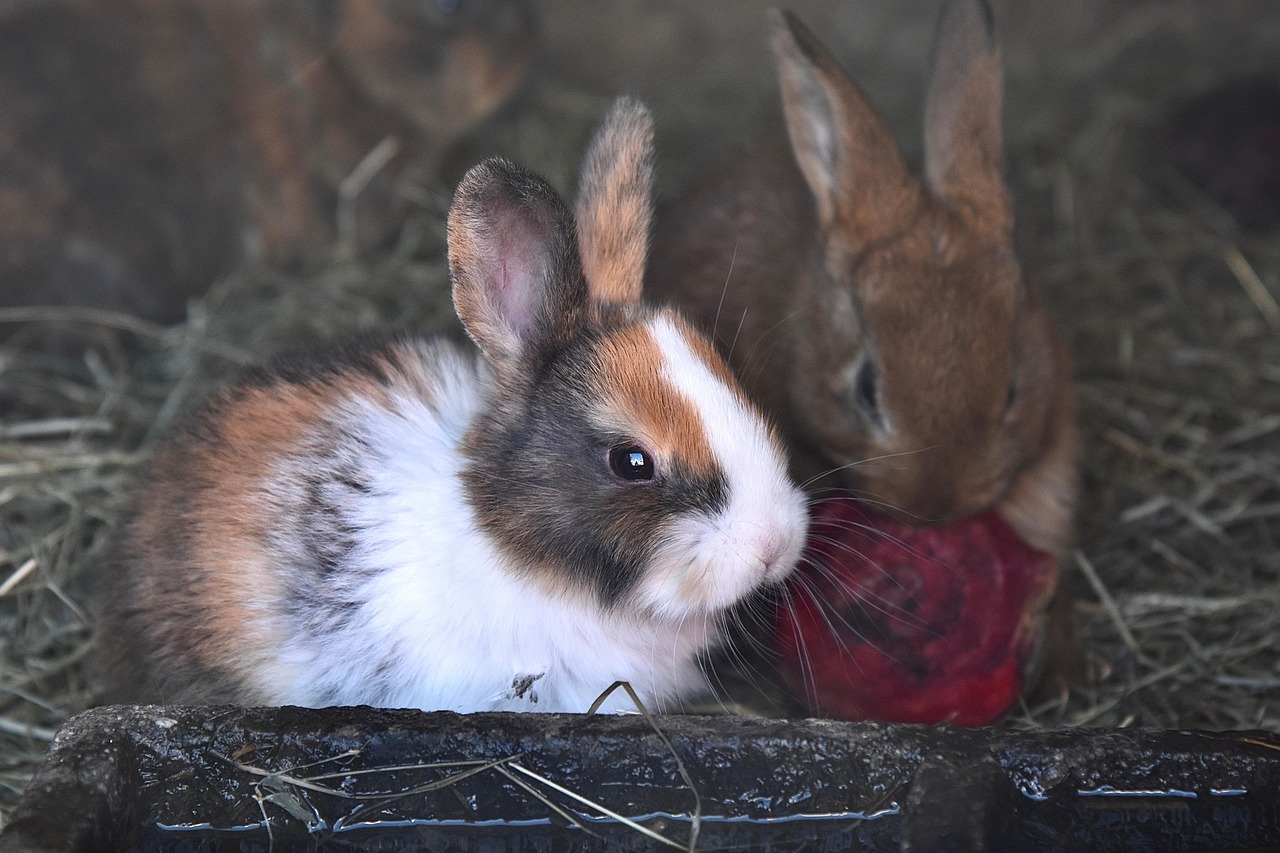
Litter-training a rabbit can make everyday care much easier.
Rabbits naturally tend to choose particular places for urinating and leaving droppings. Instead of trying to change this instinct completely, successful litter training works with it by placing an appropriate litter tray where the rabbit already prefers to toilet.
Some rabbits learn very quickly. Others need several weeks of consistent training, especially if they are young, newly adopted, not neutered or adjusting to a new environment.
Even a well-trained rabbit may occasionally leave a few dry droppings outside the tray.
The goal is therefore not necessarily perfect toilet behaviour. The goal is to encourage the rabbit to do most of its urinating and toileting in a predictable, easy-to-clean location.
This guide explains how to litter-train a rabbit, which litter materials are safer, where to position the tray, how neutering affects toilet habits and what to do if a previously trained rabbit suddenly starts having accidents.
Can Rabbits Really Be Litter-Trained?
Yes.
Rabbits naturally establish toilet areas.
Wild rabbits use specific latrine areas for urine and droppings, and domestic rabbits often show a similar tendency by repeatedly choosing the same corner of their enclosure.
This behaviour makes litter training possible.
Rather than randomly placing a litter box where you want it, observe your rabbit first.
The corner it has already selected is usually the best place to begin.
Are Rabbits as Reliable as Cats With Litter Training?
Many rabbits become very reliable with urination.
Dry droppings can be different.
Even a litter-trained rabbit may occasionally leave individual hard droppings around its enclosure or living space, particularly when marking territory.
This does not automatically mean the rabbit has forgotten its training.
Urine accidents are generally more useful when judging whether litter training is working.
Why Litter-Train a Rabbit?
A litter-trained rabbit can be easier to manage indoors and in a larger enclosure.
Benefits include:
- Easier daily cleaning
- Less urine around the living area
- Better odour control
- Easier monitoring of urine and droppings
- More practical indoor free-roaming
- Cleaner bedding and resting areas
A litter tray can also help you notice changes in health.
If a rabbit normally produces plenty of droppings but suddenly produces very few, that change may become obvious when cleaning the tray.
Changes in urination can also provide useful clues that something may be wrong.
Step 1: Choose the Right Litter Tray
The litter box should be large enough for the rabbit to enter comfortably, turn around and sit inside without being cramped.
Many small commercial “rabbit corner toilets” are too small for adult rabbits.
A larger rectangular litter tray often works better.
Suitable options can include:
- Large cat litter trays
- Low-sided plastic storage trays
- Large rabbit litter boxes
- Other sturdy, washable plastic containers with safe edges
The rabbit should be able to get in and out easily.
Consider the Rabbit’s Size
A large rabbit needs a considerably larger litter box than a dwarf rabbit.
If the rabbit repeatedly sits half inside and half outside the tray, the tray may simply be too small.
When in doubt, choose the larger option.
Older or Disabled Rabbits Need Easier Access
A high-sided litter tray can become difficult for rabbits with:
- Arthritis
- Weakness
- Mobility problems
- Previous injuries
A low entrance can make toileting easier while keeping higher sides around the rest of the tray to contain litter.
If a previously litter-trained older rabbit begins urinating beside the tray, difficulty climbing into it should be considered.
Step 2: Choose Safe Rabbit Litter
Not every litter sold for pets is suitable for rabbits.
A straightforward option is an unscented, paper-based, non-clumping and non-expanding litter.
Other suitable materials may include shredded paper or other rabbit-safe absorbent bedding.
The litter should:
- Absorb urine
- Produce little dust
- Be unscented
- Be safe around rabbits
- Not form hard clumps when wet
- Not expand dangerously if swallowed
Rabbits may nibble objects around them, so litter safety matters.
Litter Materials to Avoid
Avoid ordinary clumping cat litter.
Clumping products can create problems if swallowed and are not necessary for rabbit toilet trays.
Also avoid:
- Clay-based litter
- Very dusty litter
- Highly perfumed litter
- Sawdust
- Strongly aromatic wood shavings
- Products containing unnecessary deodorising chemicals
Simple and low-dust is usually better.
RSPCA specifically recommends non-clumping, non-expanding litter materials for rabbit trays.
Step 3: Put the Tray Where Your Rabbit Already Toilets
This is one of the most important parts of litter training.
Do not fight the rabbit’s preferred toilet location unnecessarily.
Watch where it repeatedly urinates.
Then place the litter tray in that exact location.
If your rabbit keeps choosing the opposite corner from the one you selected, move the tray.
Working with the rabbit’s natural preference is usually easier than repeatedly trying to force a different location.
Step 4: Put Some Droppings in the Tray
When first introducing the litter box, place several of the rabbit’s existing dry droppings into it.
You can also place a small amount of urine-soiled litter or bedding inside.
This creates a familiar toilet smell and helps indicate where the rabbit should go.
Do not return large amounts of wet or filthy bedding.
You only need enough familiar scent to identify the toilet area.
RSPCA specifically recommends using some used litter material and droppings to encourage rabbits to use their trays.
Step 5: Put Hay Beside or Above the Litter Tray
Rabbits commonly eat while toileting.
You can use this behaviour to make the litter area more attractive.
Place fresh hay:
- In a rack above the litter box
- In a holder beside it
- At one end of a sufficiently large tray
The goal is for the rabbit to be able to sit comfortably in the litter area while eating hay.
Do not expect the hay to remain perfectly separate from every dropping. Some waste is inevitable.
Replace contaminated hay as needed.
Should Hay Be Used as the Actual Litter?
Hay can be used in some litter arrangements, but there are disadvantages.
Hay contaminated with urine cannot be eaten safely and must be replaced frequently.
A more economical setup may involve using absorbent litter underneath while providing clean eating hay above or beside the toilet area.
Whatever system you use, make sure the rabbit always has access to plenty of clean hay.
Step 6: Start With a Smaller Training Area
Giving a rabbit access to an entire house on the first day can make litter training more difficult.
Start with a manageable enclosure or pen containing:
- Litter tray
- Hay
- Water
- Hiding place
- Comfortable resting area
- Enrichment
Once the rabbit uses the litter tray reliably, gradually increase the amount of space available.
If accidents suddenly increase after expanding the area, reduce the space temporarily and strengthen the habit before trying again.
RWAF specifically recommends beginning in a smaller area and increasing access once the rabbit is reliably using its tray.
Don’t Make the Training Space Too Small
Limiting the rabbit’s initial area does not mean keeping it in a tiny cage.
The rabbit should still have sufficient room to:
- Hop
- Stretch
- Stand upright
- Rest
- Hide
- Move between resources
The purpose is to make the litter tray easy to locate, not to restrict normal movement excessively.
Step 7: Clean Accidents Without Punishing the Rabbit
If your rabbit urinates outside the tray, clean the area.
Then consider why the accident happened.
Possible reasons include:
- The litter tray is in the wrong location
- The tray is too small
- The entrance is too high
- The tray is extremely dirty
- The rabbit has too much new territory
- Territorial marking is occurring
- Another rabbit has been introduced
- The rabbit has not been neutered
- A medical problem is developing
Do not shout at, hit or frighten the rabbit.
Punishment can make rabbits fearful and does not teach them what you want.
Positive, reward-based training is the better approach. RSPCA likewise recommends reward-based training and advises against punishment because rabbits may become stressed or frightened.
Can You Reward a Rabbit for Using the Litter Box?
Yes.
When your rabbit uses the tray correctly, you can reinforce the behaviour.
Rewards can include:
- Calm praise
- Gentle interaction if the rabbit enjoys it
- A tiny piece of an appropriate herb
- A pellet taken from its normal daily ration
You do not need to give sugary fruit every time.
For repeated training, tiny healthy rewards are preferable.
Step 8: Expand the Rabbit’s Space Gradually
Once litter habits become reliable in the original area, increase access gradually.
You might progress from:
Enclosure → part of a room → full rabbit-proofed room → larger household area.
Observe the rabbit after every increase.
If it repeatedly chooses a new toilet corner, you may need an additional litter box there.
Large living areas often work better with more than one tray.
How Many Litter Boxes Do Rabbits Need?
For bonded rabbits, providing multiple litter trays can reduce competition and give both rabbits easy access.
RSPCA recommends at least one toilet tray per rabbit, ideally with one extra.
For two rabbits, this could mean three accessible trays, especially during training or in a large living space.
Not every bonded pair will permanently require that many once habits are established, but multiple trays can be very useful.
Why Neutering Can Improve Litter Training
Sexually mature rabbits use urine and droppings for territorial communication.
Intact male rabbits in particular may spray urine.
Females can also display territorial behaviour.
Neutering often makes litter training easier because it reduces reproductive-hormone-driven behaviours such as:
- Urine spraying
- Territorial marking
- Some forms of aggression
- Reproductive behaviour
RWAF specifically notes that neutered rabbits are generally easier to litter train, while RSPCA notes that unneutered rabbits are more likely to display territorial behaviours such as urine spraying.
However, neutering is not an instant toilet-training switch.
The rabbit still needs an appropriate litter setup and consistent training.
Hormonal behaviours may also take time to decrease after surgery.
Don’t Neuter a Rabbit Just Because of One Accident
Neutering has broader health and welfare considerations and should be discussed with a rabbit-experienced veterinarian.
Our guide on Spaying and Neutering Rabbits explains the benefits, timing, surgical considerations and aftercare in more detail.
How Often Should You Clean the Litter Tray?
Spot-clean heavily soiled areas every day.
How often the entire tray needs changing depends on:
- Number of rabbits
- Tray size
- Litter type
- Urine volume
- Temperature
- Indoor or outdoor conditions
A very small tray may require more frequent cleaning than a large tray.
The goal is to keep it clean and dry without allowing urine and waste to accumulate.
MSD recommends daily spot-cleaning of litter areas and regular full cleaning.
Should You Completely Remove the Rabbit’s Smell?
During early litter training, it can be useful for the toilet area to retain a small familiar scent.
That is why putting several existing droppings into a freshly prepared tray can help.
This does not mean leaving the tray filthy.
Remove wet, heavily soiled material.
Cleanliness and scent cues can coexist.
After cleaning, simply returning a couple of normal droppings to the tray may help a rabbit that is still learning.
What Should You Use to Clean the Litter Tray?
Warm water and an appropriate animal-safe cleaning method can be used for routine cleaning.
White vinegar can also help loosen dried rabbit urine and mineral deposits on suitable surfaces.
However, vinegar should not automatically be considered a full veterinary disinfectant when an infectious disease is present.
When disease control is necessary, follow veterinary guidance regarding appropriate disinfectants.
Our How to Keep Your Rabbit’s Cage Clean guide explains cleaning and disinfection in more detail.
Why Does My Rabbit Pee Beside the Litter Box?
This is one of the most common litter-training problems.
First, check the setup.
Ask:
- Is the tray large enough?
- Is the entrance easy to use?
- Does the rabbit prefer that exact location?
- Is the tray overcrowded with hay?
- Is it extremely dirty?
- Has another rabbit started using it?
- Has the rabbit gained weight or developed mobility problems?
If the rabbit consistently urinates immediately beside a small tray, upgrading to a larger box may solve the problem.
Why Does My Rabbit Pee Over the Edge?
Some rabbits back into a corner and raise their tail while urinating.
A very low-sided tray may therefore allow urine to pass over the edge.
Try a larger tray with high sides around the back and sides while maintaining an accessible entrance.
For elderly or arthritic rabbits, a custom low entrance combined with higher surrounding walls can work well.
Why Is My Rabbit Digging in the Litter Tray?
Digging is normal rabbit behaviour.
A rabbit digging in its litter box is not automatically bored.
It may simply enjoy digging.
However, frequent litter excavation can become messy.
Provide an alternative digging activity, such as a safe digging box, and consider a litter-tray design that makes excessive scattering more difficult.
Also make sure the rabbit has appropriate enrichment.
Do not punish normal digging behaviour.
Why Does My Rabbit Eat the Litter?
Rabbits naturally investigate things with their mouths.
This is one reason choosing an appropriate rabbit-safe litter is important.
If a rabbit repeatedly consumes large quantities of non-food litter, however, review the product and discuss the behaviour with a veterinarian if it persists.
Make sure plenty of fresh hay is available.
Why Are There Droppings Outside the Litter Box?
A few hard droppings outside the tray can be normal.
Rabbits use droppings as scent markers, especially:
- In new territory
- Around other rabbits
- During bonding
- Before neutering
- After environmental changes
A few scattered dry pellets are therefore different from repeatedly urinating around the room.
Don’t Confuse Caecotrophs With Accidents
Rabbits produce ordinary hard droppings and softer nutrient-rich droppings called caecotrophs.
Caecotrophs are normally eaten directly by the rabbit.
If you repeatedly find sticky clusters of uneaten caecotrophs around the enclosure, this is not simply poor litter training.
Possible causes can include:
- Inappropriate diet
- Obesity
- Dental problems
- Arthritis
- Difficulty reaching the rear
Persistent uneaten caecotrophs deserve investigation.
Why Has My Litter-Trained Rabbit Suddenly Started Having Accidents?
A sudden change is different from a rabbit that has never been fully trained.
Possible environmental reasons include:
- Moving house
- Changing the enclosure
- A new rabbit
- New furniture
- Territorial disruption
- A different litter tray
- Stress
However, medical causes also need consideration.
These can include:
- Arthritis
- Mobility problems
- Urinary tract disease
- Bladder problems
- Pain
- Neurological disease
- General illness
If a previously reliable rabbit suddenly begins urinating everywhere, especially when other symptoms are present, do not assume it has become lazy or stubborn.
Urinary Signs That Need Veterinary Attention
Seek veterinary advice if litter-box problems occur alongside:
- Straining to urinate
- Repeated unsuccessful attempts to urinate
- Obvious pain
- Wet fur around the rear
- Reduced appetite
- Blood
- Thick or unusual urine with discomfort
- Lethargy
- Weight loss
- Major changes in water intake
Changes in toileting can sometimes be an early sign of disease.
Litter Training Older Rabbits
Older rabbits can still learn to use litter trays.
However, the physical setup may need modification.
Consider:
- Low entrances
- Larger trays
- Non-slip flooring
- More litter boxes
- Shorter distances between resting and toilet areas
If an older rabbit was previously trained but begins having accidents, arthritis and mobility problems should be considered.
Litter Training a Rescue Rabbit
A rescue rabbit may arrive with unknown previous habits.
Start from the beginning.
Give the rabbit a predictable enclosure containing several essential resources and observe where it naturally toilets.
Place a tray there.
Avoid expecting perfect behaviour immediately while the rabbit is also adjusting to:
- New people
- New smells
- New food
- New housing
- New routines
Confidence and litter habits can improve together.
Litter Training Two Bonded Rabbits
Bonded rabbits can share litter trays when the trays are large enough.
However, provide enough toilet areas that one rabbit cannot prevent the other from using them.
During a new bond, you may see increased territorial droppings.
This can settle as the relationship and environment become familiar.
Persistent aggression around litter areas may indicate that the rabbits need more resources or that the bond requires further assessment.
Litter Training Free-Roaming Rabbits
Free-roaming rabbits still need clearly established toilet areas.
Start training in a smaller section of the home before giving unrestricted access.
Once the rabbit becomes reliable, increase its territory gradually.
In larger homes, provide additional trays where necessary.
Rabbit-proof the area by protecting:
- Electrical cables
- Toxic houseplants
- Furniture
- Dangerous gaps
- Chemicals
Litter training does not remove the need for rabbit-proofing.
Rabbit Litter Training in Ghana and Other Hot Climates
Warm conditions can make litter-box hygiene particularly important.
Urine and soiled litter can quickly develop strong smells and attract flies.
Rabbit owners in Ghana should:
- Remove heavily soiled litter daily
- Keep trays dry
- Maintain good ventilation
- Control flies
- Keep fresh food away from contaminated toilet areas
- Wash trays regularly
- Avoid leaving wet litter for long periods
During the rainy season, outdoor rabbit housing should also be protected from rain and poor drainage.
However, do not confuse cleaning with training.
The same behavioural principles still apply: put the tray where the rabbit naturally toilets and reinforce consistent use.
Common Rabbit Litter-Training Mistakes
Avoid these common problems:
- Using a tray that is too small
- Placing the tray where you want it instead of where the rabbit toilets
- Using clumping or highly scented litter
- Giving too much space too quickly
- Punishing accidents
- Expecting every dry dropping to land inside the tray
- Ignoring neutering and territorial behaviour
- Keeping the tray excessively dirty
- Making the tray inaccessible to older rabbits
- Assuming sudden accidents are always behavioural
- Expecting instant results
Successful litter training is based more on setup and consistency than discipline.
A Simple Litter-Training Routine
Start with a suitable tray in the rabbit’s preferred toilet corner.
Add safe litter.
Place some existing droppings in the tray.
Keep hay beside or above it.
Allow the rabbit to learn the location within a manageable living area.
Clean accidents calmly.
Reward correct use.
Once toilet habits become reliable, gradually increase the rabbit’s available space.
If accidents return, temporarily reduce the area and reinforce the routine.
Frequently Asked Questions
How Long Does It Take to Litter-Train a Rabbit?
There is no exact timetable.
Some rabbits understand the system very quickly, while others need several weeks.
Age, neutering status, environment and individual behaviour all influence progress.
Are Rabbits Easy to Litter-Train?
Many rabbits are relatively easy to train because they naturally choose particular toilet areas.
The process becomes easier when owners put the litter tray where the rabbit already prefers to go.
What Is the Best Litter for Rabbits?
An unscented, paper-based, non-clumping and non-expanding litter is a straightforward choice.
Avoid ordinary clumping cat litter, clay litter and very dusty or strongly scented materials.
Can You Use Cat Litter for Rabbits?
Some paper-based non-clumping, non-expanding products marketed for cats may be suitable.
Traditional clay or clumping cat litter should not be used.
Always check the material rather than relying solely on the animal pictured on the packaging.
Should I Put Hay in My Rabbit’s Litter Box?
Providing hay in or immediately beside the litter area can encourage use because rabbits often eat while toileting.
Make sure plenty of clean, uncontaminated hay remains available.
Why Does My Rabbit Poop Everywhere but Pee in the Litter Box?
Scattered dry droppings can be a normal part of territorial marking.
A rabbit that consistently urinates in the tray is already demonstrating useful litter habits.
Does Neutering Help Litter Training?
Yes, it often does.
Neutering can reduce hormone-related urine spraying and territorial marking, making litter habits easier to establish.
Should I Punish My Rabbit for Peeing Outside the Box?
No.
Punishment can cause fear without teaching the rabbit what you want.
Clean the accident, review the setup and reinforce correct litter-box use.
Why Has My Rabbit Suddenly Stopped Using the Litter Box?
Consider changes to the environment, territorial behaviour, stress and physical health.
A previously reliable rabbit that suddenly has frequent accidents may need veterinary assessment.
Do I Need More Than One Litter Tray?
Possibly.
Large spaces and multi-rabbit households often benefit from multiple trays.
RSPCA recommends at least one toilet tray per rabbit and ideally an additional tray.
Final Thoughts
Learning how to litter-train a rabbit is mainly about understanding natural rabbit behaviour.
Rabbits often choose their own toilet corners, so successful training begins by putting a suitable litter tray where the rabbit already wants to go.
Choose a large, easy-to-enter tray and fill it with an appropriate low-dust, non-clumping litter.
Add a few existing droppings to identify the toilet area and place clean hay nearby.
During the early stages, keep the rabbit in a manageable but adequately spacious area. Once litter habits become reliable, gradually increase access.
Do not punish accidents.
If your rabbit repeatedly uses another location, adjust the setup.
And remember that a few hard droppings outside the litter box do not necessarily mean training has failed.
Neutering can significantly improve hormone-related marking, but it does not replace good litter-box placement and consistent training.
Most importantly, pay attention when toilet habits suddenly change.
A previously litter-trained rabbit that begins urinating outside the tray may be experiencing stress, mobility problems, urinary disease or another health condition.
A clean litter box therefore does more than keep your home tidy.
It can also help you monitor your rabbit’s everyday health.
Sources and Further Reading
For more information about rabbit litter training and housing, readers can consult:
- RSPCA — Keeping Rabbits in Your Home
- RSPCA — Rabbit Health and Housing Guidance
- Rabbit Welfare Association & Fund — Indoor Rabbit Housing
- MSD Veterinary Manual — Providing a Home for a Rabbit
This article provides general educational information. Sudden changes in urination, defecation, appetite or mobility should be discussed with a rabbit-experienced veterinarian.
