

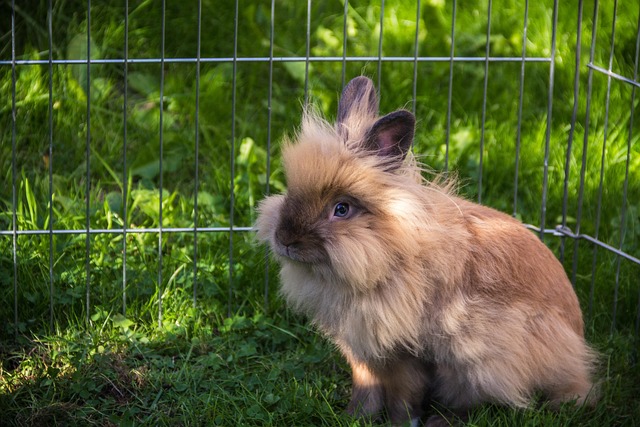
Lionhead rabbits are easy to recognise because of the long, woolly fur around their head that gives them their distinctive “lion’s mane.”
They are small rabbits, but their compact size does not mean they need small housing or less attention.
In fact, the Lionhead’s coat means owners usually need to spend more time on grooming than they would with an ordinary short-haired rabbit.
A healthy Lionhead still needs the same basic things every rabbit requires:
- Plenty of suitable hay and/or grass
- Fresh drinking water
- Appropriate leafy greens
- A measured amount of suitable pellets
- Spacious housing
- Exercise
- Social companionship
- Regular grooming
- Veterinary care
This guide explains Lionhead rabbit care, including feeding, grooming the mane, housing, dental health, exercise, companionship and what to check before adopting or buying one.
What Is a Lionhead Rabbit?
The Lionhead is a small domestic rabbit breed best known for the longer fur that forms a mane around the head.
The American Rabbit Breeders Association recognises the Lionhead as a distinct breed and lists a maximum adult show weight of approximately 3.75 pounds, or around 1.7 kg.
The breed has a compact body and upright ears.
However, not every rabbit with fluffy fur around its head is necessarily a purebred Lionhead.
Pet rabbits may also be Lionhead crosses.
For ordinary owners, pedigree matters much less than:
- Health
- Temperament
- Welfare
- Proper care
Why Do Lionhead Rabbits Have a Mane?
Lionheads carry a genetic characteristic that produces longer wool around parts of the body, especially the head and neck.
Some Lionheads have a relatively light mane.
Others have much more extensive wool around:
- Head
- Neck
- Chest
- Flanks
- Hindquarters
This difference is often described in terms of single mane and double mane genetics.
Double-maned rabbits generally have more persistent and extensive wool.
From a care perspective, the important point is simple:
The more long wool your Lionhead has, the more grooming it is likely to require.
Are Lionhead Rabbits Difficult to Care For?
Lionheads are not necessarily difficult pets, but they can require more coat maintenance than a short-haired breed.
Before getting one, consider whether you are willing to:
- Brush it regularly
- Monitor for mats
- Check the rear for faeces and urine
- Groom more frequently while it is shedding
- Arrange professional or veterinary help if severe matting develops
A Lionhead that is never groomed can develop painful mats and skin problems.
So although the rabbit itself may be small, the commitment should not be underestimated.
1. Feeding a Lionhead Rabbit
Lionhead rabbits do not require a special breed-specific diet.
For most healthy adult Lionheads, suitable hay and/or grass should form the majority of the diet.
A normal adult feeding plan can include:
- Good-quality grass hay
- Suitable fresh grass
- Appropriate leafy greens and herbs
- A small measured amount of suitable rabbit pellets
- Fresh drinking water
Fruit, carrots and commercial treats should remain occasional extras.
Hay Is Particularly Important
Hay supports:
- Normal digestive movement
- Caecal function
- Natural chewing
- Dental wear
- Foraging behaviour
Lionheads can be prone to dental problems, so encouraging regular hay chewing is particularly important.
However, hay cannot correct severe inherited jaw misalignment.
A rabbit that develops malocclusion may still require veterinary dental treatment even when its diet is excellent.
What Hay Can Lionheads Eat?
Healthy adult Lionheads can generally eat suitable grass hays such as:
- Timothy
- Meadow hay
- Orchard grass
- Other rabbit-safe grass hay
In Ghana, imported timothy hay may be expensive or difficult to obtain.
Suitable locally available grasses and properly prepared forage can also contribute to the diet when correctly identified and nutritionally appropriate.
The hay should always be:
- Dry
- Free from mould
- Free from excessive dust
- Free from toxic plants
- Stored properly
Leafy Greens
Appropriate leafy greens can provide variety and nutrients.
Possible options include suitable amounts of:
- Romaine lettuce
- Coriander
- Basil
- Mint
- Parsley
- Dandelion leaves
- Other correctly identified rabbit-safe greens
Introduce unfamiliar foods gradually.
Pellets
Choose plain, uniform rabbit pellets rather than colourful muesli-style mixes.
Pellets should support the diet rather than replace hay.
For an ordinary healthy adult Lionhead, provide a measured amount according to the rabbit’s size, body condition and the particular feed.
Our How to Feed a Rabbit Properly guide explains the complete feeding system in more detail.
2. Provide Fresh Drinking Water
Fresh water should always be available.
A heavy ceramic bowl works well for many rabbits because it allows natural drinking and cannot easily be tipped over.
Bottles can also be used, but the drinking valve must be checked regularly for blockages.
Do not wait until the water looks dirty before refreshing it.
During hot weather, check the water more frequently.
For rabbits kept in Ghana, this becomes particularly important during periods of high temperature.
3. Groom the Lionhead Mane Regularly
Grooming is one of the most important breed-specific parts of Lionhead care.
Their longer wool can:
- Tangle
- Trap debris
- Form mats
- Hide skin problems
- Trap urine or faeces around the rear
PetMD recommends grooming Lionheads several times each week and more frequently during heavier moulting periods. Veterinary and welfare guidance also identifies their heavier coat as something that requires additional management.
How Often Should You Brush a Lionhead?
There is no perfect schedule for every Lionhead because coat length varies.
As a practical starting point:
Normal periods: check and groom several times per week.
Heavy moulting: grooming may be necessary every day.
Very woolly individuals: daily coat checks may be appropriate even outside major moults.
Your rabbit’s actual coat condition should determine frequency.
Areas That Mat Easily
Pay particular attention to:
- Behind the ears
- Around the mane
- Under the chin
- Armpits
- Chest
- Belly
- Groin
- Hindquarters
A rabbit may look tidy from above while serious mats develop underneath.
Be Gentle
Rabbit skin is delicate.
Use appropriate grooming tools and avoid pulling aggressively through mats.
If a tangle does not separate easily, work slowly.
Do not repeatedly drag a comb against the skin.
Be Very Careful With Scissors
Never blindly cut a tight mat.
Rabbit skin can be pulled into the mat, making it easy to cut accidentally.
If the mat is:
- Tight
- Large
- Close to the skin
- Around the genitals
- Around damaged skin
have a rabbit-experienced veterinarian or capable professional remove it safely.
4. Lionheads Should Not Be Routinely Bathed
Their fluffy coat does not mean they should receive regular shampoo baths.
Healthy rabbits generally groom themselves.
Routine full-body bathing can cause unnecessary stress and may leave a dense Lionhead coat difficult to dry thoroughly.
Instead:
- Brush regularly
- Spot-clean small dirty areas
- Keep housing clean
- Investigate recurring dirtiness
If the rabbit repeatedly develops a dirty rear, there may be an underlying health problem.
Our How to Clean a Rabbit Safely guide covers grooming and dirty-bottom care in greater detail.
5. Check the Rear Every Day
The dense coat around some Lionheads can hide problems around the rear.
Look for:
- Urine staining
- Sticky caecotrophs
- Faeces
- Wet fur
- Mats
- Skin redness
- Fly eggs
- Maggots
This is especially important during hot weather.
Long fur that remains wet or dirty can increase the risk of flystrike.
Flystrike is an emergency.
If you find maggots, contact a veterinarian immediately rather than attempting to solve the problem with a bath.
6. Dental Health Needs Special Attention
Lionheads are small, compact rabbits, and some individuals can develop dental problems.
PetMD notes that the breed can experience malocclusion, where the upper and lower teeth do not align correctly.
Possible signs include:
- Drooling
- Wet chin
- Reduced hay intake
- Dropping food
- Weight loss
- Facial swelling
- Eye discharge
- Reduced appetite
Hay Helps but Cannot Fix Every Dental Problem
Long periods of chewing grass and hay contribute to natural dental wear.
However, if the underlying jaw structure causes poor alignment, no amount of hay can physically straighten the jaw.
Veterinary dental examinations may be required.
Never clip rabbit teeth at home.
7. Housing a Lionhead Rabbit
Lionheads may be small, but they still require substantial space.
Do not choose housing based on the idea that a small rabbit needs only a small cage.
The rabbit should have room to:
- Hop
- Run
- Stretch fully
- Stand upright
- Explore
- Hide
- Rest
- Play
A large pen, rabbit-proofed room or spacious indoor/outdoor rabbit system is much more appropriate than a traditional tiny cage.
Provide Comfortable Flooring
The floor should be:
- Solid
- Dry
- Nonslip
- Comfortable
Avoid forcing rabbits to live permanently on exposed wire flooring.
Wire can contribute to foot problems.
If wire is present in part of a system, provide substantial comfortable solid resting areas.
8. Lionhead Rabbits Need Exercise
Lionheads can be energetic and curious.
Give them plenty of opportunity for movement.
A good environment can contain:
- Tunnels
- Hide boxes
- Digging opportunities
- Chew items
- Forage activities
- Open running space
Do not treat exercise as a few minutes outside a tiny cage.
The rabbit’s normal living environment itself should permit regular movement.
9. Provide Hiding Places
Rabbits need places where they can retreat and feel safe.
Provide at least one suitable hide, and ideally enough hiding opportunities for every rabbit sharing the enclosure.
Useful options include:
- Cardboard boxes
- Rabbit shelters
- Tunnels
- Wooden hideaways designed safely for rabbits
A hide should not trap the rabbit if another companion approaches.
Two entrances can be useful.
10. Lionheads Need Companionship
Lionheads are social rabbits.
Where possible, a compatible neutered rabbit companion provides social interaction that humans cannot fully reproduce.
Bonded rabbits may:
- Rest together
- Groom each other
- Eat together
- Explore together
- Seek reassurance from each other
Human attention is still important.
However, buying a Lionhead because it seems “attached to humans” should not be used as a reason to deny rabbit companionship.
Our How to Socialize a Rabbit guide covers safe bonding in detail.
11. Neutering
Pet Lionheads that are not intended for responsible breeding are generally good candidates for neutering when medically appropriate.
Potential benefits include:
- Preventing unwanted litters
- Reducing hormone-driven territorial behaviour
- Making bonding easier
- Preventing uterine cancer when appropriate reproductive organs are removed in females
- Eliminating testicular cancer in males
The correct timing depends on the individual rabbit’s:
- Sex
- Age
- Development
- Health
- Veterinary assessment
Choose a veterinarian experienced in rabbit anaesthesia and surgery.
12. Monitor Weight
The Lionhead is a relatively small rabbit, so even modest weight changes can matter.
Do not rely only on how fluffy the rabbit looks.
The mane can make body shape difficult to judge visually.
Use:
- Regular weighing
- Body-condition assessment
- Hands-on checks
You should be able to monitor the ribs, spine and pelvis without assuming that a large fluffy coat means the rabbit is overweight.
Unexplained weight loss needs investigation.
13. Watch for Skin Problems
A dense coat can hide:
- Mites
- Fleas
- Ringworm
- Wounds
- Abscesses
- Skin irritation
Grooming is therefore also a health check.
Part the fur occasionally and examine the skin.
Seek veterinary advice if you notice:
- Bald patches
- Heavy dandruff
- Crusts
- Redness
- Wounds
- Lumps
- Persistent scratching
Never use random dog or cat flea treatment on a rabbit.
Some products can be dangerous.
14. Ear Checks
Lionheads usually have upright ears.
Inspect the visible outer ear regularly for:
- Excessive debris
- Crusts
- Redness
- Discharge
- Bad smell
Do not insert cotton buds deeply into the ear canal.
If thick crusts appear, do not pull them away.
Ear mites and infections require appropriate treatment.
15. Nail Care
Rabbit nails continue growing and need regular inspection.
How often trimming is required depends on:
- Activity
- Flooring
- Individual growth rate
Do not rely on a rigid monthly schedule if the nails do not require it.
Check them regularly and trim when necessary.
If you do not know how to identify the blood vessel inside the nail, ask a veterinarian or experienced professional to demonstrate safe nail trimming.
16. Common Health Problems to Watch For
Lionheads can develop many of the same illnesses as other rabbits.
Watch for:
- Dental disease
- GI stasis
- Respiratory disease
- Ear disease
- Skin problems
- Flystrike
- Parasites
- Obesity
- Sore hocks
Emergency Warning Signs
Contact a rabbit-experienced veterinarian promptly if your Lionhead:
- Stops eating
- Produces very few or no droppings
- Has difficulty breathing
- Develops true watery diarrhoea
- Collapses
- Cannot stand normally
- Develops severe abdominal swelling
- Has maggots
- Becomes severely weak
Do not wait for a rabbit to look extremely sick before seeking help.
17. Hair Ingestion and Grooming
Rabbits naturally swallow some hair while grooming.
This does not mean every swallowed hair automatically forms a dangerous “hairball.”
Normally, ingested hair moves through a functioning gastrointestinal system with food.
However, Lionheads can swallow more loose hair during heavy moulting because of their coat.
Regular brushing helps reduce this.
Maintain:
- Good hay intake
- Fresh water
- Normal activity
- Regular grooming
If the rabbit stops eating or producing droppings, contact a veterinarian rather than attempting a home “hairball treatment.”
18. Lionheads and Hot Weather
The Lionhead’s heavier coat makes heat management especially important.
In Ghana and other hot climates:
- Provide permanent shade
- Maintain good airflow
- Keep water continuously available
- Check the rabbit during the hottest part of the day
- Remove unnecessary heavy bedding
- Groom loose wool regularly
- Keep the rear clean
Do not shave a Lionhead simply because the weather is hot unless veterinary or coat-management circumstances justify clipping.
The coat has protective functions as well.
Environmental heat control should come primarily from good housing.
Our How to Keep Rabbits Cool in Hot African Weather guide explains tropical heat management in more detail.
19. Lionheads in Ghana
A Lionhead can live successfully in Ghana, but the environment requires planning.
Particular challenges include:
- Heat
- Humidity
- Flies
- Hay availability
- Access to rabbit-experienced veterinarians
The rabbit’s long mane needs regular checking during humid weather because wet or dirty wool can mat quickly.
Housing should remain:
- Shaded
- Dry
- Secure
- Well ventilated
Do not keep a Lionhead in direct sun simply because it has water nearby.
20. Vaccinations
Rabbit vaccination recommendations depend on the diseases present in your country and which licensed vaccines are locally available.
In countries where diseases such as myxomatosis and rabbit haemorrhagic disease are important and vaccines are available, vaccination can be a major part of preventive health care.
However, the exact vaccine schedule used in one country should not automatically be copied into Ghana.
Ask a veterinarian familiar with local rabbit disease risks and available vaccines.
21. Don’t Use Insecticides Casually Around Lionheads
The original version of this guide recommended using chemicals in the sleeping area to kill insects.
That is not appropriate general rabbit-care advice.
Do not spray:
- Insecticides
- Mosquito chemicals
- Flea sprays
- Agricultural pesticides
- Strong disinfectants
around rabbits unless the product is specifically appropriate for the intended use and the rabbit is protected according to professional instructions.
Control flies and pests primarily through:
- Clean housing
- Waste removal
- Dry bedding
- Screens where practical
- Proper feed storage
If there is a parasite problem, obtain a diagnosis and rabbit-safe treatment.
22. Lionhead Temperament
Lionheads are often described as active, intelligent and social.
However, breed labels should not be used to predict every individual’s personality.
One Lionhead may be:
- Bold
- Curious
- Highly social
while another may be:
- Shy
- Cautious
- Independent
Individual experience, handling and environment matter greatly.
Do not buy a Lionhead expecting it to automatically become a cuddly lap pet.
Many rabbits prefer interaction at floor level and dislike being picked up.
23. Training a Lionhead Rabbit
Lionheads can learn using positive reinforcement.
You may train them to:
- Use a litter tray
- Enter a carrier
- Come when called
- Return to their enclosure
- Cooperate with simple routines
Use small healthy rewards.
Never punish a rabbit for fear, accidents or normal behaviours such as digging.
24. Litter Training
Lionheads can be litter-trained using the same methods as other rabbits.
Place the litter tray where the rabbit naturally toilets.
Use:
- A large accessible tray
- Rabbit-safe litter
- Hay above or beside the tray
Neutering often improves hormone-related territorial marking.
Our How to Litter-Train a Rabbit guide explains the full process.
25. Where Should You Get a Lionhead Rabbit?
If you decide a Lionhead is right for you, choose the source carefully.
Consider Adoption First
Rabbit rescues and animal shelters sometimes have Lionheads or Lionhead crosses needing homes.
Adoption has several advantages.
The organisation may already know:
- Approximate age
- Temperament
- Health history
- Neutering status
- Compatibility with other rabbits
If Buying From a Breeder
Choose a breeder who prioritises health and welfare rather than simply producing large numbers of rabbits.
Ask to see:
- The housing
- Parent rabbits where possible
- General cleanliness
- Feeding conditions
- Health records where available
Ask questions about:
- Dental problems in the line
- Previous illness
- Temperament
- Age
- Diet
- Grooming routine
A responsible breeder should also ask whether you are prepared to care for the rabbit.
Avoid Impulse Purchases
Do not buy a rabbit simply because:
- It looks fluffy
- A child wants one immediately
- It is cheap
- Someone is selling one beside the road
A Lionhead may live for many years and requires daily care.
Think about the long-term commitment before taking one home.
Questions to Ask Before Bringing Home a Lionhead
Ask the seller, breeder or rescue:
- How old is the rabbit?
- What is it currently eating?
- Is it male or female?
- Has it been neutered?
- Has it lived with another rabbit?
- Has it had dental problems?
- Has it had digestive problems?
- How often is its coat groomed?
- Is it litter-trained?
- Are there known medical conditions?
Continue feeding the rabbit its familiar diet initially and make any necessary changes gradually.
How to Tell Whether a Lionhead Looks Healthy
Before adoption or purchase, look for:
- Bright, clean eyes
- Clean nose
- Normal breathing
- Clean rear
- Healthy skin
- Coat without severe mats
- Normal movement
- Good body condition
- Normal interest in food
Avoid accepting claims that a sick-looking rabbit is simply “quiet.”
If possible, arrange a veterinary health examination after bringing a new rabbit home.
Frequently Asked Questions
Are Lionhead Rabbits Good Pets?
They can be excellent pets for owners prepared to provide proper housing, companionship, nutrition, grooming and veterinary care.
Their mane means they generally require more grooming than short-haired rabbits.
How Big Do Lionhead Rabbits Get?
The American Rabbit Breeders Association’s breed standard lists a maximum show weight of approximately 3.75 lb, or about 1.7 kg.
Pet and crossbred individuals may vary.
Do Lionhead Rabbits Need Special Food?
No special Lionhead-specific food is required.
Healthy adult Lionheads generally need the same basic rabbit diet based mainly on suitable hay and grass, with appropriate greens, measured pellets and water.
How Often Should a Lionhead Rabbit Be Groomed?
Several times per week is a useful baseline.
During heavy moulting or for rabbits with particularly extensive wool, daily grooming may be necessary.
Can You Bathe a Lionhead Rabbit?
Routine bathing is not recommended.
Brush the coat regularly and spot-clean only when necessary.
Do Lionhead Rabbits Shed?
Yes.
They can shed significantly, and their longer mane makes regular coat maintenance particularly important during moulting.
Do Lionhead Rabbits Get Mats?
Yes.
The mane and longer wool can tangle and form mats, especially around the neck, chest, belly and rear.
Are Lionhead Rabbits Prone to Dental Problems?
Some Lionheads can develop dental malocclusion.
Monitor hay consumption, eating behaviour, drooling and weight, and arrange veterinary assessment if problems appear.
Can Lionhead Rabbits Live Outside?
They can only be housed outdoors safely when the accommodation protects them from predators, rain, heat and other weather extremes while providing adequate space and companionship.
In hot climates such as Ghana, heat management is especially important.
Can Lionhead Rabbits Live Alone?
Rabbits are social animals.
Where possible, a compatible neutered rabbit companion is preferable.
Human interaction remains important but does not fully replace rabbit companionship.
Do Lionheads Need Vaccinations?
Vaccination requirements depend on local disease risks and vaccine availability.
Ask a rabbit-experienced veterinarian about recommendations for your country.
Are Lionheads Suitable for Children?
A family with children can care for Lionheads successfully, but adults must remain responsible for the rabbit’s welfare.
Children should be taught to interact calmly and avoid constantly picking up or chasing the rabbit.
Final Thoughts
Good Lionhead rabbit care is built around normal rabbit welfare plus additional attention to the breed’s distinctive coat.
The Lionhead does not need a special luxury diet or tiny cage because it is small.
It needs:
- Plenty of appropriate hay or grass
- Clean drinking water
- Suitable greens
- Measured pellets
- Spacious housing
- Exercise
- Companionship
- Regular grooming
- Veterinary care
The mane is the biggest difference.
Check and brush the coat regularly so mats, dirty fur and skin problems do not develop unnoticed.
Also pay particular attention to dental health, because some Lionheads can develop malocclusion and other dental problems.
For owners in Ghana, heat management, ventilation, fly control and keeping the dense coat dry are especially important.
Finally, choose where your rabbit comes from carefully.
Adoption is worth considering, while anyone buying from a breeder should look for clean conditions, healthy rabbits and responsible breeding practices.
A Lionhead may be small, but proper care is a long-term commitment.
Sources and Further Reading
For additional information about Lionhead rabbits and rabbit welfare, readers can consult:
- American Rabbit Breeders Association — Lionhead Breed
- PetMD — Lionhead Rabbit
- RSPCA — Rabbit Housing, Diet and Welfare
- Rabbit Welfare Association & Fund — Rabbit Grooming and Breed Welfare
This article provides general educational information and does not replace individual veterinary diagnosis or care.
