

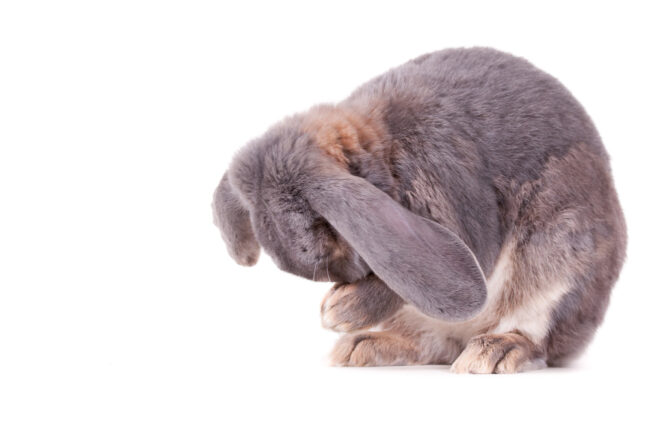
Rabbits can experience stress just like other animals, but they do not always show it in obvious ways.
Because rabbits are prey animals, their natural response to fear or discomfort may be to hide, freeze, become unusually quiet, or change their normal behaviour. This means a stressed rabbit may not immediately look distressed to an inexperienced owner.
Learning the signs your rabbit is stressed can help you identify problems with its environment, routine, social life, or health before they become more serious.
However, there is an important point to remember: many behaviours associated with stress can also occur when a rabbit is in pain or physically unwell.
A rabbit that suddenly stops eating, becomes aggressive, hides constantly, or breathes abnormally should not automatically be labelled as “stressed.” A health problem may need to be ruled out first.
Here are three major groups of signs that may indicate your rabbit is struggling.
1. Changes in Behaviour and Body Language
One of the easiest ways to recognise stress is to know how your rabbit normally behaves.
Every rabbit is different.
Some rabbits are naturally confident and curious, while others prefer to spend more time in quiet areas. What matters most is noticing a significant change from your rabbit’s usual behaviour.
Hiding More Than Usual
Hiding is completely normal for rabbits.
Rabbits naturally need places where they can retreat and feel secure. They may hide when resting, sleeping, eating caecotrophs, or when something unfamiliar happens nearby.
The concern is not simply that your rabbit hides.
Instead, pay attention when a normally social or active rabbit suddenly spends much more time hiding and is reluctant to come out even for food or normal activities.
Excessive hiding may indicate:
- Fear
- Environmental stress
- Pain
- Illness
- Conflict with another rabbit
- Feeling threatened by another animal
- Too much noise or disturbance
Always provide rabbits with appropriate hiding places. Taking away their shelter in an attempt to force them to socialise can actually increase stress.
Thumping the Hind Feet
Rabbits sometimes strike their hind feet against the ground to produce a loud thump.
This is a natural warning behaviour.
A rabbit may thump after hearing an unfamiliar noise, smelling another animal, noticing movement, or detecting something it considers threatening.
An occasional thump does not necessarily mean there is a serious problem.
However, repeated thumping may indicate that something in the environment is making the rabbit frightened or uncomfortable.
Check for possible triggers such as:
- Dogs or cats nearby
- Unfamiliar people
- Loud music
- Construction noise
- Sudden movements
- Predators around outdoor housing
- Changes to the rabbit’s surroundings
A Tense or Flattened Posture
Body posture can tell you a lot about how a rabbit is feeling.
A comfortable rabbit may lie stretched out, sit normally, groom, explore, or rest with relaxed muscles.
A worried rabbit may crouch close to the ground with a tense body.
Its ears may be held back, its eyes may appear wider, and the rabbit may look prepared to escape.
Remember that ear position varies between breeds. A lop-eared rabbit, for example, cannot display its ears in exactly the same way as an upright-eared breed.
Look at the whole rabbit rather than relying on one feature.
Freezing
A frightened rabbit may suddenly become completely still.
Freezing is part of a rabbit’s natural response to perceived danger.
If something suddenly scares your rabbit, brief freezing may be understandable.
Frequent freezing in an otherwise familiar environment deserves further investigation.
Try to determine what happens immediately before the behaviour.
There may be an unfamiliar sound, another animal, handling method, or environmental problem causing repeated fear.
2. Changes in Eating, Grooming or Toileting
The second major group of warning signs involves your rabbit’s daily routine.
Changes in eating, grooming, drinking, or droppings should be taken seriously because they may indicate stress, but they can also be important signs of illness.
Reduced Appetite
A healthy rabbit should normally show regular interest in food, particularly hay or grass.
If your rabbit suddenly eats less, stops eating hay, refuses favourite foods, or completely loses its appetite, do not assume it is simply feeling anxious.
Pain, dental disease, digestive problems, infection, and other illnesses can all reduce appetite.
Stress can also contribute to digestive problems.
Because rabbits rely on regular food intake to maintain normal digestive function, a rabbit that stops eating can become seriously ill.
Contact a rabbit-experienced veterinarian promptly if your rabbit suddenly stops eating or its appetite drops significantly.
Changes in Droppings
Stress and illness can affect normal eating and digestive activity.
Pay attention to both the number and appearance of your rabbit’s droppings.
Possible warning signs include:
- Producing fewer droppings than normal
- Very small droppings
- No droppings
- True watery diarrhoea
- Persistent soft faecal material around the rear
Reduced droppings together with a loss of appetite is particularly concerning.
Do not simply wait for several days to see whether the rabbit improves.
Excessive Grooming
Rabbits naturally spend a considerable amount of time grooming.
Normal grooming should therefore not be mistaken for stress.
The concern is when grooming becomes excessive, repetitive, or causes visible damage.
You may notice:
- Bald areas
- Damaged fur
- Repeated licking of one location
- Excessive chewing of fur
Stress or boredom can contribute to abnormal grooming, but skin conditions, parasites, pain, and other medical problems can produce similar behaviour.
If your rabbit develops bald patches or repeatedly damages its coat, veterinary assessment may be needed.
Grooming Less Than Normal
The opposite can also happen.
A rabbit that suddenly stops grooming itself may develop an untidy or dirty coat.
Reduced grooming can occur because the rabbit is:
- Unwell
- In pain
- Overweight
- Experiencing dental problems
- Having difficulty moving
- Generally distressed
Check the rabbit carefully rather than assuming that a messy coat is simply a behavioural issue.
Changes in Toileting Habits
A previously litter-trained rabbit may occasionally have an accident, particularly after moving home, changing enclosure, reaching sexual maturity, or experiencing territorial changes.
However, a sudden persistent change in toileting should be investigated.
It may relate to:
- Stress
- Territorial behaviour
- Urinary problems
- Mobility difficulties
- Pain
- Changes in the environment
If the change is accompanied by straining, blood, wet fur, reduced appetite, pain, or other symptoms, seek veterinary advice.
3. Physical and Emotional Signs of Distress
Stress can also appear through changes in movement, breathing, social behaviour, and reactions to people or other rabbits.
Again, these signs should be interpreted carefully because some can also indicate illness.
Sudden Aggression
A rabbit that suddenly begins lunging, growling, biting, or boxing may be frightened or protecting its territory.
Stress can certainly cause defensive behaviour.
However, sudden aggression in a normally calm rabbit can also indicate pain.
For example, a rabbit experiencing dental problems, arthritis, injury, or another painful condition may become defensive when touched.
Rather than punishing the rabbit, ask why the behaviour has changed.
Punishment, shouting, hitting, or forcing interaction can make fear worse.
If there is no obvious environmental explanation, consider veterinary assessment.
Rapid Breathing
A frightened rabbit may temporarily breathe faster after being startled.
However, rapid breathing is not a stress-specific symptom.
It can also occur because of:
- Heat
- Pain
- Respiratory illness
- Physical exertion
- Serious medical problems
Watch the circumstances carefully.
If rapid breathing continues while the rabbit is resting, appears difficult or laboured, or is accompanied by weakness, discharge, or other symptoms, seek veterinary help.
Open-mouth breathing in a rabbit is particularly serious and requires urgent attention.
Restlessness and Repetitive Behaviour
A rabbit that repeatedly circles, paces, bites enclosure bars, or performs the same movement for long periods may be experiencing frustration, boredom, or stress.
These behaviours can develop when rabbits have:
- Too little living space
- Insufficient exercise
- Limited opportunities to explore
- No appropriate enrichment
- Social isolation
- Few places to hide
- A highly repetitive environment
Rabbits need opportunities to perform natural behaviours such as running, exploring, digging, chewing, hiding, foraging, and interacting socially.
Improving their environment may help reduce frustration-related behaviours.
Changes in Vocalisation
Rabbits are generally quieter than many common pets, but they can make different sounds.
Grunting may occur when a rabbit is annoyed, territorial, excited, or communicating in another context, so it does not automatically mean stress.
More extreme vocalisations require greater attention.
A loud scream or shriek can indicate severe fear, pain, or distress and should be taken seriously.
Always consider the entire situation rather than interpreting a sound in isolation.
What Can Cause Stress in Rabbits?
There is no single cause of rabbit stress.
Some rabbits are more sensitive to particular situations than others.
Common triggers can include:
Sudden Environmental Changes
Moving house, changing enclosure, introducing unfamiliar smells, rearranging the rabbit’s living area, or suddenly changing its routine can cause temporary anxiety.
When possible, make major changes gradually.
Keep familiar items such as hiding places, bedding materials, or toys nearby during transitions.
Loud or Unpredictable Noise
Repeated shouting, loud music, construction work, barking dogs, fireworks, or sudden noises may frighten rabbits.
Provide a quiet retreat where rabbits can move away from noise.
Predators and Other Animals
Dogs, cats, birds of prey, snakes, and other animals can be frightening to rabbits.
Even when a predator cannot physically reach the rabbit, constantly seeing, hearing, or smelling it may cause distress.
Outdoor rabbit housing should therefore provide both physical protection and secure hiding areas.
Inadequate Space
Rabbits need room to move normally.
They should be able to:
- Run
- Hop
- Stretch
- Stand upright
- Explore
- Rest
- Move away from companions when necessary
Keeping rabbits permanently confined in a very small cage can prevent natural behaviour and contribute to poor welfare.
Lack of Enrichment
Rabbits are active and curious animals.
They benefit from safe opportunities to:
- Dig
- Forage
- Chew
- Explore
- Hide
- Use tunnels
- Search for food
A completely empty enclosure offers very little stimulation.
Pain or Illness
A rabbit that appears “stressed” may actually be sick.
Dental problems, digestive disorders, arthritis, injuries, skin conditions, urinary problems, and many other conditions can cause changes in behaviour.
This is why unexplained behavioural changes should never automatically be treated as a training problem.
Social Problems
Rabbits are social animals.
Compatible rabbits often benefit greatly from appropriate rabbit companionship.
However, simply putting unfamiliar rabbits together can result in fighting and severe stress.
Introductions and bonding should be handled carefully.
Conflict can also occur within previously bonded rabbits, particularly following illness, separation, hormonal changes, or other disruptions.
How to Help a Stressed Rabbit
The correct response depends on the cause.
Start by looking at the rabbit’s environment and routine.
Provide Secure Hiding Places
Every rabbit should have access to places where it can retreat without being disturbed.
Ideally, hiding areas should allow the rabbit to enter and leave easily rather than trapping it in a dead end.
If more than one rabbit lives together, provide enough resources so one rabbit cannot control access to every hiding place.
Maintain a Predictable Routine
Regular feeding, cleaning, and interaction schedules can help rabbits understand what to expect.
Avoid unnecessary sudden changes where possible.
Give the Rabbit More Choice
Do not force a frightened rabbit to interact.
Allow it to approach people at its own pace.
Positive interaction tends to work better than chasing, grabbing, shouting, or punishment.
Provide Exercise and Enrichment
Make sure the rabbit has enough space and activities.
Useful enrichment can include:
- Cardboard boxes
- Tunnels
- Safe chew materials
- Hay-filled objects
- Digging opportunities
- Foraging activities
- Different safe areas to explore
Rotate enrichment occasionally while keeping the rabbit’s environment familiar enough to feel secure.
Check Food, Water and Droppings
Whenever a rabbit behaves differently, check whether it is:
- Eating normally
- Drinking normally
- Producing normal droppings
- Moving normally
Changes in these areas may suggest that the problem requires veterinary attention.
When Should You Contact a Veterinarian?
Contact a rabbit-experienced veterinarian if a behavioural change is sudden, severe, persistent, or accompanied by signs of illness.
Particular warning signs include:
- Significant loss of appetite
- Stopping eating
- Very few or no droppings
- Difficulty breathing
- Severe lethargy
- Persistent hunched posture
- Unexplained weight loss
- Drooling
- Difficulty moving
- Persistent diarrhoea
- Eye or nasal discharge
- Signs of pain
A rabbit that stops eating should not simply be observed for several days.
Reduced food intake can contribute to serious gastrointestinal problems, and the underlying cause may require treatment.
Learn Your Rabbit’s Normal Behaviour
One of the best ways to recognise stress is to spend time observing your rabbit when it is healthy and relaxed.
Learn:
- When it normally sleeps
- How much it eats
- What its droppings usually look like
- How it reacts to familiar people
- Where it prefers to rest
- How active it normally is
- How it behaves around its companion
There is no single posture or behaviour that tells you everything.
Looking at patterns and changes gives you much more useful information.
Final Thoughts
The three major groups of signs your rabbit is stressed are changes in body language and behaviour, changes in eating or normal daily habits, and physical or emotional signs of distress.
You may notice excessive hiding, repeated thumping, a tense posture, unusual aggression, over-grooming, changes in toileting, repetitive behaviour, or a reduced appetite.
However, stress is not the only explanation for these signs.
Pain, illness, boredom, fear, poor housing, lack of exercise, social problems, and environmental changes can produce similar behaviours.
The most important thing is to know what is normal for your individual rabbit and pay attention when that pattern changes.
Provide rabbits with adequate space, safe hiding areas, appropriate companionship, enrichment, a predictable environment, good nutrition, and regular health monitoring.
If a behavioural change is accompanied by reduced appetite, fewer droppings, abnormal breathing, severe weakness, or other signs of illness, contact a qualified veterinarian promptly rather than assuming the rabbit is simply stressed.
Sources and Further Reading
Readers who want to learn more about rabbit stress, behaviour, and health can consult reputable resources including:
- RSPCA — Rabbit behaviour and signs of stress
- Rabbit Welfare Association & Fund — Rabbit behaviour and welfare guidance
- MSD Veterinary Manual — Signs of illness and gastrointestinal problems in rabbits
This article is intended for general educational purposes and is not a substitute for professional veterinary diagnosis or treatment.
