

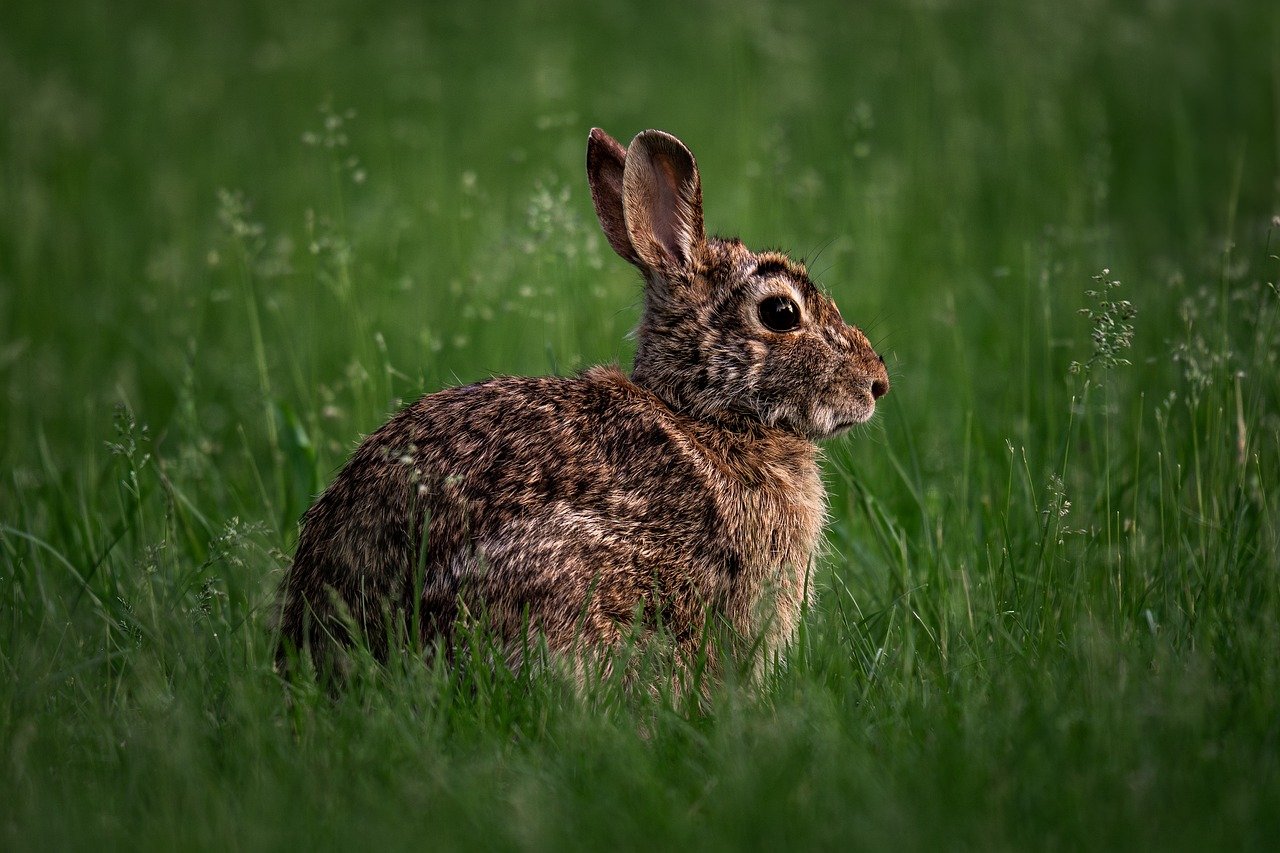
Feeding a rabbit properly is one of the most important parts of keeping it healthy.
Rabbits have a specialised digestive system designed for frequent consumption of fibrous plant material. Their diet also plays an important role in dental health because rabbit teeth grow continuously and require regular chewing to maintain normal wear.
For most healthy adult pet rabbits, the basic feeding pattern is straightforward:
- Plenty of good-quality hay and/or grass
- Appropriate leafy greens and herbs
- A small measured portion of suitable rabbit pellets
- Fresh drinking water available at all times
- Fruit, carrots and other sweet foods only as occasional treats
The exact amounts can vary according to the rabbit’s age, weight, body condition, activity, reproductive status and health.
This guide explains how to feed a rabbit properly, what foods should form the main diet, which foods should be limited and how to recognise when a rabbit’s feeding habits may indicate a health problem.
What Should a Rabbit Eat Every Day?
For a typical healthy adult pet rabbit, hay and/or suitable grass should form the majority of the diet.
A useful general feeding model is:
- About 85% hay and/or grass
- Around 10% leafy greens and herbs
- Around 5% quality rabbit pellets
These figures are best treated as a simple illustration rather than a strict mathematical rule.
You do not need to weigh every strand of hay and calculate percentages at every meal.
The practical goal is simple:
Hay and grass should clearly dominate the diet, while pellets and calorie-rich foods remain limited.
Fresh water should always be available.
Why Rabbit Diets Are Different
Rabbits are herbivores and hindgut fermenters.
Food moves through the stomach and small intestine before reaching the hindgut, where a large caecum contains microorganisms that help ferment certain plant materials.
Rabbits also produce nutrient-rich soft droppings called caecotrophs, which they normally eat directly.
This process allows them to obtain additional nutrients from their food.
Their digestive system works best when appropriate fibre is consumed frequently.
That is why a bowl full of pellets cannot replace a diet based on hay, grass and other suitable fibrous plants.
Hay and Grass: The Foundation of the Diet
For healthy adult pet rabbits, good-quality hay and/or grass should be available throughout the day.
Hay contributes to:
- Normal digestive movement
- Long periods of chewing
- Natural dental wear
- Foraging behaviour
- Mental stimulation
Rabbits naturally spend considerable time feeding.
A rabbit that finishes a small meal in five minutes and has nothing appropriate to eat for the rest of the day is not being fed in a way that matches normal rabbit behaviour.
How Much Hay Should a Rabbit Have?
Rather than restricting hay to a small measured portion, allow a healthy adult rabbit continuous access to suitable hay or grass.
RSPCA suggests supplying at least a bundle of hay approximately as large as the rabbit each day while ensuring hay remains continuously available.
The rabbit should never regularly reach a point where the hay supply has completely run out.
Replace dirty or wet hay and refresh it regularly so it remains attractive.
What Type of Hay Is Best?
For most healthy adult pet rabbits, grass hays are appropriate.
Common examples include:
- Timothy hay
- Meadow hay
- Orchard grass
- Other suitable grass hays
Availability differs by country.
A rabbit in Ghana does not need an expensive imported packet of timothy hay simply because it is frequently mentioned on foreign websites.
The important characteristics are that the hay is:
- Safe for rabbits
- Properly dried
- Free from mould
- Free from excessive dust
- Free from toxic plants
- Stored correctly
- Palatable enough that the rabbit eats it
Suitable local grasses and properly prepared forage can also contribute to rabbit diets when they are correctly identified and nutritionally appropriate.
What Does Good Hay Look Like?
Quality varies between hay batches.
Good hay should normally be:
- Dry
- Fresh-smelling
- Free from mould
- Free from chemical contamination
- Free from excessive dirt
- Stored away from moisture
Do not feed visibly mouldy hay.
This is especially important in humid and tropical climates where poorly stored hay can deteriorate quickly.
Can Rabbits Eat Fresh Grass?
Yes.
Suitable fresh grass is a natural food for rabbits and can provide valuable fibre.
However, rabbits that are not accustomed to fresh grass should be introduced to it gradually.
Only collect grass from areas that are:
- Free from pesticides and herbicides
- Away from heavy road pollution
- Free from animal waste contamination
- Free from toxic plants
Correct plant identification is essential.
Never Feed Lawnmower Clippings
Lawnmower clippings should not be fed to rabbits.
Cut grass deteriorates quickly after being crushed and heated inside a mower.
If you want to provide fresh grass, safely hand-cut suitable grass instead.
What About Alfalfa?
Alfalfa is a legume rather than an ordinary grass hay.
It generally contains more:
- Protein
- Energy
- Calcium
than typical grass hay.
This can make alfalfa useful for certain rabbits, including some:
- Growing rabbits
- Pregnant rabbits
- Nursing rabbits
- Underweight rabbits requiring nutritional support
However, alfalfa is generally not the preferred unlimited maintenance hay for an ordinary healthy adult pet rabbit.
A rabbit’s life stage matters when choosing feed.
Leafy Greens and Herbs
Appropriate leafy greens can form part of a healthy adult rabbit’s daily diet.
Examples may include:
- Romaine lettuce
- Coriander/cilantro
- Basil
- Mint
- Parsley
- Dandelion leaves
- Kale
- Broccoli leaves
- Celery leaves
- Other identified rabbit-safe greens
Variety can help provide different nutrients and make feeding more interesting.
However, not every green plant is safe.
If you cannot confidently identify a plant, do not feed it.
How Much Green Food Should You Give?
There is no single cup measurement that fits every rabbit perfectly.
Body size, health, diet and tolerance all matter.
RSPCA recommends a large handful of safe leafy greens and herbs each day and encourages a variety of appropriate plants.
This is a more practical starting point than assuming every rabbit needs exactly the same number of cups.
Introduce unfamiliar greens gradually.
Introduce New Foods Slowly
Rabbit diets should not be changed suddenly.
If your rabbit has never eaten a particular green before, begin with a small amount.
Then monitor:
- Appetite
- Droppings
- Activity
- General behaviour
Introduce one or a small number of new foods at a time.
This makes it easier to identify a problem if the rabbit reacts poorly.
Are Spinach and Kale Safe for Rabbits?
Appropriate amounts can be included as part of a varied selection of greens.
There is generally no need to treat one safe vegetable as the rabbit’s only green every day.
Variety over time is a better approach.
If your rabbit has a urinary condition or another medical problem requiring dietary modification, follow individual veterinary advice.
Rabbit Pellets: Useful but Easy to Overfeed
Pellets can provide concentrated nutrients in a convenient form.
However, they should not become the main food for a healthy adult pet rabbit.
Pellets are calorie-dense and can be eaten quickly.
If rabbits receive too many pellets, they may:
- Eat less hay
- Gain excessive weight
- Spend less time chewing
- Become selective about food
For healthy adult pet rabbits, offer a small measured amount rather than constantly refilling the bowl.
How Much Pellet Should You Feed?
The amount depends on the rabbit and the particular food.
Follow appropriate manufacturer guidance and adjust according to:
- Body weight
- Body condition
- Activity
- Age
- Health
- Veterinary advice
MSD gives one example of approximately ¼ cup per 5 lb of body weight daily for adult maintenance rabbits eating a high-fibre pellet, but this should not be treated as a universal ration for every product or rabbit.
Different feeds have different energy densities.
Growing, pregnant, lactating or underweight rabbits may require different feeding levels.
Choosing Good Rabbit Pellets
Choose a product made specifically for rabbits and appropriate for the animal’s life stage.
For ordinary adult pet rabbits, look for:
- Plain uniform pellets or nuggets
- Appropriate fibre levels
- No unnecessary coloured pieces
- No large quantities of seeds or nuts
- Clear nutritional information
- A suitable life-stage formulation
Timothy-based adult pellets are common, although product availability differs by country.
Avoid Muesli-Style Rabbit Food
Muesli-style rabbit food contains visibly different ingredients such as:
- Flakes
- Grains
- Peas
- Seeds
- Coloured pieces
- Pellets
This encourages selective feeding.
A rabbit may eat its favourite high-calorie components and leave other parts behind.
RSPCA does not recommend muesli-style diets because they are associated with nutritional imbalance, obesity, dental disease and digestive problems.
If your rabbit currently eats muesli, do not abruptly change its diet overnight.
Transition gradually to a healthier feeding system.
Fruit Is a Treat, Not a Main Food
Many rabbits enjoy fruit.
That does not mean they need it.
Fruit contains natural sugars and should generally be given only in small occasional amounts.
Examples can include:
- Apple flesh without seeds
- Banana
- Strawberry
- Blueberry
- Pear
- Mango
- Papaya
- Melon
A rabbit does not require fruit every day.
For frequent training rewards, consider using herbs, greens or pellets taken from the rabbit’s normal daily allowance.
What About Carrots?
Carrots are commonly associated with rabbits, but carrot root should not be treated as a staple food.
It contains considerably more sugar than leafy greens.
Small pieces can be used as an occasional treat.
Carrot tops can be considered differently and may form part of an appropriate selection of greens.
Rabbit Treats Should Remain Small
Treats are optional.
They can be useful for:
- Training
- Bonding
- Enrichment
- Giving medication when appropriate
But they should not reduce the rabbit’s appetite for hay.
Commercial treats should also be checked carefully.
Products marketed with pictures of rabbits are not automatically ideal foods.
Our Rabbit Treats guide explains safer choices in greater detail.
Foods Rabbits Should Not Normally Eat
Avoid feeding processed human foods such as:
- Chocolate
- Sweets
- Cake
- Biscuits
- Crisps
- Bread
- Sugary cereals
- Ice cream
- Dairy products
- Meat
These are not appropriate parts of a rabbit diet.
Chocolate can also be toxic.
What About Nuts, Seeds and Grains?
It is more accurate to say that nuts, seeds and grain-heavy foods are generally inappropriate as routine pet-rabbit foods rather than claiming that every grain or seed is poisonous.
They are calorie-dense and do not provide the same feeding pattern as hay and grass.
Many are also used heavily in unhealthy muesli-style diets.
A healthy pet rabbit normally has no nutritional reason to receive handfuls of nuts or seeds as treats.
Foods and Plants That Can Be Dangerous
Some plants and foods are genuinely unsafe.
Examples include:
- Chocolate
- Rhubarb leaves
- Raw beans
- Apple seeds
- Certain toxic ornamental plants
- Green or sprouting potato material
There are many toxic wild and garden plants.
Never assume a plant is safe simply because it grows naturally nearby.
Fresh Water Must Always Be Available
Clean drinking water should be continuously available.
Rabbits may drink different amounts depending on:
- Temperature
- Diet
- Body size
- Fresh-food intake
- Health
A rabbit eating fresh grass and leafy greens may drink less directly than one consuming mainly dry hay and pellets.
Never remove water because a rabbit eats moisture-rich foods.
Bowl or Bottle?
A heavy ceramic bowl is an excellent option for many pet rabbits and permits a natural drinking position.
Bottles can also be used, but their valves need checking because they may become blocked even when the bottle appears full.
Whichever method you use, make sure water is:
- Clean
- Fresh
- Accessible
- Available continuously
Our Water for Rabbits guide covers hydration in more detail.
Why Fiber Matters So Much
Fiber is central to rabbit nutrition.
Different fibre components help support:
- Gastrointestinal movement
- Caecal fermentation
- Normal droppings
- Chewing behaviour
Long-stemmed hay also requires prolonged chewing.
This contributes to natural tooth wear.
However, it is important not to oversimplify this into “fiber prevents every digestive problem.”
GI stasis and other gastrointestinal conditions can also occur because of:
- Pain
- Dental disease
- Dehydration
- Stress
- Illness
- Obstruction
Our guide on The Role of Fiber in a Healthy Rabbit Diet explains rabbit fibre in greater detail.
Rabbit Teeth and Diet
Rabbit teeth grow continuously.
The long chewing movements used when eating hay and grass help maintain normal wear.
Pellets are eaten more quickly and do not require the same amount of chewing.
If your rabbit previously ate plenty of hay but suddenly begins refusing it while still eating softer foods, consider dental pain.
Possible signs include:
- Drooling
- Weight loss
- Dropping food
- Reduced hay consumption
- Eye discharge
- Changes in food preference
Persistent changes should be investigated by a rabbit-experienced veterinarian.
What Are Caecotrophs?
Rabbits produce two kinds of droppings.
The dry round pellets commonly seen in the litter tray are normal faeces.
They also produce softer nutrient-rich material called caecotrophs.
Rabbits normally eat caecotrophs directly, often before owners notice them.
This is an important part of normal rabbit nutrition.
If sticky caecotrophs repeatedly accumulate around the enclosure or rabbit’s rear, there may be a problem involving:
- Diet
- Obesity
- Dental disease
- Arthritis
- Mobility
Do not mistake persistent uneaten caecotrophs for ordinary diarrhoea.
How to Feed Young Rabbits
Growing rabbits have different nutritional requirements from adult maintenance rabbits.
They require additional energy and protein for growth.
Feeding advice for adult rabbits should therefore not simply be copied directly onto a recently weaned young rabbit.
Dietary transitions should be gradual.
If you acquire a young rabbit, find out what it was eating previously and avoid sudden changes.
Ask a rabbit-experienced veterinarian for age-appropriate feeding advice where necessary.
Pregnant and Nursing Rabbits Need Different Nutrition
Pregnancy and especially milk production increase nutrient requirements.
A lactating doe should not simply be fed according to an ordinary sedentary adult pet-rabbit feeding plan.
Requirements for:
- Energy
- Protein
- Water
- Minerals
can change significantly.
Commercial rabbit farmers should use diets designed for the rabbit’s reproductive stage rather than relying solely on generic pet feeding instructions.
Feeding an Overweight Rabbit
Do not crash-diet an overweight rabbit.
The aim is usually to reduce unnecessary calories while maintaining adequate fibre and normal food intake.
This can involve reviewing:
- Pellet portions
- Sugary treats
- Exercise
- Hay intake
- Underlying pain or mobility problems
Weight loss should be gradual.
Our Overweight and Underweight Rabbits guide covers body-condition management in greater detail.
Feeding an Underweight Rabbit
Being underweight does not automatically mean a rabbit simply needs more pellets.
Possible causes include:
- Dental disease
- Parasites
- Chronic illness
- Digestive disease
- Kidney or liver problems
- Competition from another rabbit
- Poor-quality diet
Unexplained weight loss should be investigated.
Treat the cause rather than simply increasing calories without knowing why weight is being lost.
Feeding Rabbits in Ghana
Rabbit feeding advice written for Europe or North America often assumes constant access to imported timothy hay and specialist pet-food products.
That may not reflect reality in Ghana.
Rabbit keepers can still apply the same nutritional principles using safe locally available resources.
The priorities remain:
- Adequate appropriate fibre
- Correctly identified grasses and forage
- Good feed hygiene
- Suitable nutritional balance
- Reliable drinking water
- Safe storage
- Gradual diet changes
Do not assume every local leaf or agricultural by-product is suitable for rabbits.
Some plants may be toxic, nutritionally unsuitable or contaminated with pesticides.
Feed Storage in Hot and Humid Climates
Heat and humidity can cause feed to deteriorate rapidly.
Store hay and pellets somewhere:
- Dry
- Shaded
- Well ventilated
- Protected from rodents
- Protected from rain
- Away from chemicals
Inspect feed regularly.
Discard feed that is:
- Mouldy
- Damp
- Rancid
- Contaminated by rodents
- Infested with insects
Do not feed mouldy hay simply because only one portion appears affected.
Don’t Change a Rabbit’s Diet Suddenly
Abrupt dietary changes can disturb normal digestion.
If changing:
- Pellets
- Hay type
- Greens
- Feeding system
make the transition gradually where possible.
The exception is when a veterinarian specifically instructs you to stop a particular food immediately for medical reasons.
Monitor appetite and droppings during any significant dietary change.
How to Make Feeding More Interesting
Feeding does not need to happen entirely from bowls.
Rabbits naturally spend large amounts of time foraging.
You can encourage this behaviour by:
- Scattering measured pellets
- Hiding greens among hay
- Stuffing hay into safe cardboard tubes
- Providing forage boxes
- Using several hay stations
This increases activity and mental stimulation.
RSPCA specifically recommends scattering and hiding food to encourage natural foraging behaviour.
A Simple Daily Feeding Routine
A healthy adult pet rabbit might follow a routine such as:
Throughout the Day
Provide continuous access to good-quality hay and/or suitable grass.
Keep fresh drinking water available.
Morning
Check water and hay.
Provide part or all of the measured pellet ration depending on your normal routine.
Later in the Day
Offer a varied selection of appropriate leafy greens.
Refresh hay again.
Occasionally
Provide a tiny portion of suitable fruit or another appropriate treat if desired.
The exact timing is less important than consistency and ensuring hay remains available.
Monitor the Rabbit, Not Just the Bowl
Good feeding involves watching what the rabbit actually eats.
Check every day:
- Is hay being eaten?
- Are normal droppings being produced?
- Is body weight stable?
- Is the rabbit eating with enthusiasm?
- Is water consumption normal?
- Are caecotrophs being eaten?
- Has food preference changed?
A full bowl does not prove the rabbit is eating properly.
When a Feeding Change Becomes an Emergency
Rabbits should eat frequently.
Promptly contact a rabbit-experienced veterinarian if your rabbit:
- Stops eating
- Eats dramatically less
- Produces very few droppings
- Produces no droppings
- Becomes severely lethargic
- Develops a swollen or painful abdomen
- Develops true watery diarrhoea
- Has difficulty swallowing
Do not simply wait until the next day to see whether a rabbit that has stopped eating improves.
Loss of appetite can be associated with dental disease, GI stasis, obstruction, infection, pain and many other conditions.
Common Rabbit Feeding Mistakes
Avoid these frequent mistakes:
- Feeding mostly pellets
- Allowing hay to run out
- Giving carrots as a main vegetable
- Feeding large amounts of fruit
- Using muesli-style food
- Making sudden diet changes
- Feeding unknown plants
- Giving processed human snacks
- Ignoring body weight
- Assuming every rabbit needs the same diet
- Continuing to offer treats when the rabbit refuses hay
- Assuming a rabbit eating pellets cannot have dental problems
Frequently Asked Questions
What Should Rabbits Eat Every Day?
For most healthy adult pet rabbits, the diet should consist mainly of hay and/or grass, supported by appropriate leafy greens, a small measured amount of suitable pellets and continuous access to water.
Should Rabbits Have Unlimited Hay?
Healthy adult pet rabbits should normally have continuous access to appropriate hay and/or grass.
How Much of a Rabbit’s Diet Should Be Hay?
RSPCA uses approximately 85% hay and grass as a simple feeding model.
The practical goal is for hay or grass to form the clear majority of the diet.
Can Rabbits Live on Pellets Alone?
A pellet-only diet is not an appropriate feeding system for an ordinary healthy pet rabbit.
Pellets do not provide the same long chewing and foraging experience as hay and grass.
Can Rabbits Eat Vegetables Every Day?
Appropriate leafy greens and herbs can form part of a healthy adult rabbit’s daily diet.
Introduce new foods gradually.
Can Rabbits Eat Fruit?
Yes, some fruits are appropriate in small occasional amounts.
Fruit should be treated as a reward rather than a major food source.
Are Carrots Good for Rabbits?
Carrot root contains natural sugar and should generally be offered in small portions rather than as an everyday staple.
Is Alfalfa Hay Good for Adult Rabbits?
Alfalfa is nutritionally richer than ordinary grass hay and is generally not the preferred unlimited maintenance hay for an ordinary healthy adult pet rabbit.
It may be useful for certain growing, pregnant, nursing or underweight rabbits.
Why Has My Rabbit Stopped Eating Hay?
Possible explanations include stale or unpalatable hay, too many pellets or treats, and dental disease.
Sudden refusal of hay, particularly when accompanied by reduced overall appetite, weight loss or smaller droppings, should be investigated.
Should Rabbits Have Water All the Time?
Yes.
Fresh drinking water should always be available.
Final Thoughts
Learning how to feed a rabbit properly does not require an extremely complicated meal plan.
For most healthy adult pet rabbits, remember four basic principles:
Hay or grass should dominate the diet.
Appropriate greens provide variety.
Pellets should be measured.
Fresh water should always be available.
Fruit, carrots and commercial treats should remain occasional extras rather than important food groups.
Good nutrition also changes with the rabbit.
A growing rabbit, pregnant doe, nursing doe, overweight pet and elderly rabbit may not all need exactly the same diet.
Pay attention to life stage, body condition and health.
For rabbit owners and farmers in Ghana, the same basic nutritional principles apply even when imported timothy hay and specialist products are difficult to obtain. Safe local grasses and forage can play an important role when they are correctly identified, nutritionally suitable and stored properly.
Most importantly, watch your rabbit’s eating habits every day.
A sudden reduction in appetite or droppings can be one of the earliest signs of serious illness.
Feeding your rabbit properly is therefore about more than filling a bowl.
It means providing the right foods, encouraging natural feeding behaviour and noticing quickly when something changes.
Sources and Further Reading
For additional information about rabbit nutrition, readers can consult:
- MSD Veterinary Manual — Nutrition of Rabbits
- RSPCA — A Healthy Diet for Your Pet Rabbit
- Rabbit Welfare Association & Fund — Rabbit Diet Guidance
- RSPCA — Dietary Enrichment for Rabbits
This article provides general educational information and does not replace individual veterinary or animal-nutrition advice.
