

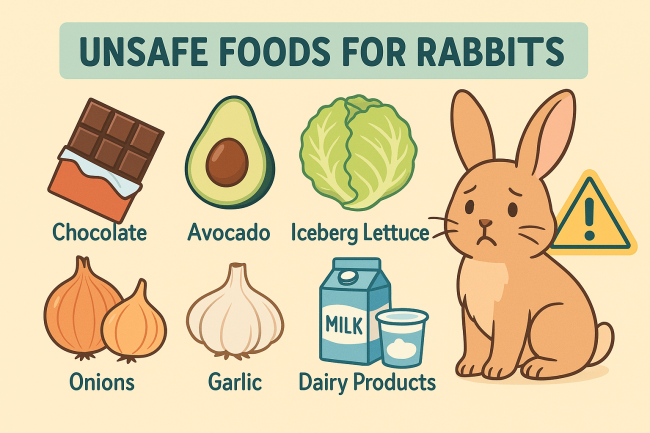
Rabbits have a specialised digestive system designed primarily for fibrous plant foods.
For most healthy adult pet rabbits, suitable hay and/or grass should form the majority of the diet, supported by appropriate leafy greens, a measured amount of rabbit pellets and continuous access to clean water.
Unfortunately, many foods that humans eat safely are either unsuitable or potentially dangerous for rabbits.
There is also an important difference between:
Toxic foods — foods that may cause poisoning or serious illness.
and
Inappropriate foods — foods that may not be acutely poisonous but are too high in fat, starch, sugar or other unsuitable ingredients to belong in a normal rabbit diet.
This guide covers 10 unsafe foods for rabbits, explains why they should be avoided and tells you what to do if your rabbit accidentally eats something dangerous.
1. Chocolate
Chocolate should never be deliberately fed to rabbits.
It contains compounds such as:
- Theobromine
- Caffeine
that can be toxic to animals.
The amount of these compounds varies according to the type of chocolate, with darker chocolate generally containing higher concentrations than milk chocolate.
Chocolate can cause serious health problems and should be kept completely out of reach.
What If a Rabbit Eats Chocolate?
Contact a veterinarian promptly.
Do not wait for obvious symptoms before asking for advice.
If possible, tell the veterinarian:
- What type of chocolate was eaten
- Approximately how much
- When it happened
- The rabbit’s approximate weight
Do not attempt to make a rabbit vomit.
Rabbits cannot vomit.
2. Avocado
Avocado is another food that should not be fed to rabbits.
The avocado plant contains persin, a compound associated with poisoning in several animal species, including rabbits.
Potentially dangerous parts include:
- Flesh
- Skin
- Seed
- Leaves
- Stems
Avocado poisoning has been associated with heart-muscle damage in susceptible mammals and birds.
The high fat content of avocado also makes it completely unnecessary in a rabbit diet.
Keep avocados and avocado plants away from rabbits.
3. Rhubarb Leaves
Rhubarb leaves should not be fed to rabbits.
They contain compounds capable of causing poisoning.
Do not assume that a plant is safe simply because one part is eaten by humans.
The leaves are the particular concern here.
If your rabbit has access to a vegetable garden, make sure rhubarb plants cannot be reached.
4. Onions, Garlic and Related Plants
Members of the onion family are not appropriate rabbit foods.
Avoid:
- Onions
- Garlic
- Shallots
- Leeks
- Chives
- Spring onions
There is no nutritional reason to add them to a rabbit’s diet.
RWAF recommends keeping onion-family plants away from rabbits.
Do not feed them raw, cooked, dried or mixed into human leftovers.
A rabbit does not need seasoning.
5. Potato and Potato Green Parts
Potatoes need careful explanation because saying simply that they are “high in carbohydrates” misses the most important safety issue.
The eyes, sprouts, shoots and green parts of ordinary potato plants can contain toxic glycoalkaloids.
These parts should never be fed to rabbits.
It is safest to avoid feeding ordinary potato altogether.
Do not feed:
- Raw potato
- Green potato skin
- Potato sprouts
- Potato eyes
- Potato leaves
- Potato stems
Potatoes are also high in starch and provide no advantage over the fibrous foods rabbits are adapted to eating.
Potato Is Not the Same as Sweet Potato
Ordinary potato and sweet potato are different plants.
However, because rabbit-feeding recommendations for sweet potato vary between sources and depend heavily on the plant part, there is no need to make either potato a standard pet-rabbit food.
Stick with clearly established rabbit-safe foods.
6. Bread, Biscuits, Pasta and Processed Human Foods
Bread is not rabbit food.
Neither are:
- Biscuits
- Cookies
- Crackers
- Cakes
- Pasta
- Crisps
- Sugary cereal
- Sweets
- Pastries
These foods tend to contain combinations of:
- Refined starch
- Sugar
- Fat
- Salt
- Flavourings
that do not fit a healthy rabbit diet.
They can also displace the hay and grass the rabbit actually needs.
A rabbit begging for bread does not mean bread is appropriate.
Animals can enjoy foods that are bad for them.
7. Meat, Eggs and Dairy Products
Rabbits are herbivores.
Their normal diet is based on plant material rather than animal products.
Do not deliberately give rabbits:
- Meat
- Fish
- Eggs
- Cheese
- Milk
- Yogurt
- Other dairy foods
The issue is not that a tiny accidental nibble of meat will necessarily poison a rabbit immediately.
The issue is that these foods are completely inappropriate for the rabbit’s digestive biology and nutritional requirements.
Avoid Yogurt Drops Too
Some pet shops still sell yogurt-style treats for small animals.
A rabbit does not need dairy-based sweets.
Healthy rewards such as appropriate herbs, greens or a pellet from the rabbit’s normal ration are better choices.
8. Peanuts, Nuts and Seeds
Peanuts are not appropriate routine foods for rabbits.
Technically, peanuts are legumes rather than true nuts, but nutritionally the same basic concern applies.
They are:
- High in fat
- Calorie-dense
- Low in the type of long structural fibre rabbits need
The same caution applies to foods such as:
- Walnuts
- Cashews
- Almonds
- Sunflower seeds offered as snacks
- Seed mixes
These foods should not form part of an ordinary pet rabbit diet.
They are not useful replacements for hay, greens or rabbit pellets.
Are Peanuts Poisonous?
It is more accurate to call peanuts inappropriate rather than universally poisonous.
The problem with the original article was describing every unsuitable food as though it had the same type of toxicity.
A rabbit diet should focus on what supports normal digestion, dental wear and healthy body condition.
Nuts do not fit that purpose.
9. Hamster, Guinea Pig and Other Animal Foods
Rabbits should receive feed formulated for rabbits.
Do not substitute:
- Hamster mix
- Rat food
- Mouse food
- Bird seed
- Dog food
- Cat food
Different species have different nutritional requirements.
Hamsters, for example, are not fed according to the same nutritional system as rabbits.
Rabbit pellets are formulated with rabbit-specific requirements in mind.
What About Guinea Pig Food?
Rabbit and guinea pig feeds may sometimes look very similar, but they are formulated for different animals.
Guinea pigs have a nutritional requirement for dietary vitamin C that rabbits do not share in the same way.
Use a quality feed specifically formulated for rabbits rather than routinely swapping species’ foods.
10. Raw Beans and Certain Corn Products
Some beans are inappropriate or potentially harmful to rabbits.
MSD specifically lists raw beans among foods rabbits should not be fed.
Avoid giving rabbits raw dried beans such as:
- Kidney beans
- Broad beans
- Other uncooked mature beans
Cooked human bean dishes are also unnecessary and may contain salt, oils, onions, garlic or seasoning.
What About Corn?
Corn requires more nuance than the old article provided.
MSD lists the corn plant as harmful to rabbits.
RWAF also advises against giving rabbits sweetcorn kernels because they can cause digestive problems and dried sweetcorn has been associated with intestinal obstruction.
For a simple pet-rabbit feeding plan, there is no need to offer corn kernels.
Do not use corn as a replacement for hay or appropriate greens.
Cauliflower Should Not Be on the Unsafe List
The old version of this article listed cauliflower as one of the ten unsafe foods.
That should be corrected.
Cauliflower is not generally considered poisonous to healthy rabbits.
Current RWAF guidance lists:
- Cauliflower
- Cauliflower leaves
among suitable brassica vegetables.
However, brassicas can cause digestive discomfort in some individual rabbits when fed in large quantities.
That means cauliflower should be:
- Introduced gradually
- Fed as part of a varied diet
- Not offered in huge quantities
This is very different from calling it toxic.
If your rabbit does not tolerate cauliflower well, simply choose another suitable vegetable.
What About Broccoli, Kale and Cabbage?
These vegetables are also sometimes incorrectly placed on “dangerous rabbit food” lists.
For healthy rabbits, appropriate amounts of:
- Broccoli
- Kale
- Cabbage
- Cauliflower
- Other suitable brassicas
can form part of a varied fresh-food selection.
RSPCA currently includes broccoli, cabbage and kale among suitable rabbit greens.
Individual tolerance varies, so introduce unfamiliar vegetables gradually.
What About Iceberg Lettuce?
Iceberg lettuce is often described online as poisonous.
That is an oversimplification.
The stronger practical reason to avoid relying on iceberg is that it is nutritionally poor compared with darker leafy greens.
Better choices include:
- Romaine
- Green leaf lettuce
- Red leaf lettuce
- Other suitable dark leafy greens
There is no reason to make iceberg an important part of the diet when better vegetables are available.
Fruit Seeds and Pits Can Be Dangerous
When feeding appropriate fruits as occasional treats, remove seeds and pits where relevant.
MSD specifically lists apple seeds as harmful to rabbits.
For an apple treat:
- Remove the seeds
- Remove the core
- Give only a small amount of flesh
Also remove hard fruit stones or pits.
Fruit itself should remain an occasional treat because of its sugar content.
Avoid Unknown Garden and House Plants
Food safety is not limited to the kitchen.
Many household and garden plants can poison rabbits.
Examples of plants that should not be available to rabbits include:
- Aloe
- Azalea
- Philodendron
- Lily of the valley
- Certain lilies
- Other toxic ornamental plants
Never assume a plant is safe because:
- It grows naturally
- A rabbit tries to eat it
- Another animal ate it
- It looks similar to an edible plant
Correct identification is essential.
What Should Rabbits Eat Instead?
Removing unsafe foods is only half the job.
The rabbit still needs a balanced diet.
For most healthy adult pet rabbits, the basic feeding pattern should be:
Hay and Grass
Suitable hay and/or grass should form the majority of the diet and remain continuously available.
They support:
- Digestive movement
- Normal chewing
- Dental wear
- Foraging behaviour
Leafy Greens and Herbs
Offer a varied selection of appropriate greens.
Examples include:
- Romaine lettuce
- Coriander
- Basil
- Carrot tops
- Mint
- Kale
- Broccoli
- Other safe leafy vegetables
Rabbit Pellets
Provide a small measured amount of suitable uniform rabbit pellets appropriate to the rabbit’s life stage.
Avoid muesli-style mixtures that encourage selective feeding.
Water
Fresh clean drinking water should always be available.
Unsafe Does Not Always Mean Toxic
This distinction is worth remembering.
Foods that may present genuine poisoning concerns include:
- Chocolate
- Avocado
- Rhubarb leaves
- Potato green parts and sprouts
- Certain toxic plants
- Apple seeds
- Raw beans
Foods that are mainly nutritionally inappropriate include:
- Bread
- Pasta
- Biscuits
- Meat
- Dairy
- Peanuts
- Nuts
- Seeds
- Hamster food
Both groups should be avoided.
But the reason is different.
This makes rabbit-feeding advice more accurate and avoids unnecessarily telling readers that every unhealthy food will instantly poison a rabbit.
What Should You Do If Your Rabbit Eats an Unsafe Food?
The correct response depends on what was eaten.
If the food is potentially toxic, contact a rabbit-experienced veterinarian promptly.
Have this information ready:
- Food or plant name
- Approximate amount
- Time of ingestion
- Rabbit’s weight if known
- Any symptoms
If possible, take the packaging or a sample/photo of the plant to the veterinarian.
Don’t Wait for Symptoms After Known Poisoning
Some toxins can begin causing internal problems before the owner sees dramatic symptoms.
Do not assume the rabbit is safe because it currently appears normal.
Do Not Make a Rabbit Vomit
Rabbits cannot vomit.
Do not try human poisoning remedies unless specifically directed by a veterinarian.
Do not force:
- Milk
- Oil
- Salt water
- Herbal mixtures
- Activated charcoal
without professional instruction.
Improvised treatment can make the situation worse.
Warning Signs After Eating Something Unsafe
Possible signs of illness can include:
- Loss of appetite
- Reduced droppings
- No droppings
- Diarrhoea
- Severe weakness
- Abdominal discomfort
- Abnormal breathing
- Trembling
- Collapse
- Unusual behaviour
Contact a veterinarian if symptoms develop.
Complete appetite loss or severe breathing difficulty should always be treated seriously.
Don’t Assume Every Digestive Problem Is Food Poisoning
A rabbit can develop gastrointestinal problems for many reasons.
Possible causes include:
- Dental disease
- Pain
- Obstruction
- Sudden dietary change
- Infection
- Stress
- Other illness
If a rabbit stops eating, do not simply assume it ate the wrong vegetable and wait for the problem to pass.
Loss of appetite can become serious quickly.
Unsafe Foods for Baby Rabbits
Young rabbits deserve extra caution.
Their digestive system changes significantly during weaning.
Do not experiment with:
- Human snacks
- Large amounts of new vegetables
- Fruit
- Treat mixtures
Keep dietary transitions gradual and age-appropriate.
Our How to Raise Rabbits from Birth to Adulthood guide explains the weaning and juvenile feeding stages in more detail.
Food Safety for Rabbits in Ghana
Rabbit owners and farmers in Ghana may have access to plants and agricultural products that do not appear on European or American rabbit-food lists.
This makes plant identification especially important.
Do not automatically feed:
- Unidentified weeds
- Crop leaves
- Kitchen scraps
- Agricultural by-products
simply because they are locally available.
Some plants may contain:
- Natural toxins
- Pesticide residues
- Herbicides
- Mould
- Other contaminants
Our Best Rabbit Foods in Ghana article covers several locally available forage options with better supporting evidence.
Mouldy Food Is Unsafe Too
Even normally safe foods become unsuitable when they are:
- Mouldy
- Rotten
- Fermented unintentionally
- Heavily contaminated
- Rancid
This particularly matters in humid climates.
Inspect:
- Hay
- Pellets
- Stored forage
- Vegetables
before feeding.
Discard mouldy feed rather than removing only the visibly affected section and using the rest.
Common Rabbit Feeding Mistakes
Avoid:
- Feeding chocolate
- Giving avocado
- Offering potato sprouts or green parts
- Feeding raw beans
- Giving bread as a regular treat
- Using peanuts and nuts as rewards
- Feeding hamster mix
- Giving human leftovers
- Feeding unknown plants
- Assuming cauliflower is poisonous
- Assuming every unsuitable food is equally toxic
- Allowing hay to run out
- Making sudden dietary changes
- Using fruit as a major daily food
- Treating kitchen scraps as a complete rabbit diet
Frequently Asked Questions
Can Rabbits Eat Chocolate?
No.
Chocolate contains methylxanthines such as theobromine and caffeine and should never be deliberately fed to rabbits.
Can Rabbits Eat Avocado?
No.
Avocado contains persin and has been associated with poisoning in rabbits and other animals.
Can Rabbits Eat Bread?
Bread is not an appropriate rabbit food.
It contains concentrated starch and does not provide the type of fibre rabbits require.
Can Rabbits Eat Pasta?
Pasta should not be fed.
It is a processed, starch-rich human food with no useful role in a healthy rabbit diet.
Can Rabbits Eat Meat?
Rabbits are herbivores and should not be given meat.
Can Rabbits Eat Peanuts?
Peanuts are high in fat and are inappropriate as rabbit treats.
Use appropriate greens, herbs or part of the normal pellet ration instead.
Can Rabbits Eat Potatoes?
Ordinary potatoes are not appropriate rabbit food.
Green parts, sprouts, shoots and eyes are particularly concerning and should never be fed.
Can Rabbits Eat Cauliflower?
Yes, healthy rabbits can eat cauliflower in moderation as part of a varied diet.
It should not be included on a list of poisonous rabbit foods.
Can Rabbits Eat Corn?
Sweetcorn kernels are best avoided.
They provide little benefit to a rabbit diet and may contribute to digestive problems, particularly dried corn.
Can Rabbits Eat Hamster Food?
It should not be used as rabbit food.
Rabbits have different nutritional requirements and should receive a rabbit-appropriate diet.
Can Rabbits Eat Rhubarb?
Rhubarb leaves should not be fed to rabbits.
Can Rabbits Eat Onions?
No.
Keep onions, garlic, leeks, shallots and chives out of the rabbit’s diet.
Final Thoughts
Knowing the unsafe foods for rabbits is just as important as knowing what they can eat.
Some foods present genuine poisoning risks.
These include:
- Chocolate
- Avocado
- Rhubarb leaves
- Onion-family plants
- Potato green parts and sprouts
- Raw beans
- Certain toxic plants and fruit seeds
Other foods may not be acutely poisonous but still have no appropriate place in a healthy rabbit diet.
These include:
- Bread, pasta and processed snacks
- Meat, eggs and dairy products
- Peanuts, nuts, seeds and foods formulated for other animals
One important correction is that cauliflower is not an unsafe or poisonous rabbit food. Healthy rabbits can eat it in moderate amounts as part of a varied selection of vegetables.
Instead of concentrating on human snacks, feed rabbits according to their natural nutritional needs.
For most healthy adult pet rabbits, that means:
- Plenty of suitable hay and/or grass
- Appropriate leafy greens
- Measured rabbit pellets
- Continuous access to clean water
If your rabbit accidentally eats a genuinely toxic food or plant, contact a veterinarian promptly.
Do not wait for serious symptoms before seeking advice.
Sources and Further Reading
- MSD Veterinary Manual — Plants and Foods That Are Harmful to Rabbits
- MSD Veterinary Manual — Food Hazards
- Rabbit Welfare Association & Fund — Recommended Vegetables and Herbs
- Rabbit Welfare Association & Fund — Growing and Feeding Vegetables and Fruits
- RSPCA — A Healthy Diet for Pet Rabbits
- Oxbow Animal Health — Foods Rabbits Should Never Eat
This article provides general educational information. Suspected poisoning, severe appetite loss, breathing difficulty, collapse or other serious symptoms require veterinary attention.
