

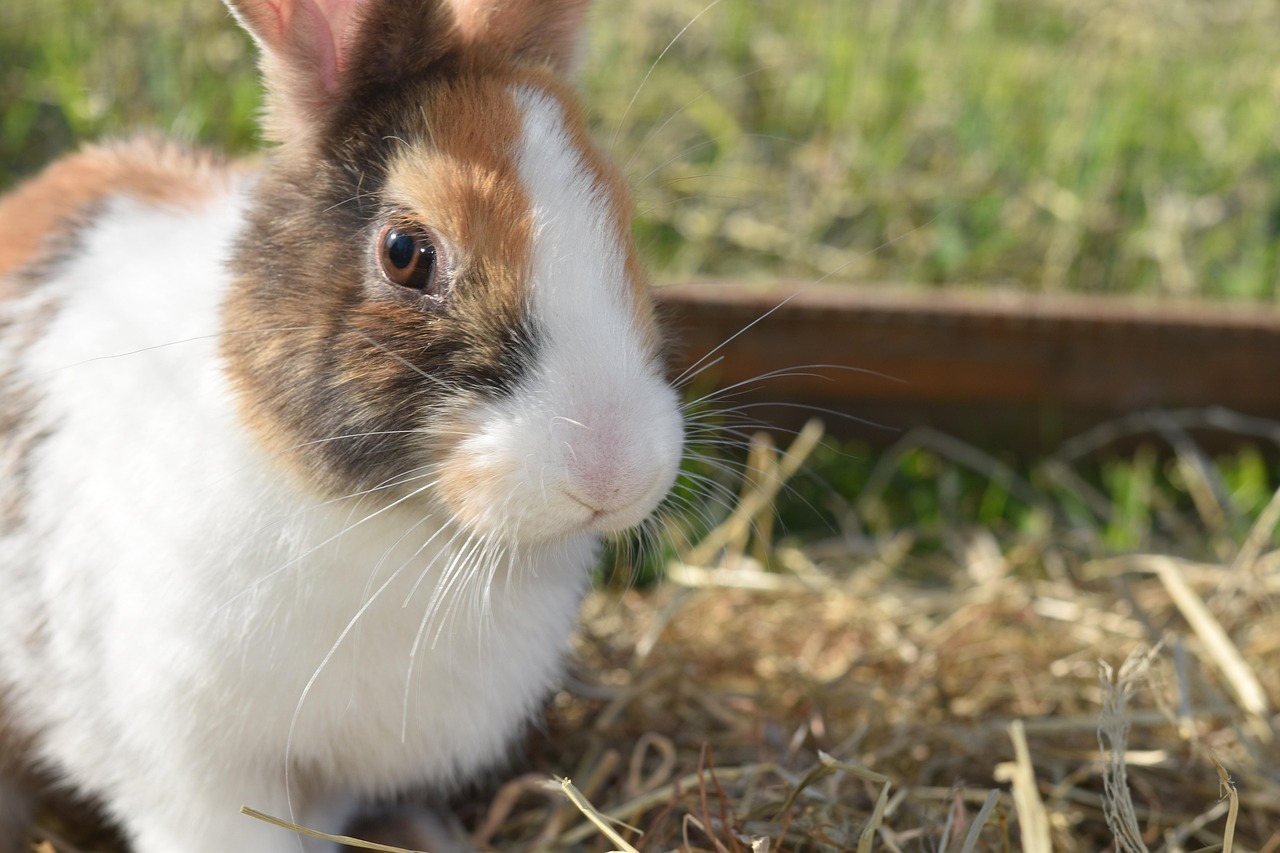
Fiber is one of the most important parts of a healthy rabbit diet.
Rabbits have a specialised digestive system designed to process large amounts of fibrous plant material. Appropriate fibre supports normal movement through the digestive tract, feeds microorganisms within the caecum and encourages the long periods of chewing that help maintain healthy teeth.
However, understanding rabbit fibre involves more than simply looking for the word “high fibre” on a bag of pellets.
Different types and particle sizes of fibre perform different functions inside the rabbit’s digestive system, and natural long-stemmed foods such as hay and grass provide benefits that a small portion of processed pellets cannot fully replace.
This guide explains how fibre works inside a rabbit’s digestive system, why hay is so important, how to choose suitable hay and what can happen when a rabbit does not eat enough fibre.
How Does a Rabbit’s Digestive System Work?
Rabbits are hindgut fermenters.
This means that much of the fermentation of plant material happens toward the end of the digestive system, mainly inside a large organ called the caecum.
Food first travels through the stomach and small intestine.
When material reaches the hindgut, the rabbit’s digestive system separates it according to particle size.
Larger, less digestible fibre particles pass relatively quickly through the colon and are eventually released as the familiar round, dry droppings.
Smaller particles and soluble material are moved back toward the caecum.
Inside the caecum, microorganisms ferment this material and produce substances the rabbit can use.
This highly specialised system allows rabbits to obtain additional nutrition from fibrous plant foods.
What Are Caecotrophs?
Rabbits produce two different types of droppings.
The hard, dry pellets most owners see around the litter tray are ordinary faecal droppings.
Rabbits also produce soft, nutrient-rich droppings known as caecotrophs.
Caecotrophs contain nutrients produced during fermentation in the caecum.
The rabbit normally eats them directly as they are produced, which is why owners may rarely see them.
Eating caecotrophs is completely normal rabbit behaviour.
It allows the rabbit to obtain nutrients that would otherwise leave the body before they could be fully absorbed.
This process is called caecotrophy.
It should not be confused with a rabbit randomly eating ordinary hard droppings.
Why Is Fiber Important for Rabbit Digestion?
One major role of fibre is supporting normal movement through the digestive tract.
The larger, less digestible fibre particles help stimulate movement through the caecum and colon.
This is particularly important because rabbits are designed to eat small amounts of fibrous material frequently throughout the day.
A rabbit’s digestive system should not spend long periods completely empty.
Appropriate fibre also helps create conditions in the caecum that support its complex microbial population.
These microorganisms are an important part of normal rabbit digestion.
Does Fiber Prevent GI Stasis?
A high-fibre diet is an important part of reducing the risk of gastrointestinal problems, but it would be misleading to say that fibre guarantees prevention of GI stasis.
GI stasis can occur for many reasons, including:
- Dental pain
- Other painful conditions
- Stress
- Dehydration
- Reduced food intake
- Illness
- Obesity
- Inappropriate diet
- Gastrointestinal obstruction
Good nutrition is therefore one part of prevention, not the only factor.
If your rabbit suddenly stops eating or produces very few or no droppings, do not simply offer more hay and wait.
Prompt veterinary assessment may be necessary.
Why Hay and Grass Are So Important
Hay and grass provide something rabbits naturally spend considerable time eating.
Unlike calorie-dense foods that can be consumed quickly, fibrous hay requires repeated chewing.
This supports two major areas of health:
digestive function and dental wear.
Good-quality hay also encourages natural:
- Grazing
- Foraging
- Chewing
- Searching behaviours
For these reasons, hay should not be viewed simply as bedding or something added occasionally beside a bowl of pellets.
For a healthy adult pet rabbit, hay and/or suitable grass should be the foundation of the diet.
Fiber and Rabbit Dental Health
Rabbit teeth grow continuously.
This includes not only the visible front incisors but also the cheek teeth farther back in the mouth.
Healthy dental wear depends heavily on how the rabbit chews.
When rabbits eat fibrous hay and grass, they perform repeated side-to-side chewing movements over long periods.
This helps wear tooth surfaces naturally.
This is one reason simply feeding a pellet that contains fibre does not provide exactly the same dental benefit as allowing a rabbit to spend long periods chewing hay or grass.
A rabbit that suddenly stops eating hay but continues eating soft pellets or treats may potentially have dental discomfort.
Persistent changes in food preference should not be ignored.
Not All Fiber Is the Same
The word fiber covers several different plant components.
In practical rabbit nutrition, it is useful to understand two broad groups.
Indigestible Fiber
Some coarse plant fibre is not extensively fermented.
It passes relatively rapidly through the digestive system and helps stimulate normal intestinal movement.
Long-stemmed hay is an important source.
Fermentable Fiber
Other plant components can be fermented by microorganisms in the caecum.
This fermentation produces substances that contribute to the rabbit’s energy and nutrition.
A healthy rabbit diet therefore needs an appropriate balance of different plant fibres rather than simply the highest possible number printed beside “crude fibre” on a food label.
Why the Crude Fiber Percentage Does Not Tell the Whole Story
Commercial rabbit foods commonly list crude fibre on the nutritional label.
That number can be useful, but it does not describe every type of fibre in the food or explain the size and physical structure of the particles.
Veterinary nutrition guidance notes that crude-fibre measurements mainly reflect certain less digestible plant components and do not fully measure fermentable fibre.
This means two foods showing similar crude-fibre percentages may not behave identically inside a rabbit’s digestive system.
For an ordinary rabbit owner, the practical lesson is simple:
Do not judge an entire rabbit diet from one percentage on the pellet bag.
Provide appropriate hay or grass as the main fibre source.
Why Long Fiber Matters
Particle size matters in rabbits.
Longer, coarse fibre particles help stimulate movement through the hindgut.
Hay also takes time to chew and forage through.
Finely processed foods may contain fibre according to the nutritional label, but they do not necessarily provide the same:
- Chewing time
- Foraging opportunity
- Particle structure
- Dental wear
as long-stemmed hay and grass.
This is why pellets should not replace hay simply because the packaging advertises them as “high fibre.”
What Is the Best Hay for an Adult Rabbit?
For most healthy adult pet rabbits, grass hay is a suitable everyday choice.
Common grass hays include:
- Timothy hay
- Meadow hay
- Orchard grass hay
- Other suitable grass hays
Availability differs by country.
Timothy hay is widely mentioned in European and North American rabbit-care information, but rabbit owners in Ghana may not always find it easily or affordably.
The important qualities are that the hay is:
- Suitable for rabbits
- Dry
- Fresh
- Free from mould
- Free from dangerous plants
- Not excessively dusty
- Stored correctly
- Palatable enough that the rabbit actually eats it
A rabbit does not require an expensive imported brand simply because the packaging looks premium.
A safe, nutritious and properly stored grass hay can be appropriate.
What About Fresh Grass?
Fresh grass can also be an excellent fibrous food for rabbits that are properly accustomed to eating it.
However, introduce fresh grass gradually if a rabbit has previously eaten mostly hay.
Grass should come from a safe area free from:
- Pesticides
- Herbicides
- Road pollution
- Animal waste
- Toxic plants
Correct plant identification is essential when collecting forage.
Never Feed Lawnmower Clippings
Freshly hand-cut grass and lawnmower clippings are not the same thing.
Lawnmower clippings should not be fed to rabbits.
The mowing process crushes and heats the grass, allowing it to ferment and deteriorate rapidly.
If you want to feed fresh grass, collect appropriate grass cleanly rather than emptying a lawnmower bag into the rabbit enclosure.
What About Alfalfa Hay?
Alfalfa is different from ordinary grass hay.
It is a legume and generally contains more protein and calcium than typical grass hays.
This can make it useful in certain life stages, particularly for some:
- Growing rabbits
- Pregnant rabbits
- Nursing rabbits
- Rabbits requiring additional nutritional support
However, it is not normally the preferred unlimited maintenance hay for an ordinary healthy adult pet rabbit.
An adult rabbit’s diet should be adjusted according to its age, health, body condition and reproductive status.
If you are unsure which hay is appropriate, ask a rabbit-experienced veterinarian.
How Much Hay Should a Rabbit Eat?
Rather than attempting to measure an exact percentage every time you feed your rabbit, make good-quality hay and/or grass continuously available.
RSPCA dietary guidance describes hay and grass as approximately 85% of a typical pet rabbit diet, with leafy greens and a small quantity of pellets making up the remainder.
The more important practical point is that rabbits should have access to suitable hay or grass throughout the day.
The hay rack should not remain empty for long periods.
Replace hay regularly so it remains fresh and appealing.
How Can You Tell Good Hay From Bad Hay?
Good rabbit hay should generally:
- Smell fresh
- Be dry
- Contain recognisable grass or plant stems
- Be free from obvious mould
- Be free from excessive dust
- Be stored somewhere dry
Do not feed hay that:
- Smells mouldy
- Is damp
- Contains visible mould
- Has been contaminated with chemicals
- Contains unidentified potentially toxic plants
- Has been heavily contaminated with urine or faeces
Hay quality matters just as much as quantity.
How Should Hay Be Stored?
Hay needs protection from moisture.
Store it somewhere:
- Dry
- Well ventilated
- Protected from rain
- Away from chemical contamination
- Protected from rodents and other pests
Avoid sealing damp hay inside airtight containers because trapped moisture encourages mould.
This is particularly important for rabbit owners and farmers in humid climates.
Fiber and Water Work Together
A high-fibre diet must always be accompanied by continuous access to fresh drinking water.
Hay is relatively dry.
Rabbits need water to support normal digestive and urinary function.
Check drinking bowls and bottles every day.
During hot weather, check them more frequently.
A rabbit eating dry hay may drink more directly than one consuming large amounts of fresh grass and leafy vegetation.
Our separate guide on Water for Rabbits explains rabbit hydration in greater detail.
Where Do Leafy Greens Fit?
Appropriate leafy greens can complement a hay-based diet.
Depending on availability and individual tolerance, examples may include rabbit-safe:
- Herbs
- Leafy vegetables
- Weeds
- Forage plants
Introduce unfamiliar greens gradually.
Greens provide variety, moisture and nutrients, but they do not mean hay is no longer necessary.
Hay or appropriate grass should remain the main dietary component for a healthy adult rabbit.
What Role Do Pellets Play?
Good-quality rabbit pellets can provide concentrated nutrition in a convenient form.
However, pellets are eaten much more quickly than hay.
If too many pellets are available, some rabbits fill up on them and reduce their hay consumption.
This can contribute to:
- Excessive calorie intake
- Weight gain
- Less chewing
- Reduced hay consumption
Healthy adult pet rabbits generally need only a measured amount of appropriate pellets rather than an endlessly refilled bowl.
Growing, pregnant, lactating, underweight or medically affected rabbits may need different portions.
Fiber and Rabbit Treats
Fruit, carrots and many commercial treats do not provide the same dietary role as hay.
Because these foods can be highly palatable, a rabbit may choose them instead of eating fibrous foods.
Treats should therefore remain small and occasional.
For regular training rewards, consider using:
- Appropriate herbs
- Leafy greens
- Individual pellets from the daily ration
rather than constantly giving sugary fruit.
Our Rabbit Treats guide explains this in more detail.
What Happens When a Rabbit Eats Too Little Fiber?
A persistently inappropriate low-fibre diet may contribute to several problems.
These can include:
- Reduced gastrointestinal motility
- Abnormal caecal fermentation
- Reduced hay consumption
- Dental problems associated with insufficient chewing
- Excess weight when low-fibre foods are also calorie dense
- Abnormal caecotroph production or consumption
However, if a rabbit suddenly stops eating hay, do not automatically blame its diet.
Dental pain, illness or another medical problem may be responsible.
Why Is My Rabbit Not Eating Hay?
Some rabbits refuse hay because they have been offered too many pellets or highly palatable foods.
Others simply dislike the particular hay being offered.
Try:
- Fresher hay
- A different grass-hay variety
- A different supplier
- Placing hay near the litter tray
- Offering hay in several locations
- Using hay in foraging activities
But there is an important warning.
If a rabbit previously ate hay normally and suddenly stops, arrange a veterinary check.
Dental disease can make chewing coarse food painful.
A rabbit with painful teeth may continue eating softer foods while avoiding hay.
How to Encourage a Rabbit to Eat More Hay
Try making hay more interesting and accessible.
Offer Hay in Several Places
Place hay:
- Beside the litter tray
- In hay racks
- Inside safe cardboard tubes
- In foraging boxes
- Near favourite resting areas
Rabbits often eat while using the litter tray, so positioning hay nearby can encourage consumption.
Refresh It Regularly
Old hay lying untouched for several days may be less appealing.
Remove heavily soiled hay and add fresh hay regularly.
Mix Suitable Hay Types
Some rabbits prefer particular textures.
You can try mixing appropriate grass hays to increase interest.
Reduce Competition From Excess Pellets
If a healthy adult rabbit fills up on pellets, it may have little motivation to eat hay.
Pellet portions may need adjustment.
Do not make sudden dietary changes, particularly if the rabbit is already eating poorly.
Make Hay Part of Enrichment
Hay provides more than nutrition.
It can also encourage natural foraging.
Try:
- Stuffing hay inside cardboard tubes
- Filling safe boxes with hay
- Hiding appropriate herbs amongst hay
- Using several feeding stations
- Creating safe forage areas
This makes the rabbit work naturally for food and can increase time spent eating fibre.
Fiber Requirements Change With Life Stage
Not every rabbit should receive exactly the same feeding plan.
Nutrition varies with:
- Growth
- Pregnancy
- Lactation
- Adulthood
- Body condition
- Illness
Veterinary nutrient recommendations also differ between maintenance, growth, pregnancy and lactation.
This is why a feeding programme for a growing commercial rabbit should not simply be copied from a guide written for a neutered adult house rabbit.
The underlying need for appropriate fibre remains important, but energy, protein and other nutrient requirements change.
Fiber for Rabbits in Ghana
Rabbit owners and farmers in Ghana may face a different challenge from owners in countries where bags of timothy hay are available in almost every pet shop.
Imported hay may be expensive or difficult to obtain.
That does not mean rabbits should simply be fed large quantities of pellets.
Suitable local grasses and properly prepared forage may provide valuable fibre when they are correctly identified, harvested and handled.
The most important considerations are:
- Plant safety
- Nutritional quality
- Clean harvesting
- Proper drying
- Mould prevention
- Pesticide exposure
- Storage conditions
Do not assume that every grass, leaf or agricultural by-product is appropriate for rabbits.
Local feeding systems should still be nutritionally balanced.
For commercial rabbit farming, consultation with an animal nutrition professional can be particularly useful when developing diets around locally available ingredients.
Humidity and Hay Storage in Tropical Climates
Hay storage can be challenging during humid or rainy weather.
Moisture encourages mould growth and deterioration.
In Ghana and other tropical regions:
- Keep hay off damp floors
- Protect it from leaking roofs
- Maintain ventilation around stored feed
- Avoid storing it against wet walls
- Inspect regularly for mould
- Rotate older feed before newly stored batches
Do not attempt to save visibly mouldy hay by simply removing the worst-looking section.
Discard unsafe feed.
Is More Fiber Always Better?
Not necessarily.
Rabbits need an appropriate balance of fibre, energy, protein, vitamins and minerals.
A food should not be judged only by having the highest possible fibre percentage.
Extremely mature or poor-quality plant material may contain plenty of fibre while being deficient in other nutrients or too unpalatable for adequate consumption.
Life stage also matters.
A lactating doe has different nutritional requirements from a sedentary adult pet rabbit.
The goal is therefore an appropriate high-fibre diet, not simply the highest fibre number available.
Should You Buy High-Fiber Rabbit Pellets?
A good adult rabbit pellet should contain appropriate fibre and nutrients, but pellets should not replace hay solely because the package claims to be high in fibre.
Compare:
- Ingredients
- Nutritional analysis
- Intended life stage
- Feeding instructions
Avoid muesli-style mixtures that encourage selective feeding.
When changing pellet brands or types, transition gradually rather than abruptly.
Signs Your Rabbit’s Diet May Need Attention
Review the diet or seek veterinary guidance if you notice:
- Refusal to eat hay
- Reduced appetite
- Weight gain
- Weight loss
- Repeated uneaten caecotrophs
- Very small droppings
- Fewer droppings
- Dental problems
- Persistent digestive upset
Do not try to correct severe symptoms purely through dietary experimentation.
A rabbit producing no droppings or refusing all food needs prompt attention.
Frequently Asked Questions
Why Do Rabbits Need So Much Fiber?
Rabbits have a specialised hindgut digestive system adapted to fibrous plant foods. Coarse fibre helps stimulate normal gastrointestinal movement, while fermentable material supports microbial activity in the caecum.
Is Hay the Best Source of Fiber for Rabbits?
For most healthy adult pet rabbits, good-quality grass hay and/or fresh grass should form the majority of the diet.
Can Pellets Replace Hay?
No.
Pellets can provide useful nutrients and fibre, but they do not provide the same extended chewing and long-particle forage experience as hay or grass.
What Hay Is Best for Adult Rabbits?
Appropriate grass hays such as timothy, meadow and orchard grass are commonly used.
The best choice also depends on availability, quality and the individual rabbit.
Is Alfalfa Good for Rabbits?
Alfalfa can be useful for some growing, pregnant or nursing rabbits because it is richer in nutrients.
It is generally not the preferred unlimited maintenance hay for an ordinary healthy adult pet rabbit.
Can Rabbits Eat Fresh Grass Instead of Hay?
Suitable fresh grass can form an important part of the diet.
Introduce it gradually, make sure it is correctly identified and avoid contaminated grass or lawnmower clippings.
How Do I Know If My Rabbit Gets Enough Fiber?
Rather than attempting to calculate every gram, make sure appropriate hay or grass forms the majority of the diet and is continuously available.
Normal appetite, normal droppings and good body condition are useful indicators, although they do not replace veterinary health checks.
What If My Rabbit Stops Eating Hay?
Try fresh or different grass hay if the rabbit otherwise appears healthy.
However, sudden refusal of hay—especially when accompanied by reduced appetite, drooling, weight loss or smaller droppings—can indicate dental or other health problems and should be investigated.
Final Thoughts
The role of fiber in a healthy rabbit diet goes far beyond simply preventing constipation.
Rabbits have a complex hindgut digestive system specifically adapted to fibrous plants.
Different fibre particles are processed differently: coarse indigestible material helps maintain intestinal movement, while smaller fermentable particles enter the caecum, where microorganisms help process them.
Hay and grass also encourage the prolonged chewing needed for natural dental wear.
For most healthy adult pet rabbits, suitable hay and/or grass should therefore remain available throughout the day and form the majority of the diet.
Pellets, greens and occasional treats all have their place, but they should not push fibre-rich forage out of the feeding routine.
Quality matters too.
Choose clean, dry, safe hay and store it carefully to prevent mould, particularly in humid climates.
For rabbit owners and farmers in Ghana, suitable locally available grasses and forage may provide valuable alternatives to expensive imported hay, but plant identification, nutritional quality and safe storage must be taken seriously.
Most importantly, watch the rabbit rather than only the food label.
If your rabbit suddenly stops eating hay, loses its appetite, produces fewer droppings or develops other signs of illness, seek veterinary help rather than assuming that adding more fibre alone will solve the problem.
Sources and Further Reading
For additional rabbit nutrition information, readers can consult:
- MSD Veterinary Manual — Nutrition of Rabbits
- RSPCA — A Healthy Diet for Your Pet Rabbit
- RSPCA — Dietary Enrichment for Rabbits
- Rabbit Welfare Association & Fund — Rabbit Diet and Hay Guidance
This article provides general educational information and does not replace individual veterinary or animal-nutrition advice.
