

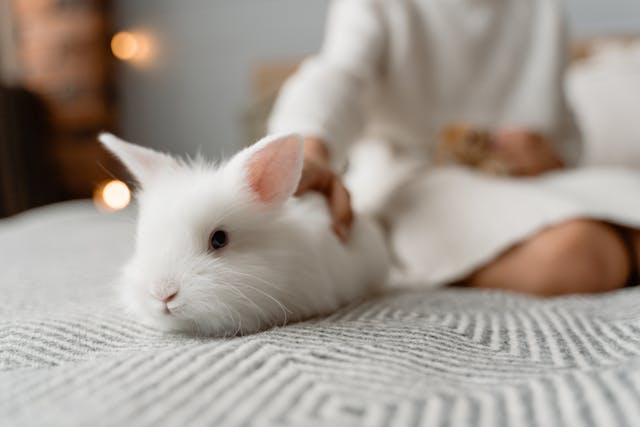
Rabbits are naturally clean animals and spend a large part of their day grooming themselves.
For this reason, a healthy rabbit usually does not need regular bathing.
Most routine cleaning should involve brushing, removing loose fur, keeping the living environment clean and gently spot-cleaning small dirty areas when necessary.
If a rabbit repeatedly becomes wet, dirty or covered in faecal material, the bigger question is:
Why is the rabbit unable to keep itself clean?
Persistent dirty fur can be associated with problems such as obesity, arthritis, dental disease, urinary disease, abnormal caecotrophs or other illness.
This guide explains how to clean a rabbit safely, when spot cleaning is appropriate, why routine baths should be avoided and when a dirty coat requires veterinary attention.
Do Rabbits Need Baths?
Normally, no.
Routine full-body bathing is unnecessary for healthy rabbits.
Rabbit Welfare Association & Fund warns that rabbits can panic when placed in water, potentially injuring themselves while struggling. Wet rabbit coats are also difficult to dry completely, leaving rabbits vulnerable to becoming chilled.
Bathing may also remove natural oils from the coat.
Instead, normal hygiene should rely mainly on:
- Self-grooming
- Regular brushing
- Clean housing
- Clean litter areas
- Spot cleaning when necessary
- Health checks
A veterinarian may occasionally recommend partial bathing or a medicated wash for a specific medical condition.
That is different from routinely giving a healthy rabbit a bath.
Why Does My Rabbit Need Help Staying Clean?
Before cleaning the rabbit, consider why it became dirty.
A healthy, mobile rabbit should generally be able to keep most of its coat clean.
Repeated dirtying may indicate:
- Soft or uneaten caecotrophs
- True diarrhoea
- Obesity
- Arthritis
- Spinal pain
- Dental disease
- Urinary problems
- Bladder sludge or stones
- Mobility problems
- Neurological disease
- Poor housing hygiene
- Long or matted fur
RWAF specifically lists dental problems, arthritis/spinal pain, excess weight, urinary disease and E. cuniculi among possible reasons a rabbit may repeatedly soil its rear.
Cleaning may solve the immediate mess.
It does not necessarily solve the underlying problem.
Start With the Least Invasive Cleaning Method
If only a small amount of dirt is present, do not immediately wet the whole rabbit.
Start with the simplest option.
Depending on the problem, this may mean:
- Brushing away dry debris
- Gently separating dirty fur with your fingers
- Wiping a small area with a slightly damp soft cloth
- Carefully grooming loose fur
The goal is to clean only what needs cleaning.
1. Brush Your Rabbit Regularly
Regular grooming is the most important routine cleaning method.
Rabbits shed throughout the year, with heavier moulting periods occurring periodically.
Brushing helps remove:
- Loose fur
- Small pieces of hay
- Dust
- Dry debris
- Beginning tangles
It also gives you an opportunity to inspect the rabbit’s skin and body.
RWAF recommends regular grooming and notes that rabbit skin is very delicate and can easily be damaged by harsh grooming tools.
How Often Should You Brush a Rabbit?
The frequency depends largely on coat type and shedding.
MSD recommends brushing:
- Long-haired rabbits daily
- Short-haired rabbits at least around twice weekly
More frequent grooming may be needed during heavy shedding.
Long-haired breeds may require significantly more coat maintenance than ordinary short-haired rabbits.
Choose Grooming Tools Carefully
Useful grooming tools may include:
- A soft brush
- A suitable wide-toothed comb
- A fine comb where appropriate
- A gentle rubber grooming mitt
Do not assume that every dog or cat deshedding tool is safe for rabbits.
Some tools have blades or sharp metal edges capable of damaging thin rabbit skin.
Use very little pressure.
2. Gently Spot-Clean Small Dirty Areas
If your rabbit gets a small amount of food, urine or other material on its coat, spot cleaning is preferable to bathing the whole rabbit.
You can:
- Place the rabbit on a secure nonslip surface.
- Support it comfortably.
- Dampen a soft cloth with lukewarm water.
- Gently wipe only the affected area.
- Avoid soaking the coat unnecessarily.
- Towel the area dry afterwards.
Keep water away from the rabbit’s:
- Eyes
- Nose
- Ear canals
Do not force the rabbit onto its back to clean it.
Placing rabbits on their backs can trigger tonic immobility, a fear response rather than relaxation, and should not be used simply to make grooming easier. MSD also advises against dorsal restraint for routine grooming.
Should You Use Baby Wipes?
I would not make baby wipes a standard rabbit-cleaning recommendation.
Even products labelled:
- Unscented
- Alcohol-free
- Sensitive
may contain preservatives, moisturisers or other ingredients intended for human skin.
Rabbits groom themselves and may lick substances left on their coats.
For simple cleaning, a soft cloth dampened with plain lukewarm water is usually the safer starting point.
If a veterinary condition requires a cleaning product, use one specifically recommended for the rabbit.
3. How to Clean a Rabbit’s Dirty Bottom
A rabbit with faeces or urine stuck around its rear needs attention because prolonged moisture can damage the skin and increase the risk of flystrike.
However, first determine what is actually stuck to the rabbit.
It may be:
- Normal faecal pellets
- Uneaten caecotrophs
- True diarrhoea
- Urine
- Mud
- Bedding
These problems have different causes.
Start With Dry Cleaning Where Possible
If the material is dry and loose enough, try carefully removing it using:
- Your fingers
- A suitable comb
- Gentle brushing
Do not pull hard against the skin.
Rabbit skin can tear surprisingly easily.
If the material is tightly attached to the skin or heavily matted, stop before causing injury.
When a Bottom Wash May Be Necessary
Sometimes faeces or urine contamination is too extensive to remove dry.
A partial bottom wash may then be necessary, ideally after advice from a rabbit-experienced veterinarian—especially if the problem is recurring.
RWAF advises keeping the rest of the rabbit as dry as possible and washing only the affected rear area when partial bathing is required.
Use:
- Lukewarm water
- A nonslip surface
- Good body support
- Minimal water
Do not leave the rabbit sitting deeply in water.
Work quickly but gently.
Don’t Automatically Use Shampoo
Plain water may be enough for some contamination.
If shampoo is necessary, use only a product considered appropriate for rabbits and preferably one recommended by your veterinarian.
Human shampoo, dog shampoo and strongly scented products should not be used casually.
A veterinarian may prescribe a particular medicated shampoo when a skin condition requires it.
4. Dry the Rabbit Thoroughly
A rabbit should not remain wet after cleaning.
Wet fur can take a long time to dry because the coat becomes dense and clumped.
Start by gently towel drying.
Do not rub the skin aggressively.
RWAF advises careful towel drying and, where genuinely necessary, a hair dryer may be used on a gentle warm—not hot—setting, with constant temperature checks to avoid burns or overheating.
If using a dryer:
- Keep it at a safe distance
- Use gentle airflow
- Avoid hot temperatures
- Keep your hand in the airflow to monitor heat
- Stop if the rabbit becomes distressed
- Take breaks
- Never overheat the rabbit
A rabbit that finds the dryer extremely frightening may need another drying approach.
Do not return an outdoor rabbit to cold or wet conditions while its coat remains damp.
5. Do Not Use Routine Powder “Dry Baths”
Some older rabbit-care advice recommends putting cornstarch or baby powder into dirty fur as a routine dry bath.
I would not make this a standard SimpleTipsGH recommendation.
Loose powders can become airborne around the rabbit’s:
- Nose
- Eyes
- Airways
and may also be ingested during grooming.
For ordinary dirt, use brushing or careful local cleaning instead.
If urine, faeces or greasy skin repeatedly makes powder treatments seem necessary, investigate the cause with a veterinarian.
6. How to Deal With Matted Rabbit Fur
Matted fur can pull against the skin and become painful.
Small, loose tangles may sometimes be gently separated using:
- Fingers
- A suitable comb
Never pull hard.
Be Extremely Careful With Scissors
The old version of this article recommended simply trimming mats with scissors.
That needs stronger caution.
Rabbit skin is very thin and may be pulled upward inside a mat, making it surprisingly easy to cut the skin accidentally.
RWAF advises owners who cannot safely tease a mat apart to have a veterinarian clip it, particularly when the mat is close to the skin.
If you cannot clearly distinguish fur from skin:
Do not cut it yourself.
Seek professional help.
Severe Mats Need Proper Treatment
Get help if:
- Matting is tight against the skin
- Large sections of coat are affected
- The rabbit becomes distressed
- The skin underneath looks red or damaged
- The rabbit cannot move normally
- Urine or faeces is trapped inside the mat
Severe matting can hide significant skin problems.
7. Cleaning Around a Rabbit’s Eyes
Healthy rabbit eyes should generally be bright and free from persistent discharge.
If a small amount of dried material is present around the fur, you may gently soften it with a damp cotton pad or soft cloth.
Do not:
- Rub the eye itself
- Put soap in the eye
- Use human eye drops
- Pull hard at dried fur
Persistent eye discharge should not simply be cleaned every day without investigation.
Possible underlying causes can include:
- Tear-duct problems
- Dental disease
- Infection
- Eye injury
RSPCA advises veterinary attention for abnormal eye discharge.
8. Cleaning Rabbit Ears
Rabbit ears do not normally require routine deep cleaning at home.
You can observe the visible outer ear during regular health checks.
Look for:
- Redness
- Crusts
- Discharge
- Bad smell
- Excessive scratching
- Head shaking
Do not insert cotton buds deep into the ear canal.
Do not pour cleaning solution into the ears unless instructed by a veterinarian.
Never Pull Off Ear-Mite Crusts
Thick crusts inside the ears can occur with ear mites.
Do not peel them away manually.
MSD warns that removing these crusts from an awake rabbit can be extremely painful.
Seek veterinary treatment.
9. Cleaning Around the Nose and Face
The nose should normally remain relatively clean and dry.
Small food marks can be wiped gently with a slightly damp cloth.
However, repeated wetness around the nose is different.
Watch for:
- Nasal discharge
- Frequent sneezing
- Matted front paws
- Noisy breathing
- Difficulty breathing
These signs may indicate respiratory disease and should not simply be treated as a grooming problem.
10. Check the Feet While Grooming
Cleaning sessions are a good opportunity to inspect your rabbit’s feet.
Look underneath and around the feet for:
- Redness
- Fur loss
- Swelling
- Open sores
- Matted fur
- Urine staining
Do not remove the protective fur underneath healthy hind feet simply because it looks thick.
That fur helps cushion the rabbit’s weight.
Sore or damaged hocks require veterinary attention.
11. Check the Rear Every Day
RSPCA recommends checking the rabbit’s bottom and tail area daily to ensure it remains clean.
This becomes particularly important:
- During hot weather
- For overweight rabbits
- For older rabbits
- For long-haired rabbits
- For rabbits with urinary problems
- After digestive problems
A dirty rear can attract flies.
Flystrike: Do Not Try to Wash It Away
If you see:
- Maggots
- Fly eggs
- Open wounds
- Severe wetness with bad smell
treat the situation as urgent.
Flystrike is a veterinary emergency.
Do not place the rabbit in a bath to wash away the maggots.
RWAF advises against bathing rabbits with flystrike because wet fur becomes harder to clip and thoroughly examine. Veterinary treatment is required.
Why Is My Rabbit’s Bottom Always Dirty?
Repeatedly cleaning a dirty bottom without finding the cause is not enough.
Common reasons may include:
Obesity
An overweight rabbit may be unable to bend properly to clean itself or eat its caecotrophs directly.
Arthritis
Pain and stiffness may prevent an older rabbit from reaching its rear.
Dental Disease
Dental pain can affect normal grooming and feeding.
Inappropriate Diet
An unsuitable diet may contribute to excessive soft caecotrophs.
Urinary Disease
Urine leakage or difficulty urinating can leave the rear constantly wet.
Mobility or Neurological Problems
Some rabbits physically cannot groom normally.
If the rear becomes dirty repeatedly, arrange veterinary assessment.
Is “Poopy Butt” the Same as Diarrhoea?
Not always.
The phrase “poopy butt” is commonly used online, but it can describe several different situations.
Rabbits produce:
Hard faecal pellets — normal waste.
Caecotrophs — softer nutrient-rich material normally eaten directly.
Sticky caecotrophs accumulating around the rear are different from true watery diarrhoea.
Repeated uneaten caecotrophs may be associated with diet, obesity, arthritis or dental problems.
True watery diarrhoea is abnormal and can be serious.
Seek veterinary care, particularly when accompanied by:
- Appetite loss
- Weakness
- Lethargy
- Dehydration
Grooming During Shedding
Rabbits swallow hair while grooming.
Hair normally passes through a healthy digestive system.
The old idea that every swallowed hair automatically creates a “fur ball” is an oversimplification.
MSD explains that hair is normally present in the rabbit stomach and generally passes when gastrointestinal contents and fibre intake are normal.
Regular grooming during heavy shedding helps reduce the amount swallowed.
At the same time, ensure the rabbit has:
- Plenty of appropriate hay
- Fresh water
- Normal appetite
- Normal droppings
If droppings become unusually small or the rabbit stops eating, seek veterinary attention.
Long-Haired Rabbits Need More Grooming
Long-haired breeds can develop serious mats if their coats are not maintained.
Pay particular attention to:
- Behind the ears
- Under the chin
- Armpits
- Groin
- Rear
- Belly
These areas can mat before the top of the coat looks obviously tangled.
Some long-haired rabbits may need daily combing or periodic professional clipping.
Should You Clean Rabbit Scent Glands?
Rabbits have scent glands around the genital area.
These do not necessarily need routine cleaning in every rabbit.
If material accumulates or produces an unusual smell, ask a veterinarian to show you how to inspect and clean the area safely.
Do not force or scrape delicate tissue.
Keep the Environment Clean Too
A rabbit cannot remain clean if its living environment is constantly:
- Wet
- Dirty
- Muddy
- Filled with soiled bedding
Good hygiene includes:
- Daily toilet-area checks
- Removing urine-soaked bedding
- Keeping drinking containers from leaking
- Providing dry resting surfaces
- Replacing dirty hay
- Cleaning litter trays regularly
Our guides on How to Keep Your Rabbit’s Cage Clean and How to Clean a Rabbit Litter Box cover environmental cleaning in greater detail.
Rabbit Cleaning in Ghana and Other Hot Climates
Warm weather increases the importance of keeping rabbits dry and clean.
In Ghana and similar tropical environments, pay close attention to:
- Flies
- Dirty rear ends
- Urine-soaked fur
- Humid housing
- Wet bedding during the rainy season
Check rabbits’ rear ends every day.
Long-haired and overweight rabbits may need especially close monitoring.
Do not solve hot-weather hygiene problems by repeatedly bathing rabbits.
Improve:
- Housing ventilation
- Litter management
- Flooring
- Diet
- Weight management
and investigate any underlying medical cause.
When Should You Contact a Veterinarian?
Arrange veterinary care if your rabbit has:
- A repeatedly dirty bottom
- True diarrhoea
- Urine-soaked fur
- Skin sores
- Severe mats
- Eye discharge
- Nasal discharge
- Ear crusts or discharge
- Persistent bad smell
- Unexplained bald areas
- Signs of pain
- Reduced appetite
- Fewer droppings
- Difficulty grooming
Seek urgent veterinary care for flystrike, severe diarrhoea, breathing difficulty, collapse or complete loss of appetite.
Common Rabbit Cleaning Mistakes
Avoid these mistakes:
- Giving routine full-body baths
- Submerging a rabbit unnecessarily
- Using human shampoo
- Using scented wipes as routine grooming products
- Applying baby powder as a regular dry bath
- Cutting mats close to the skin without knowing where the skin is
- Pulling ear-mite crusts
- Cleaning persistent eye discharge without investigating the cause
- Forcefully holding a rabbit on its back
- Returning a wet rabbit to a cold environment
- Bathing a rabbit with flystrike
- Repeatedly cleaning a dirty rear without investigating why it happens
A Simple Rabbit Grooming Routine
Every Day
Check:
- Appetite
- Droppings
- Rear end
- Eyes
- Nose
- General coat condition
Long-haired rabbits may require daily coat grooming.
Several Times a Week
Brush short-haired rabbits as needed and more frequently during moulting.
Inspect:
- Feet
- Skin
- Coat
- Ears
As Needed
Spot-clean small dirty areas.
Remove minor tangles carefully.
Trim nails at appropriate intervals if you know how to do so safely.
Seek help for difficult mats or medical cleaning problems.
Frequently Asked Questions
Can You Bathe a Rabbit?
Routine bathing is not recommended.
A veterinarian may occasionally recommend partial bathing for a health problem, but healthy rabbits generally clean themselves.
How Do You Clean a Dirty Rabbit?
Start with brushing or a slightly damp cloth and clean only the dirty area.
Avoid soaking the entire rabbit unnecessarily.
Can I Use Baby Wipes on a Rabbit?
They are not necessary for routine care.
Plain lukewarm water on a soft cloth avoids leaving cosmetic ingredients on fur that the rabbit may later lick.
Can I Use Baby Powder to Clean a Rabbit?
I would not recommend routine powder baths.
Loose powder may reach the rabbit’s eyes, nose or airways.
Use safer grooming and spot-cleaning methods instead.
How Do You Clean Poop Off a Rabbit?
If dry material is loose, gently comb or separate it.
If it is firmly stuck, a carefully performed partial wash may be necessary.
Repeated soiling requires investigation for diet or health problems.
Can I Wash My Rabbit’s Bottom?
A limited bottom wash may occasionally be necessary when contamination cannot be removed otherwise.
Keep the rest of the rabbit dry and dry the rear thoroughly afterwards.
If bottom washing is repeatedly necessary, see a veterinarian.
Can I Use a Hair Dryer?
If a rabbit has had to be wet for medical cleaning, a dryer may sometimes be used cautiously on a gentle warm—not hot—setting.
The rabbit must be protected from burns, overheating and excessive stress.
Can I Cut Matted Rabbit Fur With Scissors?
Do not cut a tight mat close to the skin unless you are confident you can do so safely.
Rabbit skin can easily be cut.
A veterinarian can clip difficult mats.
Why Does My Rabbit Keep Getting a Dirty Bottom?
Possible causes include obesity, arthritis, dental problems, abnormal caecotrophs and urinary disease.
Repeated dirtying should not be treated as merely a hygiene problem.
Should I Clean My Rabbit’s Ears?
Routine deep ear cleaning is generally unnecessary.
Inspect the ears and contact a veterinarian if you see significant wax, crusting, discharge, redness, pain or repeated head shaking.
Final Thoughts
Learning how to clean a rabbit safely starts with understanding that healthy rabbits normally do most of their own cleaning.
They do not require routine baths.
Regular brushing, clean housing and occasional spot cleaning are usually sufficient.
If a small area becomes dirty, start with the least invasive method—a brush, comb or slightly damp cloth—rather than soaking the whole rabbit.
Partial bottom washing may occasionally be required, but repeated dirtying can indicate obesity, arthritis, dental disease, urinary problems or another health condition.
Be particularly cautious with matted fur because rabbit skin is thin and easy to cut.
And if you find fly eggs or maggots, do not try to solve the problem with a bath. Flystrike requires urgent veterinary treatment.
Good rabbit hygiene is ultimately about more than making the coat look clean.
It means keeping the rabbit comfortable, checking the body regularly and recognising when poor grooming is actually an early sign of illness.
Sources and Further Reading
For more information about rabbit grooming and bathing, readers can consult:
- Rabbit Welfare Association & Fund — Bathing Rabbits
- Rabbit Welfare Association & Fund — Grooming Rabbits
- RSPCA — Rabbit Health and Grooming
- MSD Veterinary Manual — Providing a Home for a Rabbit
- MSD Veterinary Manual — Routine Health Care of Rabbits
This article provides general educational information and does not replace veterinary diagnosis or treatment.
